Ravin R20 Long Range Testing That Holds Up
A Ravin R20 can make 100 yards look easy on a calm range. That does not mean 100 yards is an automatic hunting shot. Ravin R20 long range testing needs to separate speed and mechanical accuracy from the things that actually decide a shot in the field: broadhead flight, wind, range estimation, rest stability, and the shooter behind the trigger.
The R20 remains a serious crossbow for hunters who want Ravin’s compact HeliCoil platform without paying for the newest flagship. It is fast, narrow when cocked, and capable of excellent groups. But long-range capability is not the same thing as ethical long-range hunting range. Real survival info. Real gear. No BS.
What the Ravin R20 Brings to Long-Range Testing
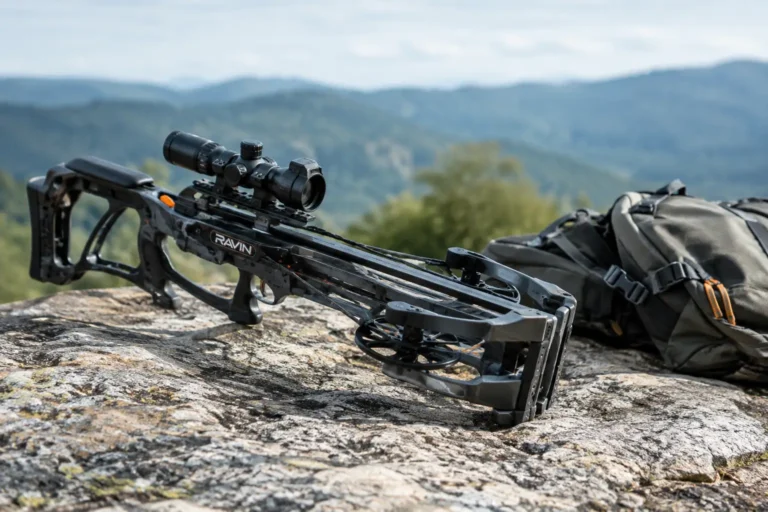
The Ravin R20 is rated at up to 430 feet per second with the factory arrow setup. That speed matters because it creates a flatter trajectory than slower crossbows and trims the time an arrow spends exposed to wind. Its HeliCoil cam system also keeps the string and cams centered through the shot cycle, which helps the platform produce repeatable accuracy when it is properly maintained.
The compact width is another practical advantage. A narrow, balanced crossbow is easier to settle into a rest, especially from a blind window, treestand rail, or pack-supported position. At 60 yards and beyond, little handling mistakes become big misses. A crossbow that is awkward to hold or difficult to keep level will punish the shooter no matter what the speed rating says.
Still, do not buy an R20 because a specification sheet says 430 fps. Buy it if its size, handling, trigger feel, cocking system, and realistic effective range match your hunting. The R20 has enough performance for nearly any deer-hunting situation. The real question is whether you can consistently use that performance.
Ravin R20 Long Range Testing: A Useful Setup
Long-range testing should start at 20 yards, not 80. Confirm that the scope is mounted correctly, the rail is clean, the screws are properly tightened, and every arrow is the same model, weight, and condition. Use the arrows specified for the crossbow. Mixing arrows because they appear similar is a fast way to create inconsistent impact points and unnecessary wear.
Shoot from a solid bench or a stable shooting rest first. This does not prove field readiness. It removes most shooter movement so you can see what the R20, scope, arrows, and broadheads are actually doing. Start with field points at 20 yards, then verify at 40, 60, 80, and 100 yards if the range allows it safely.
Do not fire tight groups into the same small spot. Ravin arrows carry enough energy to damage each other. Use separate aiming points or move your target between shots. Damaged arrows are not a bargain, and using one after a hard impact is not worth the risk.
A practical test sequence looks like this:
- Confirm a dead-on 20-yard zero with three-shot groups.
- Shoot three-shot groups at 40 and 60 yards using the scope’s correct aiming references.
- Repeat those distances with your hunting broadheads.
- Test 80 and 100 yards only from a stable rest and in predictable conditions.
- Record group size, point-of-impact shift, wind direction, and any loading or scope issues.
Three-shot groups tell you more than one lucky arrow. Five-shot groups tell you even more, provided you use multiple targets or fresh aiming dots. The goal is not a photo-worthy group. The goal is knowing where the first cold arrow lands and how far your setup can be trusted.
Field Points Are Only the Beginning
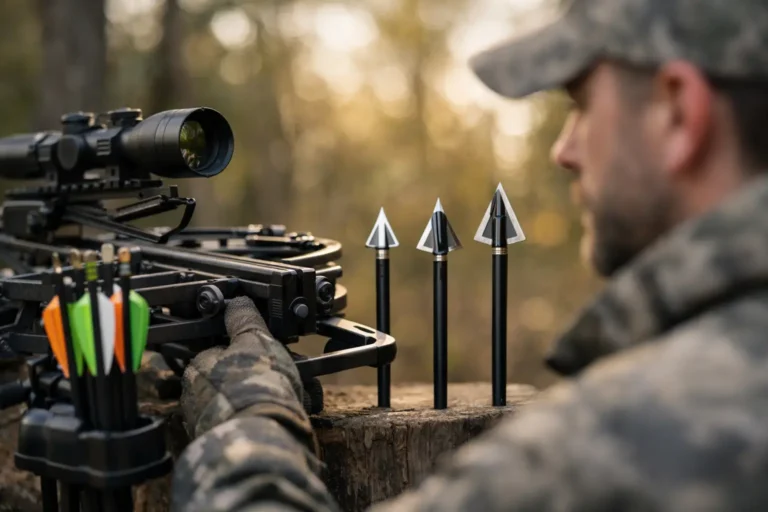
An R20 that groups field points at 100 yards may still move broadheads at 50 or 60. Fixed-blade broadheads can show more sensitivity to arrow alignment, blade design, wind, and slight variations in shooting form. Mechanical broadheads often fly closer to field points, but they still need verification from your exact crossbow.
For deer hunting, broadhead testing is the line that matters. If your broadheads are consistently two inches off from field points at 50 yards, correct the issue before season. Do not memorize a compensation and hope adrenaline, poor light, and a moving deer leave room for it.
Check every arrow’s nock, fletching, shaft, and insert before testing. A loose vane or damaged nock can turn a dependable setup into a mystery. The R20 is built for precision, but it cannot correct inconsistent ammunition.
What Happens Beyond 60 Yards
At 20 yards, a small range error rarely ruins a shot. At 80 yards, it can. The R20’s speed reduces drop, but it does not erase it. A few yards of bad range estimation, a slightly canted crossbow, or a crosswind you barely notice can move impact enough to turn a good hit into a bad one.
Wind is usually the biggest reality check in long-range crossbow shooting. An arrow is not a bullet. Even with the R20’s fast launch speed, a crosswind has time to push it. Gusting wind is worse because there is no honest way to call it perfectly from the stand. If the wind is changing direction or speed, long-range groups on paper are no longer a useful prediction of what will happen on an animal.
Scope magnification and reticle clarity also matter. At longer distances, make sure the scope is set up for your actual arrow speed and that you understand each aiming mark. If you change arrow weight, broadhead type, or other components that affect speed, recheck the entire sight-in process. Do not assume the marks remain correct.
Cant is another quiet problem. A crossbow tilted left or right can throw impact sideways, especially at distance. A bubble level can help during range work, but hunters should also practice mounting the R20 with a naturally level grip and shoulder position. Gear helps. Repetition is what makes it automatic.
Realistic Hunting Range for the R20
For many capable hunters, 50 to 60 yards is where the Ravin R20’s long-range performance becomes genuinely useful for hunting. That does not mean every hunter should shoot that far. It means the crossbow has the speed and accuracy potential to make those distances realistic when the shooter has done the work.
A new crossbow hunter may be better served by keeping shots inside 30 or 40 yards until they can repeatedly place broadheads into a tight group from field positions. An experienced hunter with a known range, a calm animal, a solid rest, and proven broadhead groups may have a wider personal limit. Conditions decide the shot as much as equipment does.
For deer, wait for a relaxed, broadside or slight quartering-away angle. For elk, where a wounded animal can cover serious ground, the margin for error gets even smaller. The R20 delivers plenty of energy with an appropriate hunting arrow and broadhead, but shot placement remains the whole game.
Do not confuse a 100-yard target test with a 100-yard hunting recommendation. Long-distance practice is valuable because it exposes flaws in your form, setup, and wind reading. It can make a 40-yard shot feel calmer. That is a far better reason to practice at 100 than trying to stretch every opportunity in the woods.
Is the Ravin R20 Still Worth Considering?
The R20 makes sense for a hunter who wants a compact Ravin crossbow with serious speed and has access to a safe place to practice. It is particularly appealing if you value a narrow cocked profile for blinds and treestands but do not need the extreme speed numbers of newer Ravin models.
The trade-off is simple: premium crossbow performance demands premium discipline. Keep the rail and string maintained according to Ravin’s instructions, inspect arrows before every use, confirm your scope regularly, and practice from the positions you actually hunt. The crossbow can do its part. Your testing has to prove that the complete system does its part too.
Before choosing between the R20 and newer Ravin options, compare the models based on your realistic hunting distances, preferred cocking method, weight tolerance, and budget. The best Ravin is not the one with the biggest number on the box. It is the one you can carry comfortably, shoot precisely, and trust when the shot finally shows up.