How to Choose Draw Weight for Crossbow Hunting
A crossbow that looks powerful on a spec sheet can still be the wrong hunting tool if it is awkward to cock, unpleasant to practice with, or more speed than your setup can manage. When hunters ask how to choose draw weight for crossbow hunting, they are usually trying to answer a bigger question: what level of power can I use confidently and legally on the game I hunt?
Here is the no-BS answer: do not choose a crossbow on draw weight alone. With modern Ravin crossbows, the complete system matters more – arrow weight, bolt speed, kinetic energy, broadhead choice, accuracy, cocking method, and how well you can make a calm shot from a stand or blind.
What Draw Weight Actually Means on a Crossbow
Draw weight is the force required to pull a crossbow string to its fully cocked position. It is measured in pounds. A higher number generally means the bow stores more energy, but it does not automatically tell you how hard it hits downrange or how suitable it is for hunting.
Crossbows work differently from vertical bows. Their limbs are held under tension at full draw, and their power stroke, cam system, arrow weight, and efficiency all affect the final result. That is why comparing one crossbow’s draw weight to another without looking at speed and energy can lead you in the wrong direction.
A 400-pound-draw crossbow with an efficient cam system can produce serious hunting performance. A heavier-draw model may shoot faster, but speed has trade-offs: more noise, more demanding tuning, more expensive arrows, and potentially less forgiveness if you are new to crossbows.
For most hunters, draw weight is best viewed as part of the power package, not the starting point of the buying decision.
Start With the Game You Hunt
Your intended game sets the minimum standard for the crossbow, but it should not push you into buying more bow than you need.
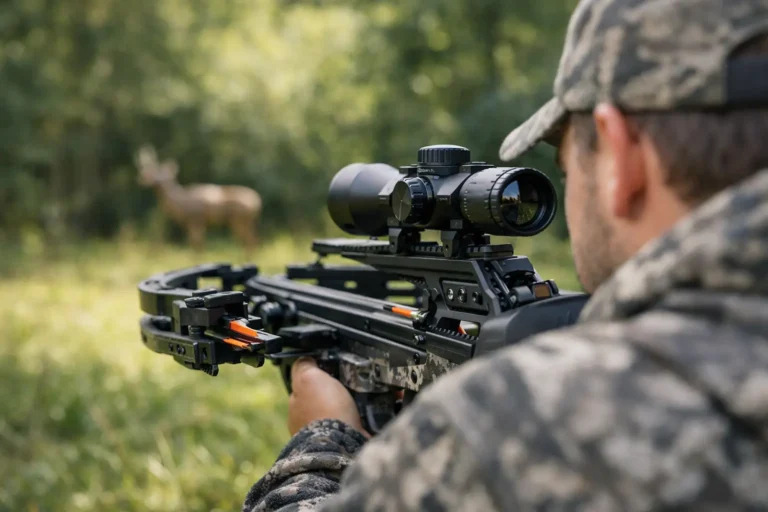
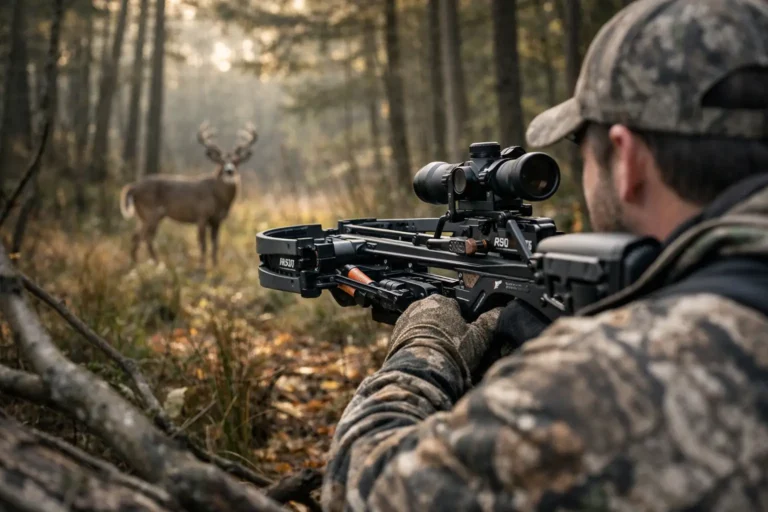
For whitetail deer, a properly tuned hunting crossbow with a legal broadhead and sufficient kinetic energy is more than capable when you keep shots within your practiced distance. Shot placement matters far more than chasing the highest draw-weight number. A sharp fixed-blade or mechanical broadhead that flies correctly from your specific arrow does more real work than extra paper speed paired with poor accuracy.
For larger animals such as elk, you need to be more deliberate. The goal is not simply a heavier draw weight. You want reliable arrow energy at the distance you will actually shoot, a stout arrow matched to the platform, broadhead durability, and enough penetration potential for an ethical broadside or slightly quartering-away shot. No crossbow setup makes a bad angle good.
Predator and small-game use is different again. Excessive speed can be hard on targets and may not offer a practical hunting advantage. Build around the animal, your legal season, and your normal shot distances.
Check Your State Rules Before Shopping
Crossbow rules vary by state and sometimes by specific season or permit. Some states regulate broadhead type, minimum draw weight, minimum arrow length, or minimum arrow weight. Others focus more on equipment definitions than draw-weight thresholds.
Check the current regulations where you hunt before narrowing down models. Do not rely on an old forum post or a buddy’s memory. A crossbow that is legal for general firearms season may not be legal in an archery-only season, depending on your state.
Why Ravin Draw Weight Is Not the Whole Story
Ravin crossbows are built around compact cam systems and high-performance arrows. That design is a big reason hunters should avoid using draw weight as a standalone comparison. The practical questions are: how fast does the bow shoot its approved arrow, how much energy does that arrow retain at your range, and can you operate the platform safely every time?
The Ravin R10 remains a sensible direction for hunters who value a proven, compact platform without needing the headline speed of newer premium models. It is the kind of crossbow that makes sense for a deer hunter who wants a manageable setup, solid field performance, and less temptation to stretch shots past their ability.
The Ravin R29X steps up the performance conversation. It is aimed at hunters who want more speed and a flatter trajectory while retaining the compact handling Ravin is known for. That extra performance can be useful in a tight stand window or when you have practiced enough to make use of it, but it does not replace range practice or sound shot judgment.
The Ravin R50 and R500 are for hunters considering the fast end of the Ravin lineup. They offer serious speed, and that can reduce holdover at longer ranges. The trade-off is that high-performance crossbows demand closer attention to arrow selection, string and cable maintenance, scope setup, and safe handling. If you only expect 20- to 35-yard whitetail shots, paying for maximum speed may not improve your odds as much as buying the model you can practice with most.
Choose a Cocking System You Can Use Under Pressure
This is where draw weight becomes personal. A crossbow may have a heavy draw weight, but a well-designed cocking system can make it practical for a wide range of hunters. Ravin’s integrated cocking approach is a major part of the ownership experience because it gives the user more control than trying to muscle a string back by hand.
Still, do not assume any cocking system removes the need for a test fit. Think about your real hunting conditions. Can you cock the bow while seated in a blind? Can you do it in cold weather with gloves on? Can you operate it safely after hiking in with a pack and feeling rushed?
A crossbow that is easy to cock consistently is safer and more likely to get practiced with. That matters more than bragging rights over draw weight.
Match Arrow Weight to the Crossbow, Not Internet Advice
Arrow weight is one of the biggest factors in real-world crossbow performance. Lighter arrows usually increase speed. Heavier arrows often increase momentum, can be quieter, and may improve penetration on larger game. Neither choice is universally better.
Use the arrows approved for your Ravin model and stay within its stated weight requirements. This is not the place to improvise with random bolts from the shop bin. Crossbow arrows are part of the system, and using the wrong length, nock style, or total weight can create accuracy problems or damage equipment.
For typical deer hunting, many hunters are best served by a properly matched factory arrow setup and a broadhead that groups with their field points. If you hunt elk or want a penetration-focused setup, discuss a heavier approved arrow configuration with a qualified Ravin dealer, then test it extensively before season.
A Practical Way to Choose Draw Weight for Crossbow Hunting
Use this decision process instead of chasing the largest number:
- Confirm your state’s crossbow and broadhead rules.
- Identify your primary game – whitetail, elk, or mixed hunting.
- Set an honest maximum range based on your practice, not the scope’s reticle marks.
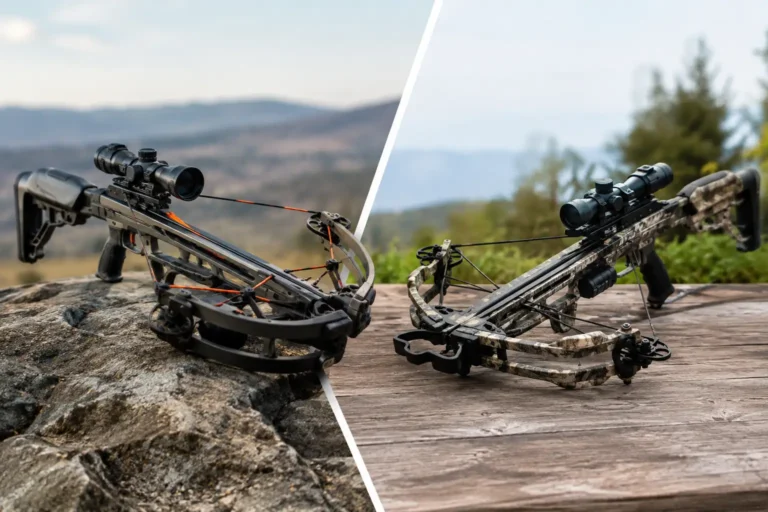
- Compare Ravin models by complete hunting performance, cocking system, size, arrow requirements, and service needs.
- Choose the setup you can cock, carry, maintain, and shoot accurately without fighting it.
For the majority of whitetail hunters, a capable Ravin platform with approved arrows and consistent 40-yard-or-less practice is plenty. For experienced hunters pursuing bigger game or wanting more confidence at measured longer distances, higher-performance options can make sense – as long as the rest of the setup is equally dialed in.
Do Not Confuse Speed With Ethical Range
Fast crossbows can make range estimation and holdover less punishing, but they do not stop deer from moving. A whitetail can react to sound before an arrow arrives, especially at longer distances. The faster the bow, the more tempting it becomes to treat 60 or 70 yards as routine. That is where many otherwise capable hunters get into trouble.
Set your personal range limit around your ability to put broadheads into a tight group from realistic positions: seated, standing, from a rest, and in the clothing you will wear during season. If your groups open up when your heart rate rises, your effective range is shorter than you thought. That is not weakness. That is useful information.
Before buying, compare the Ravin models that fit your budget and hunting style on the brand’s product and comparison pages. Then spend as much care choosing arrows, broadheads, and practice time as you spent choosing draw weight. The crossbow that earns a clean pass-through is the one you can place precisely when the moment finally shows up.