Common Crossbow Hunting Mistakes New Hunters Make
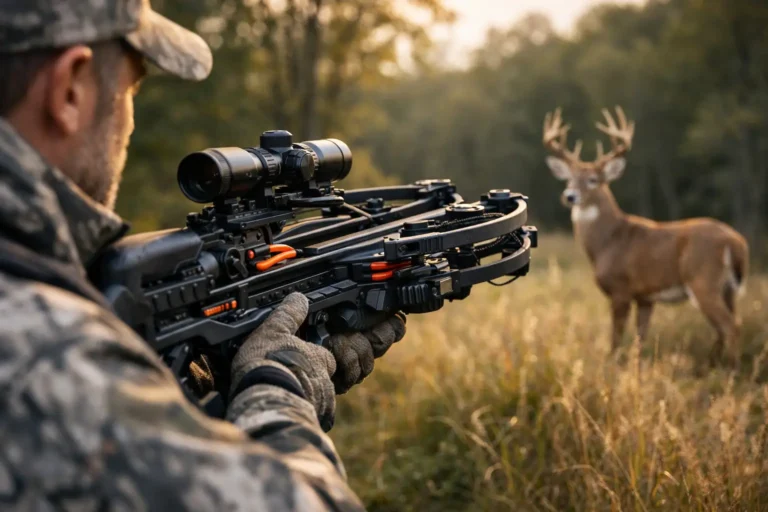
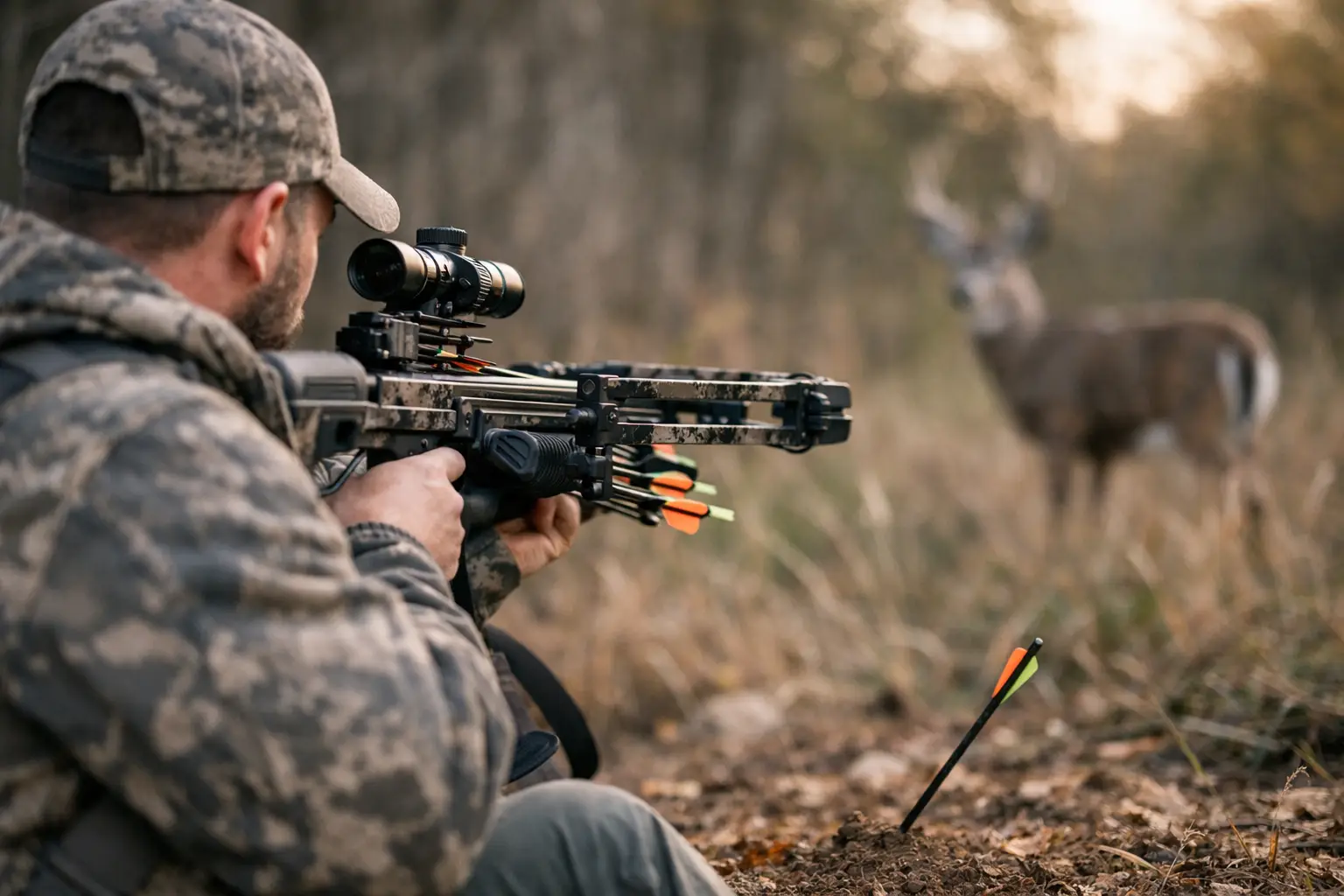
A crossbow can make a new hunter feel ready faster than they really are. That is where common crossbow hunting mistakes new hunters make start piling up: a scope that was never confirmed, bolts that do not match the bow, a rushed shot from a bad rest, or a loaded crossbow carried where it should not be. Fast gear is useful, but it does not erase the basics.
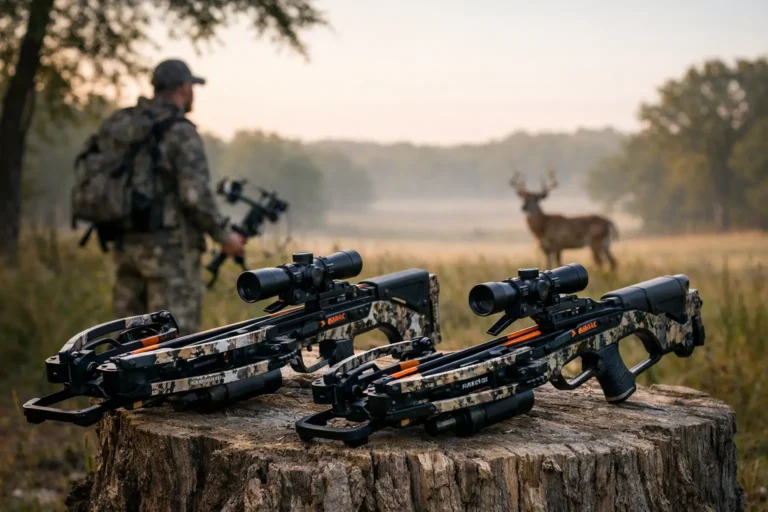
Ravin crossbows are built for serious accuracy and compact handling, but that performance comes with a responsibility: set the bow up correctly, practice under hunting conditions, and understand what happens after the trigger breaks. Here is the no-BS field checklist of mistakes that cost new crossbow hunters opportunities.
Common Crossbow Hunting Mistakes New Hunters Make
Treating the first sight-in as finished
Many beginners shoot a few bolts from a bench, see a tight group at 20 yards, and call the crossbow ready. That is not a hunting zero. It only tells you the bow and scope are close at one distance, from one stable position, on one day.
Confirm every reticle mark or speed-compensating setting at the distances you may actually shoot. For most whitetail hunters, that usually means 20, 30, and 40 yards. If you plan to shoot farther, earn that distance with consistent groups first. A Ravin R10 or R29X can be extremely accurate, but the crossbow cannot fix an incorrect scope setting, a loose mount, or a hunter who guesses yardage.
Check your zero after transporting the crossbow, changing broadheads, replacing strings or cables, and taking a hard bump in the truck or woods. Also shoot from realistic positions. A perfect bench group does not guarantee a clean shot while seated in a blind or standing against a tree.
Using broadheads without testing them
Field points are for practice. Broadheads are for hunting. They do not always hit the same place.
New hunters often wait until the evening before opening day to screw on broadheads, then assume their point of impact will match their field tips. Sometimes it will. Sometimes it will not, especially with a loose broadhead, inconsistent bolts, or a fixed-blade head that catches more air.
Practice with the exact broadhead model and bolt setup you will carry. Start close, use a broadhead-safe target, and verify impact at your hunting distances. Do not fire broadheads repeatedly into the same small spot. They can destroy each other, and damaged blades are not hunting-ready.
Mixing bolts, points, and accessories
A crossbow is a system, not a pile of parts. Bolt length, nock style, total weight, point weight, and broadhead compatibility all matter. Using the wrong bolt or a setup that falls outside the manufacturer’s requirements can hurt accuracy, damage equipment, and create a safety problem.
This matters even more with high-performance Ravin models such as the R500 or R50. Their speed is a benefit, but they are not forgiving of careless bolt selection. Use Ravin-approved bolts and nocks for your specific model, inspect them before every hunt, and follow the manual for weight and configuration requirements.
Do not use a bolt with cracks, splinters, deep gouges, damaged fletching, or a questionable nock. A bad bolt is cheap to replace compared with a ruined hunt or an injury.
Ignoring bolt clearance and shooting lane reality
A crossbow bolt does not need much room, but it does need a completely clear path. Tiny twigs, brush, blind-window edges, treestand rails, and hanging straps can clip a bolt or fletching before it reaches the target. At crossbow speeds, even a light deflection can turn a solid shot into a miss or worse.
Before the animal appears, practice moving the crossbow through the shooting window. Look at the full route from the front of the bow to the target, not just the scope view. Keep your support hand safely below the flight deck and well clear of the string path. This is one of the most preventable safety errors in crossbow hunting.
Compact Ravin crossbows help in tight blinds and stands, but compact does not mean careless. You still need room for the limbs, string, bolt, and your body to move without contact.
Carrying a cocked, loaded crossbow carelessly
A cocked and loaded crossbow is hunting-ready. Treat it that way. Do not climb with it, drag it through brush, rest it carelessly against a tree, or hand it to someone loaded.
Use a haul line to raise and lower the crossbow from a treestand only after you are safely secured. Keep the bolt pointed in a safe direction. Keep your finger off the trigger until the moment you are ready to shoot. If the hunt is over or you need to move locations, unload according to the manufacturer’s instructions. Do not try to fire a bolt into the ground as a shortcut.
Also understand your crossbow’s safety features before opening day. Ravin’s anti-dry-fire systems are valuable protection, but no mechanical safety replaces deliberate handling. A safety can be engaged and the crossbow can still be dangerous.
Range Errors Cause More Misses Than Gear Problems
Shooting beyond your honest range
Crossbow marketing often focuses on speed and long-range groups. Hunting is different. A deer can take a step, duck, turn, or move behind cover between the shot and impact. The farther the shot, the more time and variables you add.
Your ethical range is not the farthest distance you hit paper once. It is the farthest distance where you can repeatedly place a broadhead into the vital zone from a realistic hunting position, while accurately ranging the animal and accounting for wind, angle, and obstacles. For many new hunters, that range is closer than they want to admit. That is fine.
A 25-yard shot you can make every time beats a 45-yard shot that depends on everything going perfectly. Let the animal get closer when possible.
Guessing distance instead of ranging it
A crossbow’s trajectory makes yardage errors matter. A deer that looks like 30 yards may be 36 yards, and that difference can put the bolt low or high enough to ruin the shot.
Range landmarks before deer show up: the trail crossing, the scrape, the edge of the food plot, and the likely stopping points. A rangefinder is the cleanest answer, but pre-ranged markers keep you from fumbling when the moment arrives. If you hunt from elevation, practice the angles you expect and use angle-compensated ranging when appropriate.
Taking rushed shots at poor angles
New hunters sometimes see the shoulder through the scope and shoot before reading the animal’s body position. That is how bolts hit heavy shoulder bone, strike too far back, or fail to reach the vitals cleanly.
Wait for a broadside or slightly quartering-away animal whenever possible. Avoid steep quartering-toward angles, especially as a beginner. Know where the exit path should be, not just where the bolt enters. A crossbow does not make marginal angles ethical.
Practice the Whole Hunt, Not Just the Trigger Pull
Range practice should include cocking, loading, checking the scope, settling into position, ranging, selecting the correct aiming point, and making a controlled shot. If your Ravin uses a cocking system, practice it until you can operate it quietly and correctly without rushing. Read the manual and follow its sequence every time.
Wear the coat, gloves, face covering, and harness you expect to hunt in. Gloves can change trigger feel. A bulky jacket can alter your anchor and cheek weld. A treestand harness can make certain shots awkward. Find that out at the range, not when a buck is standing in front of you.
Practice stopping yourself, too. Passing on a shot is a skill. If the deer is moving, the lane is cluttered, the range is uncertain, or you cannot hold steady, let it walk. That decision is not failure. It is what responsible hunters do.
Choose Ravin Performance You Can Actually Run
Do not buy only by feet per second. The right Ravin depends on how and where you hunt. A compact R10 may make more sense for a first-time hunter working tight blinds, while an R29X or R500 may appeal to hunters who want higher-end speed and reach. The R50’s compact profile can be useful in confined setups, but every model still needs the same disciplined setup and practice.
Before choosing, think about your hunting space, your comfort with the cocking process, your typical shot distance, and how much practice time you will honestly put in. Premium gear is worth it when it fits your use. Buying more speed than you can manage does not make you more prepared.
The best first season with a crossbow is usually not the one with the longest shot or the biggest gear budget. It is the season where you know your setup cold, wait for the right opportunity, and make one clean, calm decision when it counts.