Ravin R10 Broadhead Review for Deer Hunters
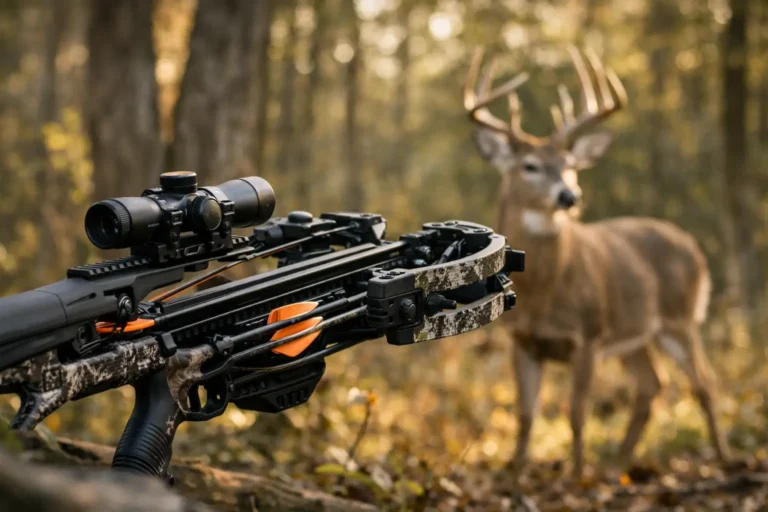
The Ravin R10 broadhead review most hunters need is not about chasing the biggest cutting diameter on the shelf. It is about making a broadhead fly like your field point from a compact, 400-fps crossbow – then trusting it when a deer steps into a narrow shooting lane. The R10 has enough speed to expose sloppy setup fast. Get the bolt, head, and sight-in process right, and it is still a serious deer-hunting rig.
The straight answer: the Ravin R10 can shoot fixed-blade and mechanical broadheads effectively, but it is less forgiving of poor tuning than slower crossbows. Mechanical heads are usually the easier route for matching field-point impact. Fixed blades can work very well, especially for hunters who value a simple one-piece cutting head, but they demand more careful verification before opening day.
What the Ravin R10 Changes About Broadhead Choice
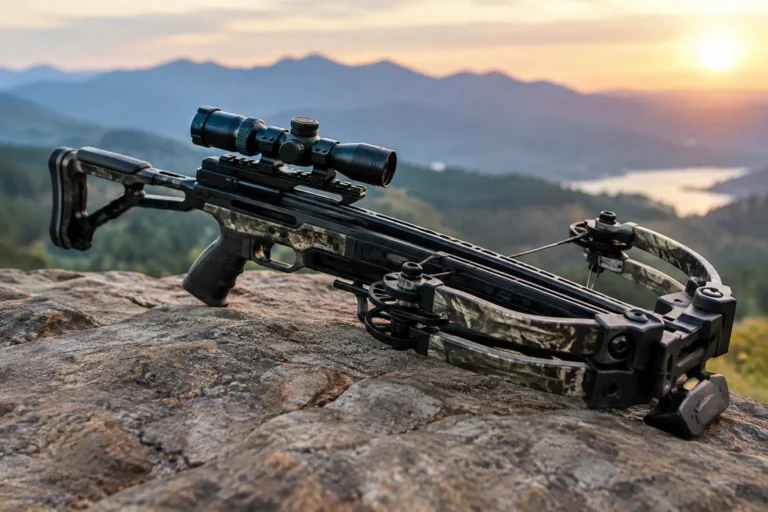
The R10 is a compact Ravin platform built around the company’s HeliCoil cam system. Its advertised 400 fps speed, narrow cocked width, and balanced feel make it a practical stand or blind crossbow. None of that means every broadhead automatically shoots well from it.
At this speed, a broadhead catches air differently than a field point. Small blade surfaces, a slightly bent ferrule, inconsistent bolt weight, or a loose component can shift impact. That is not a Ravin flaw. It is the reality of sending a hunting bolt downrange at serious speed.
For most R10 owners, the best broadhead is the one that meets three non-negotiables: it is rated for crossbow use, it is legal for the game and state you hunt, and it hits with your practice point at the distances you will actually shoot. Do not choose a head because the package promises dramatic wound channels. Choose the head that groups.
Fixed-Blade Broadheads With the R10
A fixed blade brings obvious appeal. There are no deployment mechanisms to inspect, no blades that can fail to open, and no question about whether the head is ready after it leaves the rail. For close-range deer hunting, that simplicity matters.
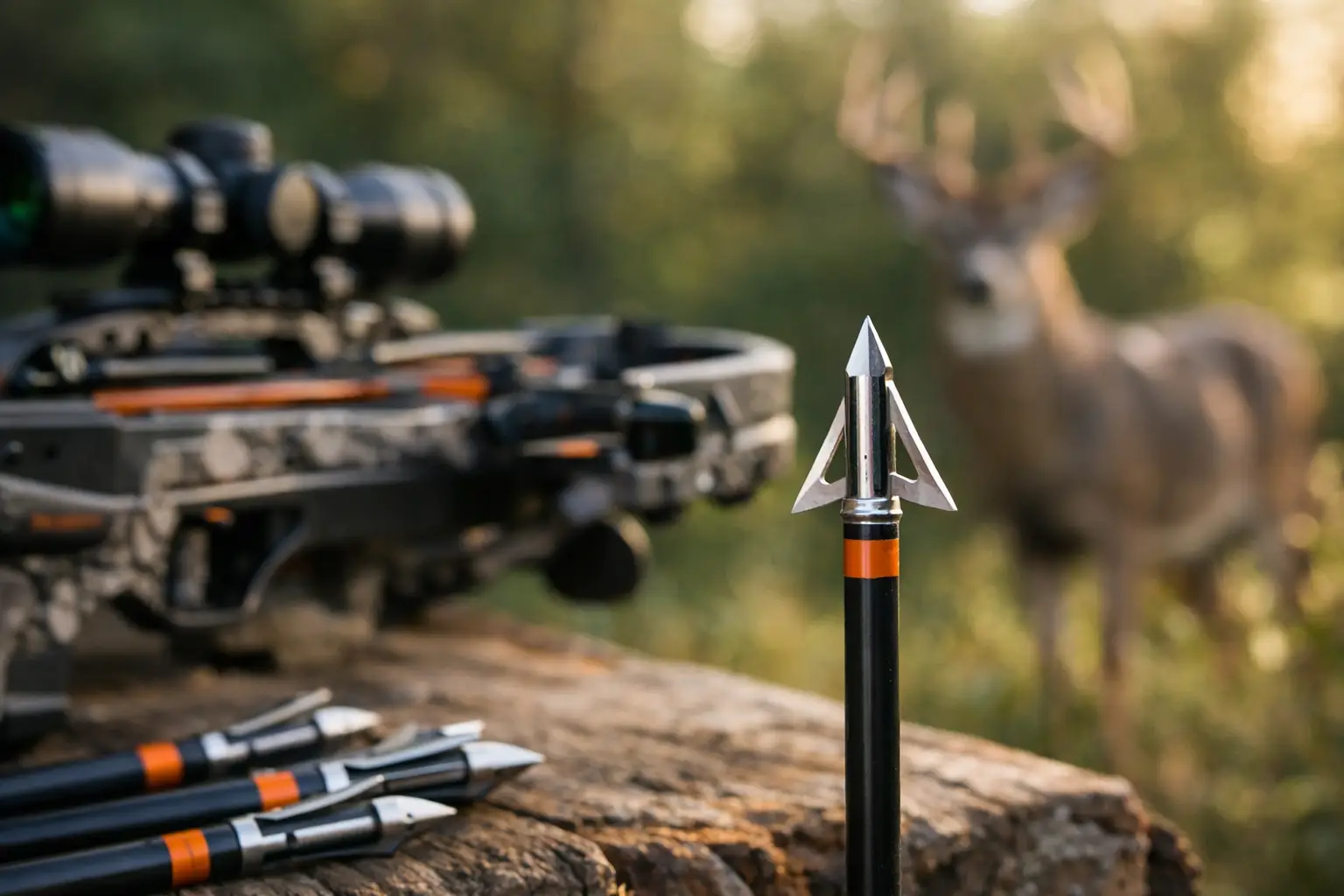
The trade-off is flight. Fixed blades create steering force, especially in wind or with a bolt that is not perfectly consistent. An R10 can shoot them accurately, but do not assume your 100-grain fixed head will land exactly where your 100-grain field point lands. Confirm it.
Start at 20 yards with one broadhead-tipped Ravin bolt. If it is close, move to 30 and then 40 yards. If it is consistently off by an inch or two, do not start cranking your scope turret right away. First inspect the head, tighten the insert and nock, check the bolt for damage, and try another broadhead. A single bad head can waste an afternoon and convince you the whole setup is wrong.
For hunters committed to fixed blades, broadhead-specific sight confirmation is part of the deal. Set your final zero with the exact head and bolt combination you will carry into the woods.
Mechanical Broadheads With the R10
Mechanical heads generally make more sense for the average R10 deer hunter because their closed profile tends to fly more like a field point. That can shorten the tuning process, particularly for a new crossbow owner who wants dependable accuracy at 20 to 40 yards.
That convenience comes with its own checks. Use a mechanical head specifically approved for crossbow speed. Inspect the retention system before every hunt. Make sure blades are not loose, damaged, or partially deployed from transport. And practice with a dedicated practice head when the manufacturer provides one, rather than repeatedly firing an expensive hunting head into a target.
A mechanical is not automatically better because it has a bigger cut. Very wide heads can require more energy to drive through bone or heavy tissue. On a clean broadside deer shot, a properly functioning mechanical can be highly effective. On steep angles, hard quartering shots, or larger-bodied game, head design and shot selection matter more than brochure claims.
Ravin R10 Broadhead Review: Bolt Setup Matters More
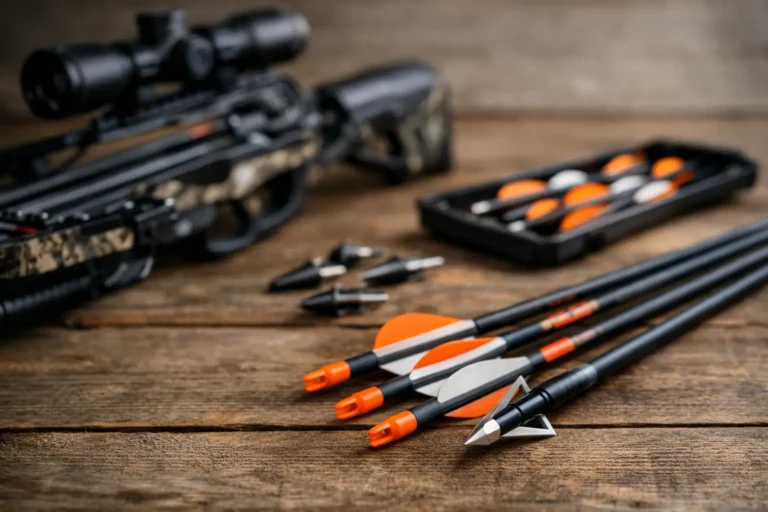
The broadhead is only one part of the system. The R10 should be shot with Ravin-approved bolts and nocks that match the crossbow’s requirements. This is not the place to save a few dollars with random bolts that happen to fit the rail. Ravin’s high-speed design depends on correct bolt length, nock engagement, spine, and overall weight.
Keep the total setup consistent. If you practice with a 100-grain field point, use a 100-grain broadhead. Changing point weight changes front-of-center balance and can change impact. It may also alter bolt speed and trajectory enough to matter at longer ranges.
Inspect every hunting bolt before shooting it. Look for cracked carbon, splinters, damaged fletching, loose nocks, and inserts that rotate or wobble. Retire questionable bolts. A damaged bolt is not worth gambling on, especially with a compact crossbow that puts out R10-level speed.
Do not mix bolts casually. Mark a small group of dedicated hunting bolts, weigh them if you have a grain scale, and use those same bolts for broadhead verification. You do not need laboratory-level perfection for whitetail hunting, but consistency is cheap insurance.
A No-BS R10 Broadhead Tuning Process
You do not need a complicated tuning bench to get practical hunting accuracy. You do need patience and a target built to stop broadheads safely. Broadhead targets designed for easy arrow removal are worth using, because pulling broadheads from the wrong foam can ruin blades and fletching.
Before the season, run this process:
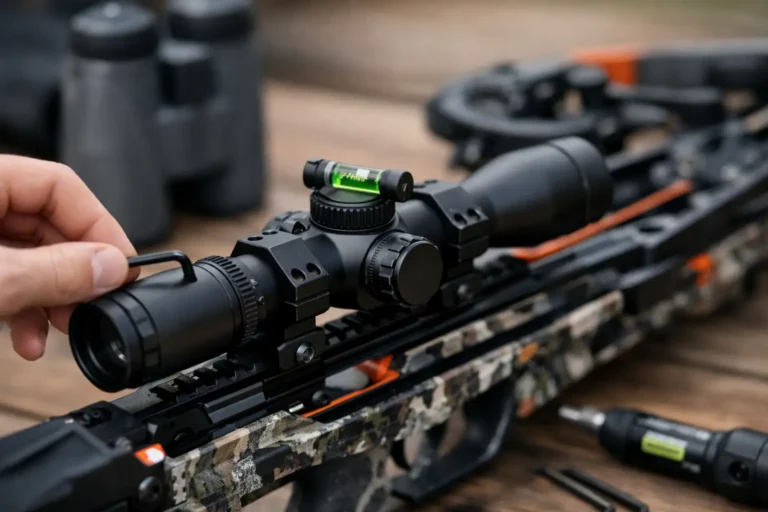
- Confirm the R10 scope is zeroed with the same Ravin bolt model and point weight you plan to hunt with.
- Shoot field points at 20, 30, and 40 yards from a stable rest, not just a rushed standing shot.
- Shoot one broadhead at each distance, then compare its impact with the field-point group.
- Inspect the broadhead and bolt after every shot, and repeat with a second head to rule out a defective one.
- Set your personal maximum range based on broadhead groups, not on the farthest distance printed on the scope.
A three-shot broadhead group at 40 yards tells you more than a single perfect arrow. If your group opens up, shorten the range. Deer deserve a clean shot, and there is no prize for stretching an older crossbow past the distance where you can keep every bolt in the vital zone.
Field Accuracy Is More Than the Bench
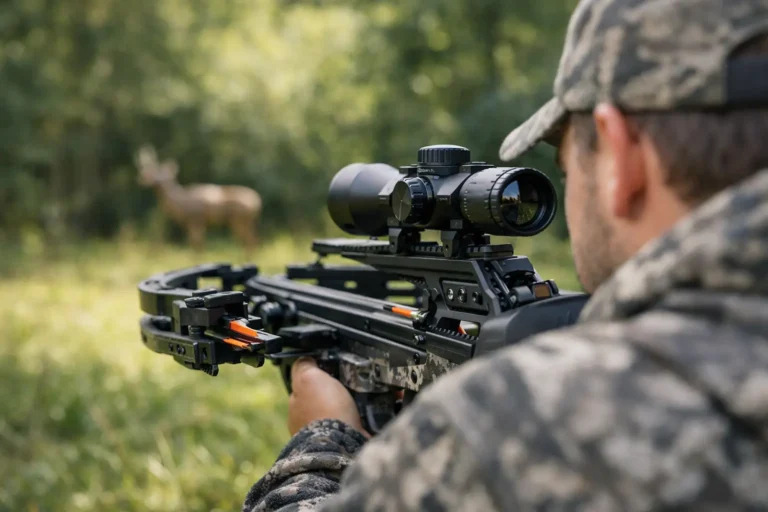
The R10’s compact profile is a real advantage in a blind, treestand, or tight ground setup. But broadhead performance changes when you add hunting conditions. Heavy clothing can interfere with the string path. A bulky rest can push the crossbow off level. Wind has more effect on a broadhead than many hunters expect, particularly past 30 yards.
Practice from realistic positions. Shoot seated if you hunt from a blind. Shoot from a supported treestand position if that is where your R10 will live in November. Keep fingers, sleeves, straps, and the edge of the blind clear of the string and cables every time. A compact crossbow still needs room to work.
Also, make broadhead practice a separate part of your routine. Field points are for volume and form. Broadheads are for confirmation. You do not need to burn through a dozen hunting heads, but you should know exactly where they land before carrying them afield.
Is the Ravin R10 Still a Good Broadhead Hunting Crossbow?
Yes, if your expectations are realistic. The R10 remains a capable choice for the hunter who values a compact Ravin crossbow and intends to keep shots inside a disciplined range. Its speed gives you a flatter trajectory than many older designs, but speed does not replace broadhead testing or good shot judgment.
It may not be the right fit for someone who wants the newest Ravin features, more speed, or a longer-range setup. Hunters comparing it against newer Ravin models should look closely at cocking system preferences, package features, and the distances they genuinely hunt. The R10 can still do the core job very well: send a properly prepared hunting bolt accurately through a deer’s vital zone.
The best move is simple. Pick a legal crossbow-rated broadhead, match its weight to your field points, verify it with your Ravin bolts, and keep your hunting range honest. When the shot is there, that kind of preparation matters far more than a flashy broadhead package.