How to Store Emergency Water Safely at Home
A storm can knock out your water service long before it knocks out your ability to hunt, work, or get home. Knowing how to store emergency water safely means you are not gambling on questionable tap water, a half-empty case of bottles, or whatever happens to be in the fridge. Real preparedness is simple: clean water, clean containers, a sensible rotation plan.
The common benchmark is one gallon per person, per day, with enough on hand for at least three days. That is the floor, not a bragging point. Water is used for drinking, basic food prep, and minimal sanitation. Hot weather, hard physical work, pets, kids, medications, and a hunting camp far from town can push that number higher fast.
Start With the Right Water Containers
Do not store drinking water in random containers from the garage. Old milk jugs, juice bottles, and containers that once held chemicals are bad choices. Their seams can fail, residue can remain, and they are difficult to sanitize well.
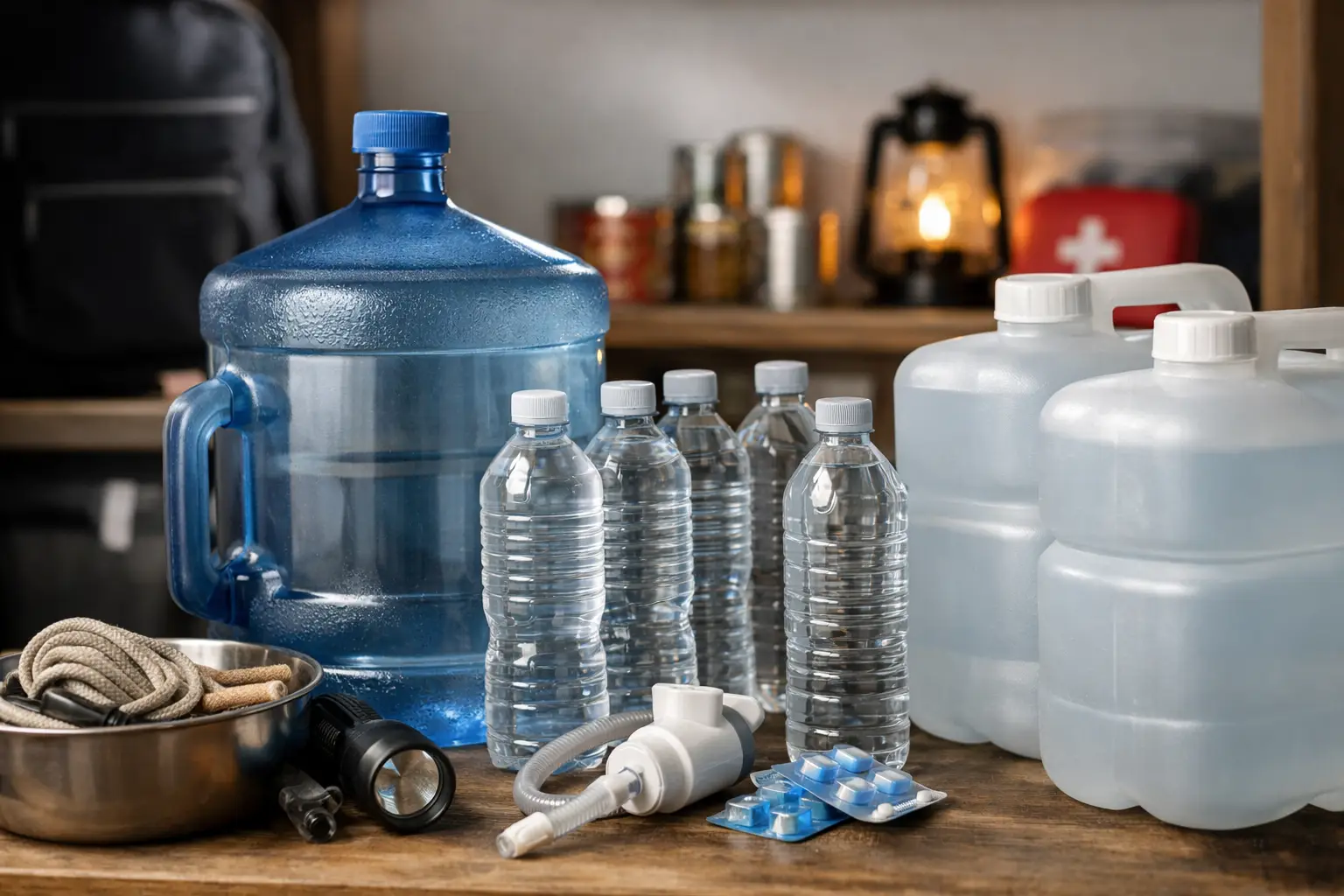
Use food-grade containers made for potable water. Look for containers marked for food use, with tight-fitting caps and openings you can properly clean. Smaller containers are easier to carry and rotate. Larger five- to seven-gallon containers are efficient for a home supply, but remember that a full seven-gallon container weighs nearly 60 pounds. If nobody in the house can lift it safely, it is not practical emergency gear.
Commercially packaged bottled water is also a solid option, especially as a grab-and-go backup. Keep it in original sealed packaging until needed. It is convenient, but it takes more space and creates more individual bottles to inspect and rotate.
For a practical home setup, use a mix: a few portable bottles for an evacuation or vehicle, plus larger containers for sheltering in place. That setup is more useful than betting everything on one oversized tank.
Clean and Sanitize Refillable Containers First
A new container is not automatically ready for long-term storage. Wash it with dish soap and hot water, rinse it thoroughly, then sanitize it before filling. A common method is to use an unscented household bleach solution, following the bleach label directions for sanitizing food-contact surfaces. Swish the solution inside the container so it reaches the cap and threads, then drain and let it air-dry if the label permits.
Do not use scented bleach, splashless bleach, or products with added cleaners. Those formulas are not meant for treating drinking-water equipment. If the container has scratches, a stale odor, mold, or residue you cannot remove, retire it from water storage.
Use Safe Water and Treat It When Needed
The best starting point is municipal tap water that is already treated and safe to drink. Fill sanitized containers directly from the cold-water tap, leaving a little headspace for expansion. Seal them tightly and label each container with the fill date.
If your tap water comes from a private well or another source without reliable treatment, test it before using it for long-term drinking water. Clear water is not necessarily safe water. Bacteria, parasites, and chemical contamination do not always show up as a smell or color.
When you must store water from a source that may not be treated, follow established public-health directions for disinfection. Unscented regular household bleach can disinfect water in the correct concentration, but the dose depends on the product strength and the clarity of the water. Read the label and use current emergency-water guidance rather than guessing. If the water is cloudy, filter it through a clean cloth first, then disinfect it.
Boiling is another reliable treatment method for many biological threats, but boiled water still needs a clean container afterward. Neither boiling nor bleach makes water safe if it contains fuel, pesticides, saltwater, or other chemical contamination. That is a hard line: contaminated water needs a different source, not more optimism.
Where to Store Emergency Water Safely
Cool, dark, dry storage is the goal. A basement, interior closet, or temperature-stable pantry usually works better than a hot shed, attic, or vehicle. Heat speeds up container breakdown and can affect water quality. Sunlight promotes algae growth if light reaches the water.
Keep containers off bare concrete when possible. Concrete can transfer odors and temperature changes, and it is rough on plastic over time. A shelf, wood platform, or sturdy storage tote works fine. Avoid placing water beside gasoline, paint, pesticides, solvents, or strong-smelling cleaners. Plastic can absorb odors and vapors, even when the cap is on.
Storage location is where many otherwise smart setups fail. A big water supply in the garage is useless if it freezes repeatedly, gets buried behind holiday bins, or cannot be reached after a storm. Put some water where you live day to day, and keep a smaller backup near your exit route.
For hunters, think beyond the house. A truck kit or camp tote can make sense, but only if you account for heat and freezing. Water left in a vehicle through a brutal summer or winter is not a long-term supply. Rotate it frequently, protect it from direct sun, and do not let it become an excuse to skip a proper home reserve. The same discipline that keeps a Ravin crossbow case organized before season should apply here: know what is there, keep it protected, and inspect it before you need it.
Build a Rotation Schedule You Will Actually Follow
Stored water is not a set-it-and-forget-it item. Commercial bottles generally carry a best-by date, while home-filled water should be inspected and rotated on a regular schedule. Many households rotate refillable water every six months. If your storage area runs hot, gets humid, or has major temperature swings, check it more often.
Write the fill date on every container with a permanent marker. Put a recurring reminder on your phone for the beginning of spring and fall. When it is time to rotate, use the older water for washing gear, flushing toilets, cleaning, or watering non-edible plants, then clean and refill the containers.
Inspect containers each time you rotate. Look for leaks, swelling, cracks, damaged caps, cloudiness, floating material, discoloration, or odd smells. If something looks wrong, do not talk yourself into using it because it is only emergency water. Replace it.
A simple rotation system is easier to maintain than a giant stash you forget exists. Keep the oldest containers in front and newly filled containers behind them. If you use bottled water, move the oldest cases forward when adding new ones.
How Much Water Should You Keep?
Three days of water is a realistic starting target. For one person, that means at least three gallons. For a family of four, that means at least 12 gallons before counting pets, sanitation, cooking, or a longer outage.
Aim higher if your situation calls for it. Add extra water if anyone has medical needs, if you live in extreme heat, if your area is prone to long power outages, or if you regularly have family members at your home during storms. Outdoor households should also account for dogs and livestock separately. A thirsty dog does not care that your math only covered people.
Do not chase a perfect number before you start. Store one week if you have the room, but begin with a clean three-day supply and improve it over time. Water is heavy, takes space, and requires rotation. The best amount is the amount you can store safely, inspect regularly, and access without a mess.
Keep One Backup Method, Not One Point of Failure
Stored water is your first line. A backup treatment method is your second. Keep a way to disinfect water and a way to remove sediment if your supply runs short. These are backups, not replacements for stored drinking water. A filter can clog, chemicals can run out, and a nearby creek may be unsafe for reasons you cannot see.
Also protect the water you have. Do not drink directly from a large storage container if you can avoid it. Pour from it using clean hands and a clean cup, or use a dedicated dispenser. Once you introduce dirty hands, a dirty dipper, or backwash into the container, you have shortened the life of that supply.
Set aside an hour this week: count the people and pets in your household, choose a storage spot, and fill the first containers. No hype, no complicated system. When the tap stops working, clean water is one problem you will already have handled.