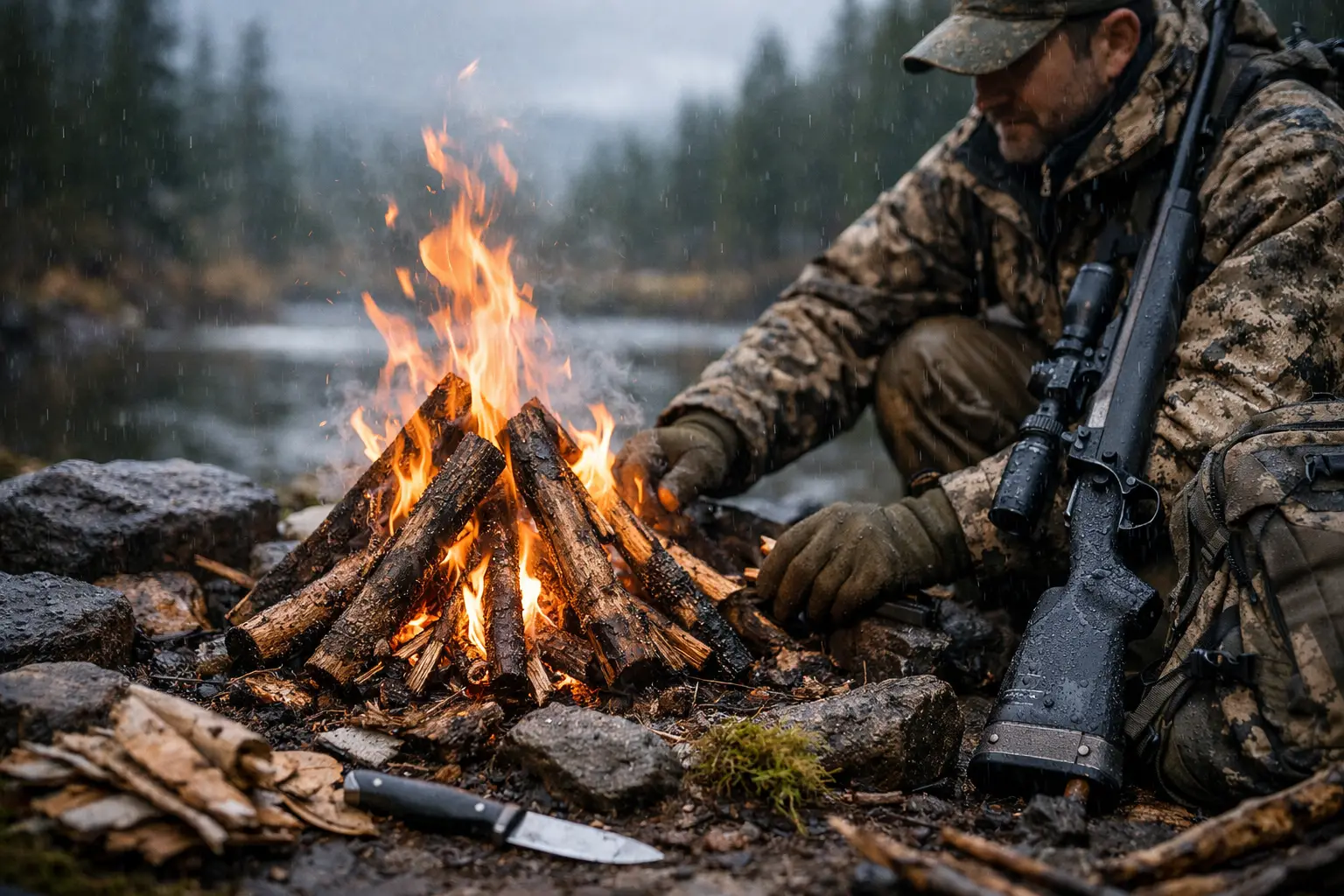
Weather Proof Fire Building Tips for Hunters
A cold, wet sit can turn a good crossbow hunt into a long, miserable lesson fast. These weather proof fire building tips are for hunters who need a small, controlled fire after legal shooting hours, at camp, or during an unexpected delay – without soaking their kit, wasting daylight, or doing something dumb around a loaded crossbow.
This is not about building a huge blaze. It is about getting a dependable fire going when the ground is wet, wind is pushing through the timber, and your hands are too cold to mess around. Real survival info. Real gear. No BS.
Start With the Site, Not the Spark
The biggest fire-building mistake in wet weather happens before anyone reaches for a lighter. Hunters see a flat spot, drop their pack, and start piling up wood directly on soaked leaves or mud. That ground steals heat from your tinder and kindling before the fire has a chance.
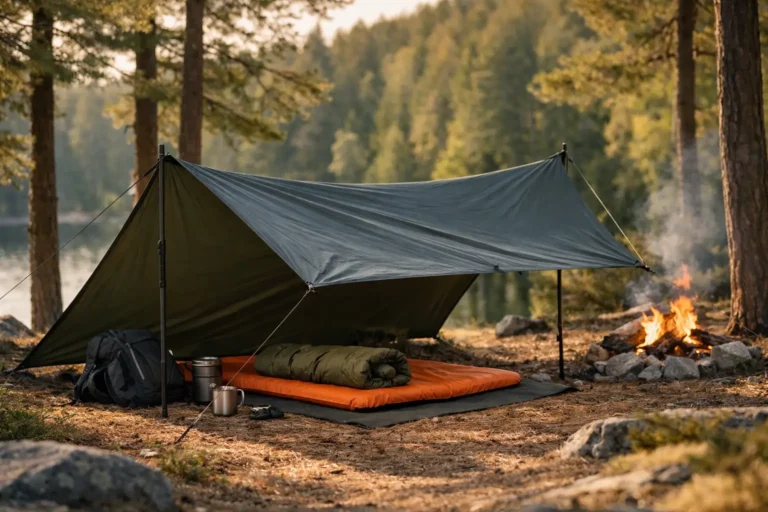
Pick a legal, established fire area whenever one is available. If you are in the backcountry and fires are permitted, look for mineral soil, gravel, or an existing fire ring. Stay clear of dry grass, low branches, dead logs, tents, and your vehicle. Wind can carry embers farther than most people expect.
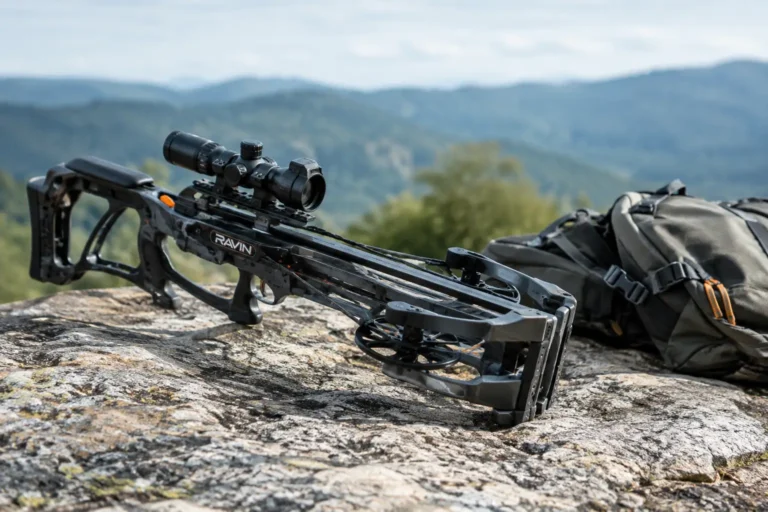
Never build a fire beside your crossbow or lean it against a tree near the heat. A Ravin crossbow is built for hard hunting conditions, but broadhead edges, strings, cables, optics, and polymer accessories do not belong near open flame. Set your hunting pack and crossbow well outside the spark zone, unload it, and make sure the safety is engaged before you start handling fire materials.
Build a Dry Platform First
When the forest floor is saturated, make a platform. This is one of the most useful weather proof fire building tips because it separates the growing fire from cold, wet ground.
Lay down several wrist-thick sticks side by side, then cross a second layer over them. Use dry-looking wood from the underside of fallen branches when possible. Do not strip bark from live trees or cut green wood just to make a fire. The goal is a raised, breathable base that gives your tinder a dry place to work.
On snow, make the platform wider and thicker. A small fire can melt into snow and drown itself. On soaked ground, use more material underneath than you think you need. If your base starts steaming before the tinder catches, it is not insulated enough.
Find Dry Material Where It Hides
Rain wets surfaces first. The useful fuel is often protected underneath. Check the lower side of downed limbs, inside standing deadwood, beneath dense evergreen cover, and in snapped branches that have dry inner wood. Split larger pieces with a fixed-blade knife, hatchet, or other appropriate tool to expose dry interiors.
Avoid trying to light wet bark, moss, or big sticks with a lighter. That is how people burn through fuel and patience. Start with material that will take a flame immediately, then feed the fire in stages.
Keep three separate piles ready: tinder, pencil-thin kindling, and finger-to-wrist-thick fuel. In bad weather, gathering everything before lighting is smarter than scrambling for wood while your first flame dies.
Protect Tinder Like It Matters
It does. The best fire starter is useless if it has spent all day compressed in a wet jacket pocket. Carry reliable tinder in a waterproof pouch or hard container inside your pack. Keep it separate from food, spare broadheads, and anything that can crush or contaminate it.
For a wet-weather hunting kit, bring more than one ignition method and more than one tinder option. A butane lighter is fast, but cold and wind can make it frustrating. Stormproof matches work well if they stay dry. A ferro rod is dependable for a practiced user, but it needs properly prepared tinder and steady technique.
Commercial fire starters are often the practical choice for hunters because they burn hot and long enough to dry marginal kindling. Cotton-based tinder, waxed fire tabs, and resin-rich wood shavings can all work. Test whatever you carry before hunting season. Gear that only works on a calm afternoon at home is not field-ready gear.
Do not count on finding dry natural tinder after days of rain. You may get lucky under a cedar or in a dead branch, but your fire plan should not depend on luck.
Use a Windbreak Without Choking the Fire
Wind is a double-edged problem. A little airflow feeds a fire. Too much turns your first flame into a flickering mess or throws sparks into grass and leaves.
Use logs, rocks, a stump, or the terrain to block the strongest wind from one side. Do not completely surround the fire with a solid wall. Leave room for air to enter low and smoke to exit high. A simple lean-to style arrangement of kindling can help shield the tinder while still drawing air through the base.
Position yourself upwind while lighting it so your body can block gusts for a moment. Keep loose clothing, sling straps, and crossbow accessories out of the work area. If the wind is strong enough that sparks are lifting and traveling, skip the fire. Warm up with dry layers, food, movement, and shelter instead. A fire is never worth starting a wildfire.
Build Small, Then Feed It
A dependable wet-weather fire starts small. Put your protected tinder on the dry platform, surround it loosely with fine kindling, and light it. Once the kindling is burning on its own, add slightly larger pieces one or two at a time.
Do not bury the flame under a pile of damp wood. Smoke is not proof of progress. If your fire is smoking heavily but not producing heat, reduce the load, expose the coal bed, and add drier, smaller fuel.
A teepee can work, but in rain and wind, a lean-to or log-cabin setup is often easier to control. The lean-to protects the tinder from a light drizzle. A small log-cabin structure creates air gaps and lets you add fuel without collapsing the whole setup. It depends on the material you have, but both beat an oversized pile of random sticks.
Once you have a stable flame, keep a reserve of drying wood near the fire – not so close that it catches or scorches. Rotate damp pieces near the heat before adding them. This is slower than burning perfect dry wood, but it keeps a fire alive when conditions are working against you.
Keep the Hunt and the Fire Separate
Campfire smoke gets into clothing, gloves, and packs. That matters on a deer hunt. If you are planning to hunt again at first light, keep the fire downwind of where your hunting clothes and crossbow case are stored. Let gear cool and air out before packing it up.
Crossbow hunters also need to protect the details that affect a shot. Heat, ash, grit, and moisture do not belong on the rail, scope lenses, string, or cocking system. After tending a fire, clean your hands before handling your Ravin. If you are comparing Ravin models for cold, wet hunting, look beyond speed numbers and focus on fit, carry weight, cocking process, and how easily you can protect the bow in a pack or blind.
The compact handling of a Ravin R10 can make it easier to manage around a tight camp or blind, while a higher-performance model such as the R29X may appeal to hunters who want more speed for longer open-country opportunities. Neither choice changes the rule: keep every crossbow unloaded and away from open flame until it is time to hunt.
Put the Fire Dead Out
When you are done, burn the fuel down as far as practical. Spread the coals, add water slowly, stir the ashes, and add more water. Feel for heat only after the area is soaked and you can do so safely. If it is too hot to touch, it is too hot to leave.
Do not cover hot coals with dirt and assume the job is done. Buried embers can keep burning and surface later. Pack out all wrappers from fire starters and leave the site cleaner than you found it.
The right fire is small, controlled, and boring. That is exactly what you want after a wet day in the woods: dry hands, a warm meal, protected gear, and no surprise waiting for you when the wind shifts.