Can a VEVOR Generator Power a Whole House During an Outage?
A refrigerator hums along quietly. Then the power drops, the sump pump is silent, and the furnace blower will not kick on. That is when the real question hits: can a VEVOR generator power a whole house during an outage? Sometimes, yes. Most of the time, a portable generator is better treated as a way to power carefully chosen circuits, not every electrical load in the house at once.
The honest answer comes down to the generator’s running-watt rating, its surge capacity, your home’s large appliances, and how the generator is connected. No hype, no wishful math. If the load is larger than the generator can carry, breakers trip, appliances may not start, and you are back in the dark.
What “Power a Whole House” Actually Means
People use “whole house” two different ways. The first means every outlet, light, appliance, central HVAC system, electric range, dryer, and water heater operates normally. That takes serious capacity, especially in an all-electric home. A typical portable generator is rarely the right tool for that job.
The second meaning is more realistic: the generator runs the circuits that matter during an outage. Think refrigerator, freezer, a few lights, internet equipment, a furnace blower or boiler controls, a sump pump, a microwave, and phone chargers. In a home with gas heat, gas water heating, and no electric well pump, this can feel a lot like normal life while using far less power.
That distinction matters when evaluating a VEVOR generator. Do not shop by the biggest number printed on the box alone. You need to know whether that number is running watts or peak watts, then match it to the loads you truly need.
Running Watts Matter More Than Peak Watts
Every generator has a continuous output rating and a higher, short-duration peak rating. Running watts are what it can provide steadily. Peak or surge watts help start motors in appliances such as refrigerators, freezers, sump pumps, and well pumps.
A generator might have enough peak capacity to start a refrigerator, but not enough continuous capacity to run the refrigerator, freezer, furnace, and pump together. This is where people get burned. They add up a few appliance labels, forget motor startup demand, and assume the generator has plenty of room.
Use the running-watt figure as your ceiling. Then leave a margin of roughly 20 percent when possible. A generator working flat out for hours is loud, thirsty, and harder on equipment. It also gives you no room when a refrigerator compressor or pump starts unexpectedly.
A realistic essential-load example
A modest outage setup might include a refrigerator at 150 to 700 running watts, a freezer at 100 to 600 watts, LED lighting at 50 to 200 watts, internet equipment at 20 to 100 watts, and a gas furnace blower or boiler controls at 400 to 1,000 watts. Those numbers vary widely by appliance, but the basic point holds: essentials can often fit within a mid-sized portable generator if you manage them.
Add a sump pump and the picture changes. A smaller pump may run at several hundred watts but need much more for a split second at startup. A deep-well pump can demand even more. Central air conditioning, electric heat strips, an electric range, clothes dryer, and electric water heater can push the required capacity far beyond what a typical portable unit can reasonably support.
The label on each appliance is the source of truth. Look for volts and amps, or watts. If you only have volts and amps, multiply volts by amps to get a usable watt estimate. For motor-driven equipment, check the manual for starting watts or use a meter that can capture startup demand.
Can a VEVOR Generator Run Your Specific House?
The right question is not whether a VEVOR generator can power a whole house in the abstract. Ask whether a specific generator can support your selected circuits at the same time.
Start by writing down what must stay on for the first 24 hours. In many homes, that is refrigeration, heat controls, lights, communications, medical equipment, and water management. Then list what can wait: electric cooking, laundry, central AC, shop tools, hot tubs, and other high-draw loads.
A smaller inverter-style unit may be enough for a fridge, lights, chargers, and electronics. It is often quieter and more fuel-efficient at light loads, but it may not have the output for a large pump or furnace blower. A higher-output portable generator can carry more essential circuits, but it will use more fuel, make more noise, and require more careful load management.
If your home has a 120/240-volt service and you need to run a well pump, a 240-volt appliance, or selected circuits across both legs of the panel, verify that the exact generator offers the proper 120/240-volt output. A 120-volt-only generator cannot magically run a 240-volt load. That is a hard stop, not a workaround.
The Connection Method Is a Safety Decision
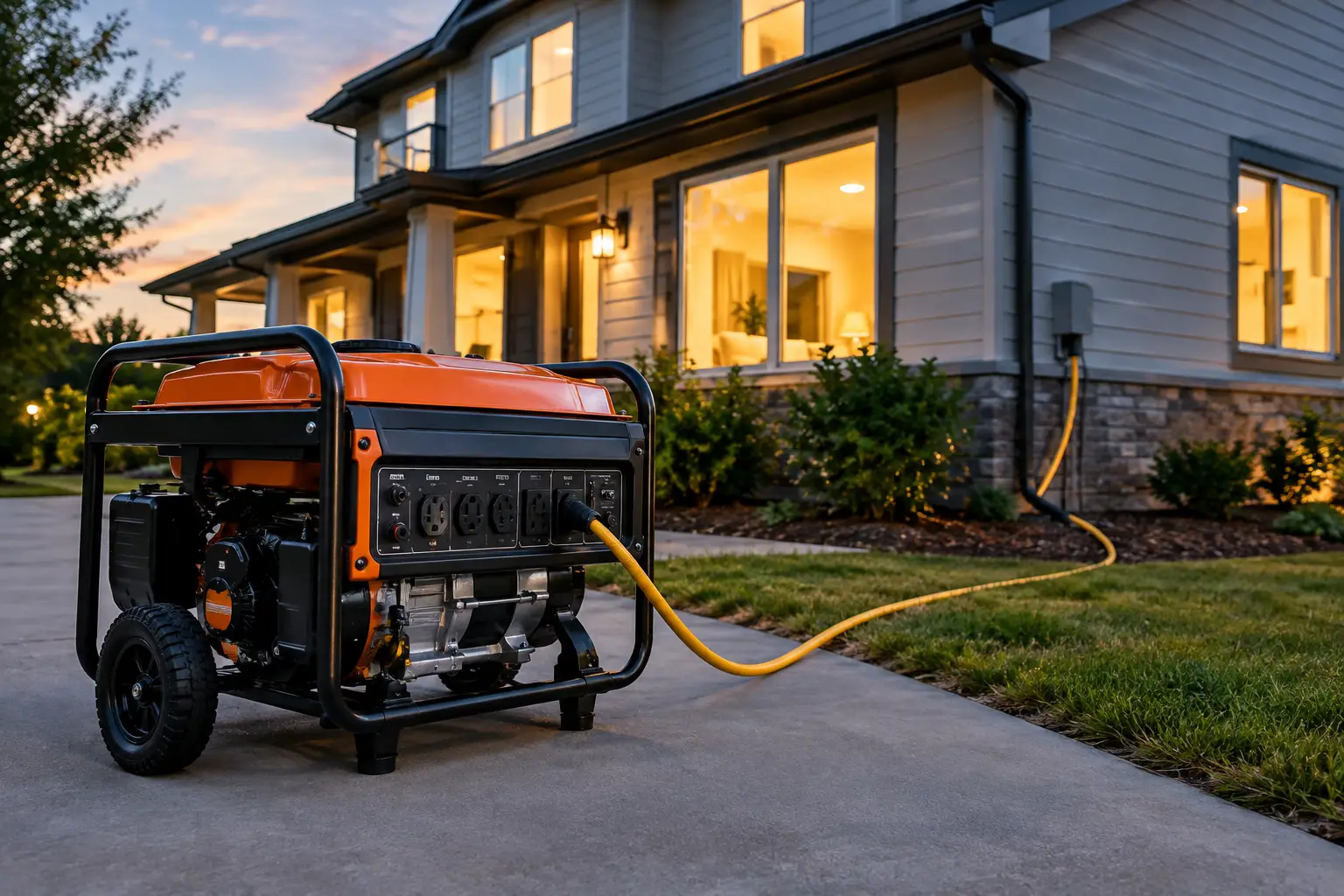
Extension cords are acceptable for a limited setup when they are outdoor-rated, properly sized, and run directly to appliances. This is the simplest path for a refrigerator, freezer, lamps, and charging station. Keep cords out of standing water and protect connections from rain.
For selected home circuits, use a properly installed transfer switch or panel interlock and a generator inlet. This lets you power chosen breakers while keeping generator power isolated from the utility. It is cleaner, more convenient, and much safer than running cords through windows.
Never plug a generator into a wall outlet or dryer outlet to energize the house. That practice, often called backfeeding, can send electricity onto utility lines, injure utility workers, damage equipment, and create a fire hazard. There is no no-BS version of that advice: do not do it. Have a licensed electrician install the correct equipment before storm season, not after the lights go out.
Load Management Is What Makes the Setup Work
Even a correctly sized generator can be overloaded when several motor-driven appliances start together. The practical fix is simple: stage your loads.
Let the refrigerator cycle before starting the microwave. Avoid running a sump pump, well pump, and large blower at the same moment if your available capacity is tight. If you have a portable electric heater, skip it unless your generator plan specifically accounts for it. Resistance heat consumes a lot of power fast.
You also need to plan for fuel. A generator that can run the essential circuits for 10 hours at a moderate load is more useful than one that runs hard for four hours and drains its tank. Check the stated runtime at a realistic load, not only the best-case figure. Store fuel legally and safely, use fresh fuel appropriate for the generator, and follow the maintenance schedule.
Generator Placement Is Non-Negotiable
A generator belongs outside, far from doors, windows, vents, crawlspace openings, and attached garages. Carbon monoxide is odorless and can enter a home faster than people expect. Never run it in a garage, shed, basement, enclosed porch, or under a structure that traps exhaust.
Use carbon monoxide alarms inside the home, including near sleeping areas. Keep the generator dry with a purpose-built outdoor cover or shelter that does not block ventilation or exhaust. Refuel only after shutting it down and allowing it to cool. Gasoline plus a hot engine is a bad combination.
Before You Buy or Rely on One
Check the exact model’s continuous wattage, peak wattage, outlet configuration, voltage capability, runtime, noise level, and transfer-switch compatibility. Then compare those details against your own load list. A bigger generator is not automatically better if it is difficult to store, too loud for your situation, or burns more fuel than you can keep on hand.
Test the plan before an outage. Run the generator outdoors, connect the intended loads, and see what happens when the fridge compressor, furnace blower, or pump cycles on. That test tells you more than a sales page ever will.
A generator earns its keep when it keeps the essentials running safely, not when it tries to imitate unlimited utility power. Build the plan around the equipment your home actually needs, leave room for startup loads, and you will have a setup that works when the outage stops being theoretical.