How to Power a Van or Camper Off-Grid Without a Generator
A loud generator has no place beside a deer lease, tucked into a trailhead camp, or running outside a van before daylight. If you want to know how to power a van or camper off-grid without a generator, the answer is not one oversized battery. It is a properly matched system: solar panels to replace power, batteries to store it, charging while you drive, and a realistic understanding of what your gear actually consumes.
For hunters, quiet power matters. You need enough electricity for lights, a cooler, navigation, phones, cameras, and maybe a laptop or heated blanket – without draining your battery bank on night one. Real survival info. Real gear. No BS: start with the load, not the shopping cart.
Start With Your Daily Power Load
Every off-grid electrical system lives or dies by watt-hours. A watt-hour is simply power used over time. A 10-watt light running for five hours uses 50 watt-hours. A 60-watt cooler averaging eight hours of compressor runtime per day uses about 480 watt-hours.
Before buying panels, write down everything you plan to run during a normal 24-hour hunting camp. Be honest. The small stuff adds up fast, especially when nights are cold and devices stay plugged in longer.
A modest van setup might use 600 to 1,000 watt-hours a day: efficient LED lights, a compressor fridge, phone charging, a fan, and basic electronics. A camper with a microwave, electric cooking gear, a heated blanket, or extended laptop use can push past 2,000 watt-hours daily. Electric space heaters and air conditioners are a different class of load. Running either from a normal battery-and-solar setup for long is usually unrealistic.
Do not plan around the appliance label alone. A fridge cycles, while a light stays on continuously. Check actual wattage, estimate hours used, and add a 15 to 20 percent cushion for losses and forgotten loads.
Build the Battery Bank First
Your battery bank determines how long you can camp when clouds roll in or you park under heavy timber. Lithium iron phosphate batteries are the practical choice for most off-grid vans and campers. They provide more usable capacity than lead-acid batteries, charge faster, weigh less, and tolerate repeated cycling far better.
Battery capacity is often listed in amp-hours, but watt-hours make comparisons easier. A 12-volt, 100-amp-hour lithium battery stores roughly 1,280 watt-hours. You should not plan to use every last watt-hour, so treat about 1,000 to 1,150 watt-hours as comfortable working capacity.
For a hunter using around 800 watt-hours per day, one 100-amp-hour lithium battery can work for short trips with decent sun. Two batteries give you a much more forgiving setup. That extra reserve matters when a storm settles in, the truck stays parked, or you spend a full day glassing instead of driving.
Cold weather is the catch. Most lithium batteries should not be charged below freezing unless they have built-in low-temperature protection or heating. If you hunt late season, install the battery inside the heated portion of the van or camper, or choose a battery designed for cold-weather charging.
Keep High-Draw Heat Out of the Electrical Plan
Battery power is excellent for lighting, refrigeration, electronics, and small tools. It is poor value for making heat. Coffee makers, toaster ovens, hair dryers, electric griddles, and portable heaters can flatten a small system fast.
Use fuel-based cooking and cabin heat where appropriate, and reserve electrical capacity for the equipment that has no easy substitute. That is not glamorous, but it is how a quiet camp stays functional for several days.
Add Solar for Day-to-Day Independence
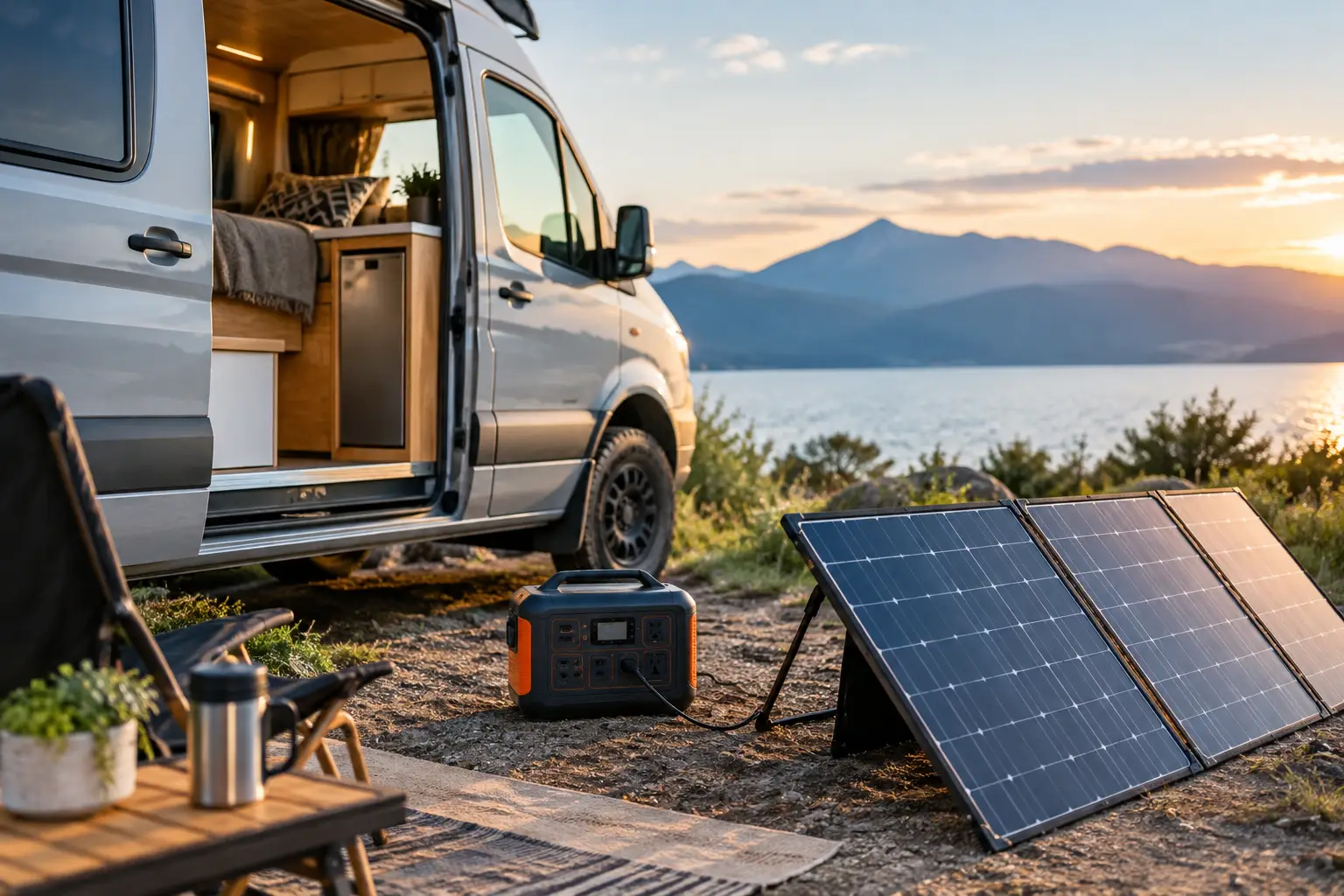
Solar is what turns a battery bank into an off-grid system instead of a countdown timer. Fixed roof panels are simple and protected, but their output depends on where the vehicle is parked. A roof covered in leaves, snow, or shade will not produce much. Portable panels can be moved into the sun while the van stays hidden or cool under trees, but they require setup, security, and attention when weather changes.
For a daily use of 800 to 1,000 watt-hours, 300 to 400 watts of solar is a sensible starting point. Under clear summer conditions, that may replace most or all of a day’s use. In fall and winter, or in northern timber, it may produce far less. Never assume a panel’s rated output is what you will get all day.
A charge controller sits between the panels and battery. An MPPT controller costs more than a basic PWM unit, but it generally captures more usable solar output, especially when panel voltage, temperatures, and sunlight conditions vary. For a hunting rig that may see open country one weekend and shaded forest the next, that efficiency is worth having.
Keep panels clean and check wiring connections before leaving for a trip. A loose connector can make a good system look broken, and a layer of dust or pine pollen steals output when you need it most.
Charge While You Drive
Solar is not the only way to refill batteries. A DC-to-DC charger takes power from the vehicle alternator and safely charges the house battery while the engine runs. This is one of the most useful additions for hunters who move camps, scout multiple properties, or drive daily between a campsite and a trailhead.
A standard isolator is not always enough for modern lithium batteries. Lithium can draw heavy current, and many newer vehicles use smart alternators that do not maintain a steady charging voltage. A properly sized DC-to-DC charger manages that safely and delivers a more dependable charge.
Think of driving charge as your backup plan for bad solar weather. Two hours on the road can recover a meaningful chunk of your daily use, but it will not magically cover careless power habits. Pair it with solar and a battery bank sized for your actual load.
If you occasionally camp where shore power is available, add an AC charger as well. It lets you fully recharge before a trip or recover after several cloudy days. Shore charging is not off-grid power, but it keeps the system ready for the next remote camp.
Use an Inverter Only Where You Need It
An inverter converts battery power into standard household AC power. It is necessary for certain chargers, camera equipment, laptops, and small appliances. It also wastes some power just by being on, and high-output inverters invite high-draw appliance use.
A 1,000- to 1,500-watt pure sine wave inverter covers most practical van and camper needs. Install it close to the battery with correctly sized cables, a fuse, and proper ventilation. Do not treat inverter wiring as a casual weekend shortcut. High current creates heat, and poor connections can become a fire risk.
Whenever possible, run devices directly from 12-volt power or USB-C charging. A 12-volt fridge, USB lights, and vehicle-specific chargers avoid the conversion losses of battery to inverter to wall charger. Those small efficiency gains are what separate a relaxed three-day stay from a dead battery before the final morning.
For crossbow hunters, keep your field electronics in the plan. Rangefinders, phones, mapping devices, cameras, and rechargeable accessories are easy loads to support. If you run an electric-cocking Ravin model, check its manual and include its charging needs in your daily total rather than assuming it is too small to matter.
How to Power a Van or Camper Off-Grid Without a Generator: A Practical Setup
For most two- to four-day hunting trips, a solid baseline is a 200-amp-hour lithium battery bank, 300 to 400 watts of solar, an MPPT controller, a 30- to 40-amp DC-to-DC charger, and a modest pure sine wave inverter. That setup will comfortably cover refrigeration, camp lighting, device charging, a fan, and careful laptop use in fair conditions.
Need more than that? Add battery capacity before adding a giant inverter. Add solar if you regularly camp in open terrain. Add driving charge if your trips involve frequent movement. The right upgrade depends on where and how you hunt.
Protect the System Before You Leave Pavement
Install a main fuse close to the positive battery terminal. Use cable sizes matched to the current and cable length. Secure batteries and heavy components so rough roads cannot turn them into projectiles. Keep water away from electrical connections, label your circuits, and carry spare fuses.
A battery monitor is not optional if you want dependable off-grid power. Voltage alone is a poor fuel gauge, particularly with lithium batteries. A proper monitor shows amps moving in and out, state of charge, and how quickly your equipment is draining the bank.
Test the full system at home before a hunt. Run the fridge, charge your normal devices, and watch what happens overnight. You will learn more from one controlled test than from guessing at capacity in the middle of nowhere.
Quiet, generator-free power is not about packing more gadgets. It is about building enough reserve for the way you actually camp, then using that power with the same discipline you bring to every piece of hunting gear.