Best Van Life Power Inverter Picks
The best van life power inverter is not the biggest one on the shelf. It is the one that matches your battery bank, your actual loads, and the way you use your rig day to day. Get that wrong, and you end up with dead batteries, tripped protection, hot wiring, or an inverter that just sits there because it never fit your system in the first place.
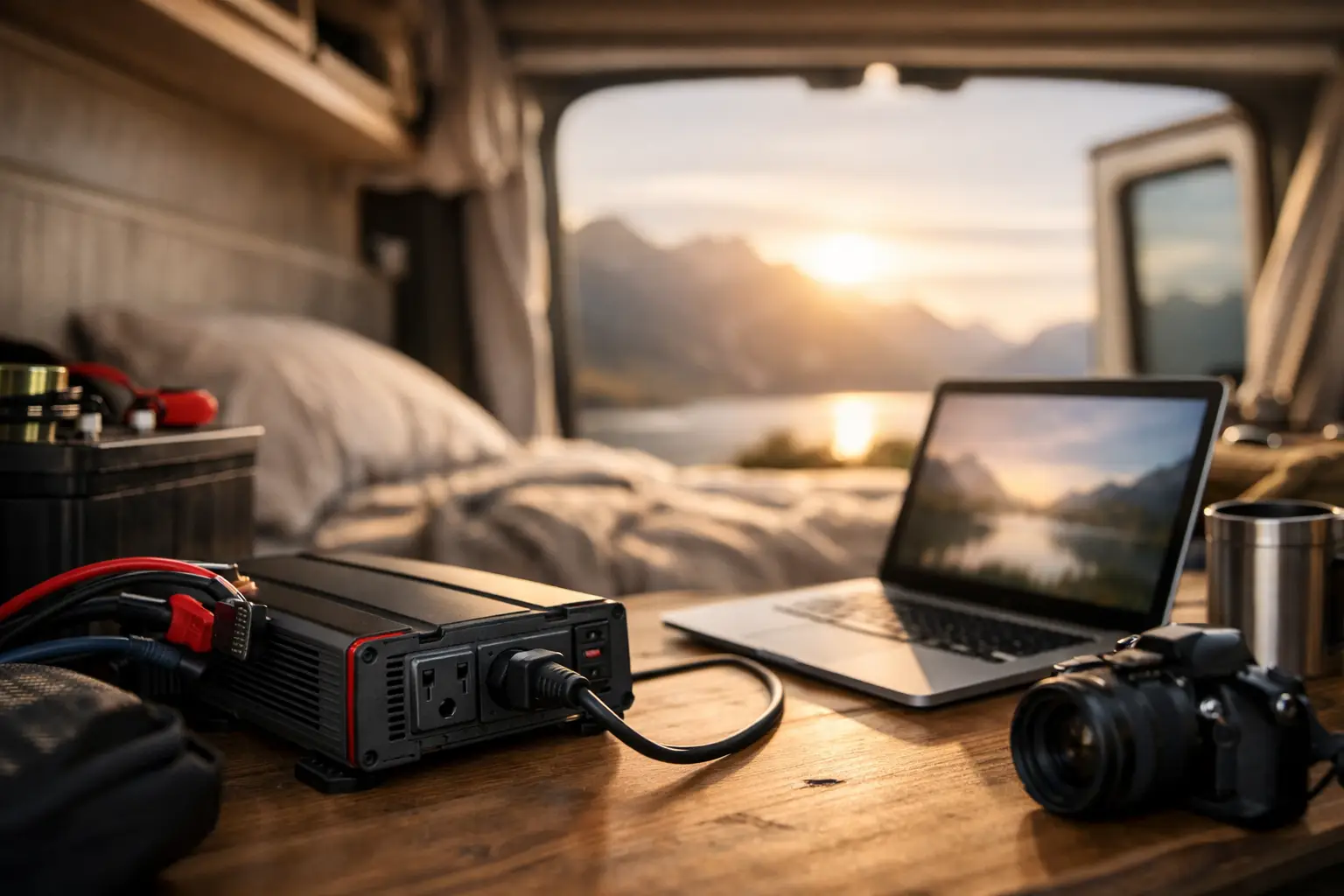
For most van builds, a pure sine wave inverter in the 1000W to 2000W range is the sweet spot. That is enough for laptop charging, camera batteries, small kitchen gear, power tools, and the usual van life basics without turning your electrical system into a bloated mess. Some people need more. Plenty need less. The right call depends on what you plan to run and whether you already have a solid battery and charging setup to support it.
What makes the best van life power inverter?
A good inverter does one job – it converts your 12V DC battery power into usable AC power for the stuff you would normally plug into a wall outlet. The best van life power inverter does that safely, efficiently, and without frying sensitive electronics.
The first thing that matters is waveform. Pure sine wave is the standard you want for van life unless you are building the cheapest possible system and only running very basic loads. Sensitive electronics, CPAP machines, induction chargers, newer power tool chargers, and many appliances all perform better on pure sine wave power. Modified sine wave units still exist because they are cheap, but cheap gets expensive fast when devices buzz, overheat, or refuse to work.
The second factor is continuous power, not peak power. Plenty of inverters advertise a big surge number because it looks impressive. What matters more is what the inverter can hold steadily. If your coffee maker pulls 1200W and your inverter is rated for 1000W continuous, that is a problem no matter how pretty the marketing looks.
Efficiency also matters more in a van than it does in a house. Every bit of wasted power becomes heat and battery drain. Better inverters waste less energy at idle, handle startup loads better, and usually have stronger safety protections built in.
Best van life power inverter size for most people
If you are trying to choose a size without overthinking it, start with your biggest realistic AC load and work backward.
A 300W to 600W inverter works for light-duty setups. Think laptop charging, camera gear, small fans, and maybe a TV. This is fine for minimalist vans that rely mostly on USB charging and 12V appliances.
A 1000W inverter is where many practical van systems begin. It gives you room for a laptop, battery chargers, small kitchen devices, and occasional tool use. If you are not trying to run a microwave, induction cooktop, or hair dryer, 1000W can be a smart, efficient choice.
A 2000W inverter is the most common sweet spot for full-time van lifers. It gives enough headroom for a blender, coffee maker, some power tools, and other intermittent heavy loads. It is also easier to live with if your setup changes over time and you add gear later.
A 3000W inverter starts making sense when your van is closer to a tiny off-grid cabin than a simple travel rig. That usually means a larger battery bank, heavier cables, stronger fusing, and real charging capacity from solar, alternator, shore power, or a portable power station. If the rest of your system is not built for it, a 3000W inverter is just wasted money and extra draw.
Pure sine wave vs modified sine wave
This part is simple. Buy pure sine wave unless you have a very specific reason not to.
Modified sine wave can run some basic gear, but it is a compromise from the start. Motors may run hotter. Audio gear can hum. Chargers can act weird. Some appliances will simply not play nice. In a home backup setup, maybe you accept that trade-off. In a van where every watt matters and every piece of gear earns its place, it makes less sense.
Pure sine wave costs more, but it is the right kind of more. It buys compatibility, cleaner power, and fewer headaches. For most readers, that is the only type worth considering as the best van life power inverter.
Features that actually matter
A lot of inverter listings are packed with filler. Ignore the fluff and look for the things that keep your system usable and safe.
Low idle draw is a big one. Some inverters waste enough power just sitting on that they quietly eat your battery bank overnight. If you leave the inverter on for convenience, this matters a lot.
Built-in protection is non-negotiable. You want overload, over-temp, low-voltage, and short-circuit protection at a minimum. Good cooling also matters. A fan that kicks on when needed is normal. A unit that constantly screams like a leaf blower gets old fast in a van.
A remote switch is more useful than many people expect. If your inverter is mounted under a bench or bed platform, you do not want to crawl around every time you need AC power. A simple remote panel makes daily use easier and helps cut wasted battery drain because you are more likely to shut it off when you are done.
Hardwire terminals and decent AC outlets are worth checking too. Cheap outlet housings and flimsy terminals are red flags. Inverters live in rough conditions in vans – vibration, temperature swings, dust, and constant movement. Build quality matters.
Match the inverter to your battery system
This is where people get themselves into trouble. An inverter is only one part of the power system. If your battery bank cannot supply the current, the inverter rating means nothing.
At 12V, a 1000W inverter can pull roughly 83 amps under heavy load before losses. A 2000W inverter can pull around 166 amps. A 3000W unit can push past 250 amps. That is serious current. It means cable size, fuse selection, battery chemistry, and battery capacity all matter.
Lithium batteries handle inverter loads better than lead-acid in most van builds because they maintain voltage better under load and provide more usable capacity. Lead-acid can still work, but once you start running larger inverters, the limits show up fast. Voltage sag becomes a headache, and your usable energy is lower than many first-time builders expect.
If you are using a portable power station instead of a DIY battery bank, the inverter is already part of the package. In that case, focus less on standalone inverter specs and more on the unit’s AC output, surge rating, battery capacity, recharge speed, and expandability. For beginners who want fewer wiring mistakes, that route can make a lot of sense.
When a small inverter is better than a big one
Bigger is not always better in van life. A large inverter adds cost, takes up space, requires heavier wiring, and can waste more power at idle. If your real-world needs are charging laptops, running a drone charger, and powering a small fan, buying a 3000W monster is just gear hoarding with a wiring bill attached.
A smaller inverter can be the smarter move for weekenders, solo travelers, and anyone who already relies heavily on DC devices. The more you can run directly from 12V or USB-C, the less you need a big AC inverter at all. That usually means better efficiency and fewer points of failure.
Common mistakes when buying a van life inverter
The biggest mistake is shopping by wattage alone. People see a high number and assume it equals quality. It does not. A well-built 1000W pure sine wave inverter is often a better buy than a bargain-bin 2000W unit with bad cooling and inflated specs.
Another mistake is planning around everything you might possibly use instead of what you actually use. If you only make coffee at campgrounds or only use power tools on job sites with shore power, do not size your whole van around those edge cases.
The last common miss is ignoring install quality. Even the best van life power inverter can become a problem if the cables are undersized, connections are loose, or ventilation is poor. The inverter gets most of the attention, but the install is what keeps it reliable.
So what should you buy?
For most people building a serious but sane van electrical setup, a 1000W to 2000W pure sine wave inverter is the right target. It covers the gear most van lifers actually use, keeps wiring manageable, and leaves room to grow without forcing a full electrical overhaul.
If your needs are light, stay smaller and save the money for battery capacity or charging upgrades. If your needs are heavy, make sure your battery bank and charging sources are built to support the load before you chase a bigger inverter. Real survival info. Real gear. No BS. That applies to van power too.
Buy the inverter that fits your system, not the one with the loudest marketing. You will feel that decision every single day you are parked off-grid.