Crossbow vs Compound Bow for Hunting Guide
A deer standing at 28 yards does not care what is in your hands. But the choice you made months earlier determines whether you can get settled, hold steady, judge the shot, and make an ethical hit. That is the real question behind crossbow vs compound bow for hunting. This is not about declaring one weapon superior for every hunter. It is about matching the tool to your terrain, physical ability, practice time, and hunting style.
For hunters considering a Ravin, the decision usually comes down to one practical issue: do you want the compact, rifle-like shooting process of a modern crossbow, or do you want the lighter carry weight and faster follow-up potential of a compound bow? Both can put venison in the freezer. They ask different things from the hunter.
Crossbow vs Compound Bow for Hunting: The Real Difference
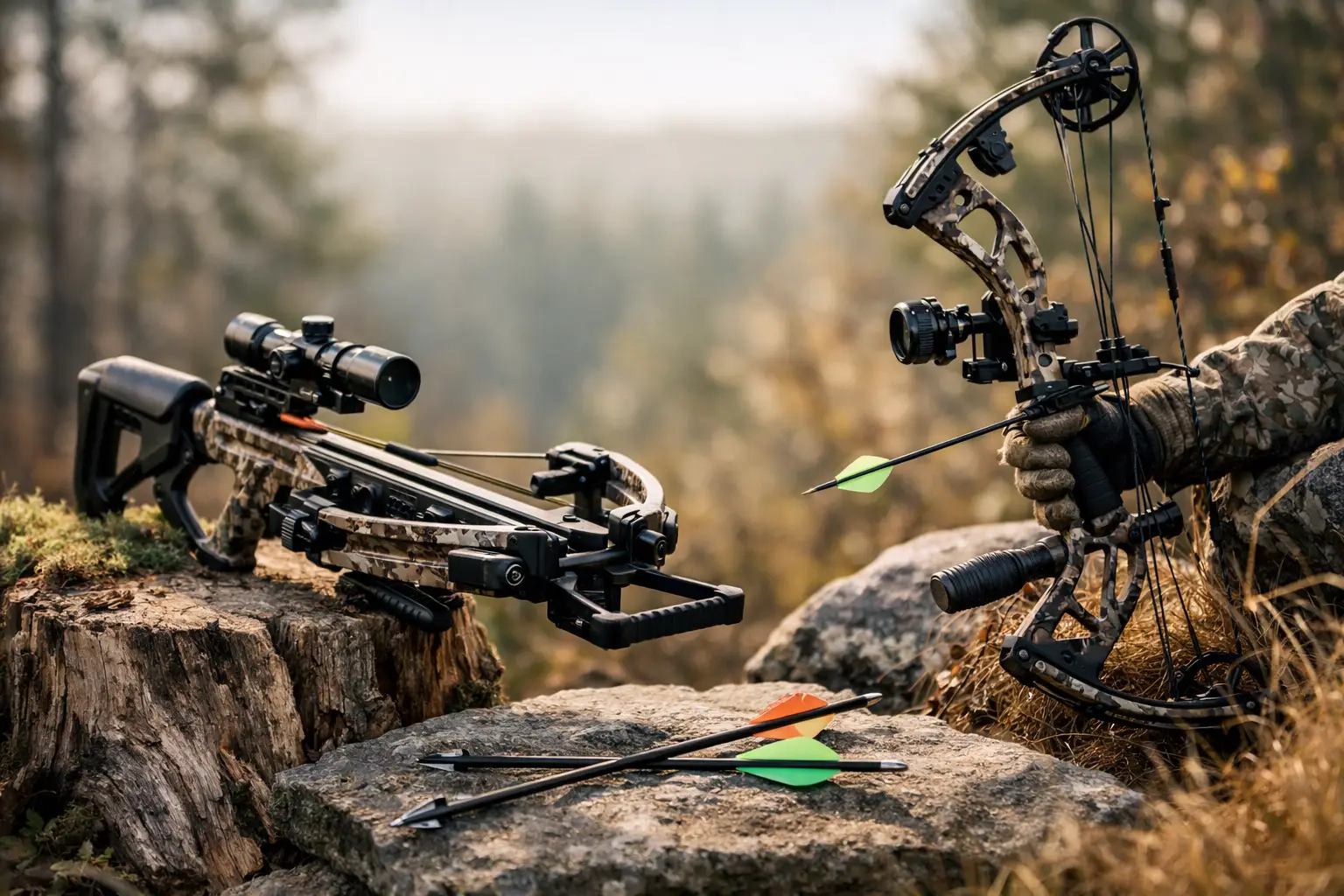
A compound bow is held at full draw while you aim. Its let-off reduces the holding weight substantially, but you still need to draw it smoothly, settle your anchor point, manage your release, and execute the shot without punching the trigger. That takes regular repetition. A compound bow rewards hunters who enjoy the process of shooting and can keep their form sharp all season.
A crossbow is cocked before the shot opportunity. Once loaded, the string is held by the trigger mechanism, not your back and shoulders. You shoulder the stock, use an optic, settle the reticle, and press the trigger. The fundamentals still matter, especially steady rest, broadhead tuning, range estimation, and shot discipline. But the learning curve is usually less steep for a new hunter or someone returning after years away.
That does not make a crossbow a shortcut to hunting success. It gives you a different platform. You still have to scout, play the wind, move quietly, know your effective range, and make a clean recovery after the shot. Real gear helps. It does not replace real hunting.
Why a Crossbow Makes Sense for Many Deer Hunters
The biggest advantage of a crossbow is that it removes the need to draw at the exact moment an animal appears. In a tight ground blind or a treestand where a buck can step into an opening without warning, that matters. You can be cocked, shouldered, and ready to aim with less body movement than a compound requires.
Modern Ravin models are built around that advantage. Ravin crossbows are known for a compact layout and a cam system that keeps the platform narrow when cocked. For a hunter working inside a blind window, sitting against the tree on a small platform, or carrying a crossbow through thick cover, a narrow front end is more than a spec-sheet number. It can mean fewer collisions with brush, blind walls, and seat frames.
The Ravin R10 is the sensible entry point for hunters who want a proven compact crossbow without chasing maximum speed. It is a practical option for whitetail ranges, especially for a first-time crossbow buyer who would rather put money into broadheads, targets, and range time than pay for top-end velocity.
The Ravin R29X steps up the performance and compact handling for hunters who want a faster, more refined rig. The R50 and R500 sit in the premium end of the lineup, where speed and engineering are the main draw. Those models can flatten trajectory and reduce time of flight, but they also demand disciplined setup. Fast crossbows are not forgiving of loose bolts, damaged nocks, poor broadhead choice, or neglected strings and cables.
Crossbow advantages in the field
A crossbow is often the better fit if you hunt from blinds, have a shoulder limitation, struggle to draw a bow in cold clothing, or cannot practice several days a week. The scope also gives many newcomers a more familiar aiming reference than a peep sight and pin system.
Crossbows can also be easier to shoot accurately from a supported position. A shooting rail, tripod, or solid blind rest can make a real difference when waiting on a deer. Just make sure the crossbow is supported under the fore-end, not with anything touching the string or cables. Contact with moving parts can create a dangerous obstruction.
The trade-off is weight. A crossbow may feel easy to aim once it is shouldered, but it is typically heavier and bulkier to carry than a compound bow. It also has a wider overall footprint from stock to stirrup, even when the limbs are narrow. If you hike steep public land or still-hunt all day, that weight becomes part of the decision.
Where the Compound Bow Still Wins
Compound bows remain hard to beat for mobile hunters. They are lighter, easier to sling over a shoulder, and less awkward when slipping through timber. A bowhunter who spends all day still-hunting, climbing ridges for elk, or covering large tracts of public land may appreciate every pound saved.
A compound is also quicker for a second shot. With a quiver full of arrows, the hunter can nock another arrow and draw again. Reloading a crossbow takes more time and more deliberate movement. That should not encourage rushed shots with either platform, but it matters when conditions change quickly.
Then there is the satisfaction factor. Many traditional bowhunters simply prefer the physical involvement of drawing, anchoring, and executing a compound shot. If you shoot well, practice often, and enjoy the discipline, there is no reason to switch just because crossbows are fast and compact.
The downside is that compound proficiency fades when practice fades. A hunter who shoots a few arrows the week before opening day is not ready. You need to practice from realistic positions, in your hunting clothing, at the ranges you will actually shoot. Draw cycle, anchor consistency, release execution, and broadhead flight all need attention.
Speed Is Useful, Not Magic
Crossbow marketing puts speed front and center, and for good reason. Higher speed can reduce arrow drop and shorten the time an arrow is in the air. At longer distances, that can provide a useful margin when your range estimate is slightly off.
But speed does not turn a 60-yard shot into a good idea. Animals move. Wind moves arrows. Steep angles change your point of impact. Broadheads can reveal setup issues that field points hide. The ethical range is the distance where you can repeatedly place a broadhead into a tight group under realistic hunting conditions, not the farthest mark on your scope.
With a Ravin R500 or R50, it is especially easy to get tempted by the trajectory. Resist that urge until you have verified your scope marks with the exact bolts, broadheads, and configuration you will hunt. The fastest setup in camp is useless if it is not confirmed on the range.
Cost, Maintenance, and Safety
The purchase price is only part of the budget. Either setup needs a quality case, target, broadheads, practice points, and regular maintenance. A crossbow also needs correctly matched bolts and nocks. Never mix components because they look close enough. Follow the manufacturer specifications exactly.
Ravin crossbows use a crank-cocking system that helps make cocking controlled and consistent, which is a serious benefit for accuracy and safety. Still, inspect your string, cables, rail, bolts, nocks, and broadheads before every hunt. Keep fingers and clothing below the string path. Never dry-fire. Never use a damaged bolt. These are simple rules, but ignoring them is how expensive gear gets ruined and hunters get hurt.
Compound bows need their own maintenance: string condition, cam timing, rest alignment, peep position, and broadhead tuning. If you do not have the equipment or confidence to work on one, use a qualified bow technician. No BS: a badly tuned bow costs more animals than most hunters want to admit.
Which One Should You Buy?
Choose a crossbow if you value a shorter learning curve, hunt from blinds or stands, want a cocked-and-ready platform, or need to reduce the physical demand of drawing a bow. A Ravin R10 makes sense for practical whitetail hunting, while the R29X, R50, and R500 are worth comparing if compact dimensions and higher speed fit your budget and hunting style.
Choose a compound bow if you prioritize low carry weight, hunt on the move, practice consistently, and want the hands-on shooting experience that comes with a vertical bow. It is not outdated. It is simply a different commitment.
Before you spend money, check your state regulations. Crossbow seasons, disability provisions, legal bolt requirements, and broadhead rules vary by state. Then handle the platform if possible, practice with it before season, and buy the setup you can carry confidently and shoot cleanly when the moment is real. That is the gear choice that earns its place in the woods.