Crossbow Broadhead Guide: Fixed vs Mechanical Hunting
A broadhead that shoots perfectly from a practice point can still fail you if it opens poorly, planes in a crosswind, or cannot handle a hard quartering shot. That is why this crossbow broadhead guide: fixed vs mechanical for hunting starts with the real question: which head matches your crossbow, your shot distance, and the game you hunt? There is no magic answer. There is only the head you have proven from your own setup.
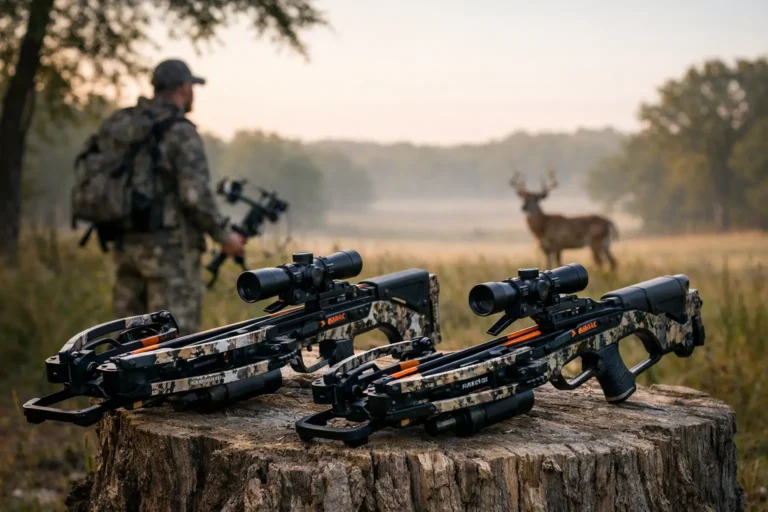
Fast crossbows make broadhead choice less forgiving, not less relevant. A modern Ravin platform can produce tight groups and serious downrange speed, but speed also exposes poor arrow tuning, loose components, and broadheads that do not fly well from that particular arrow.
Crossbow Broadhead Guide: Fixed vs Mechanical
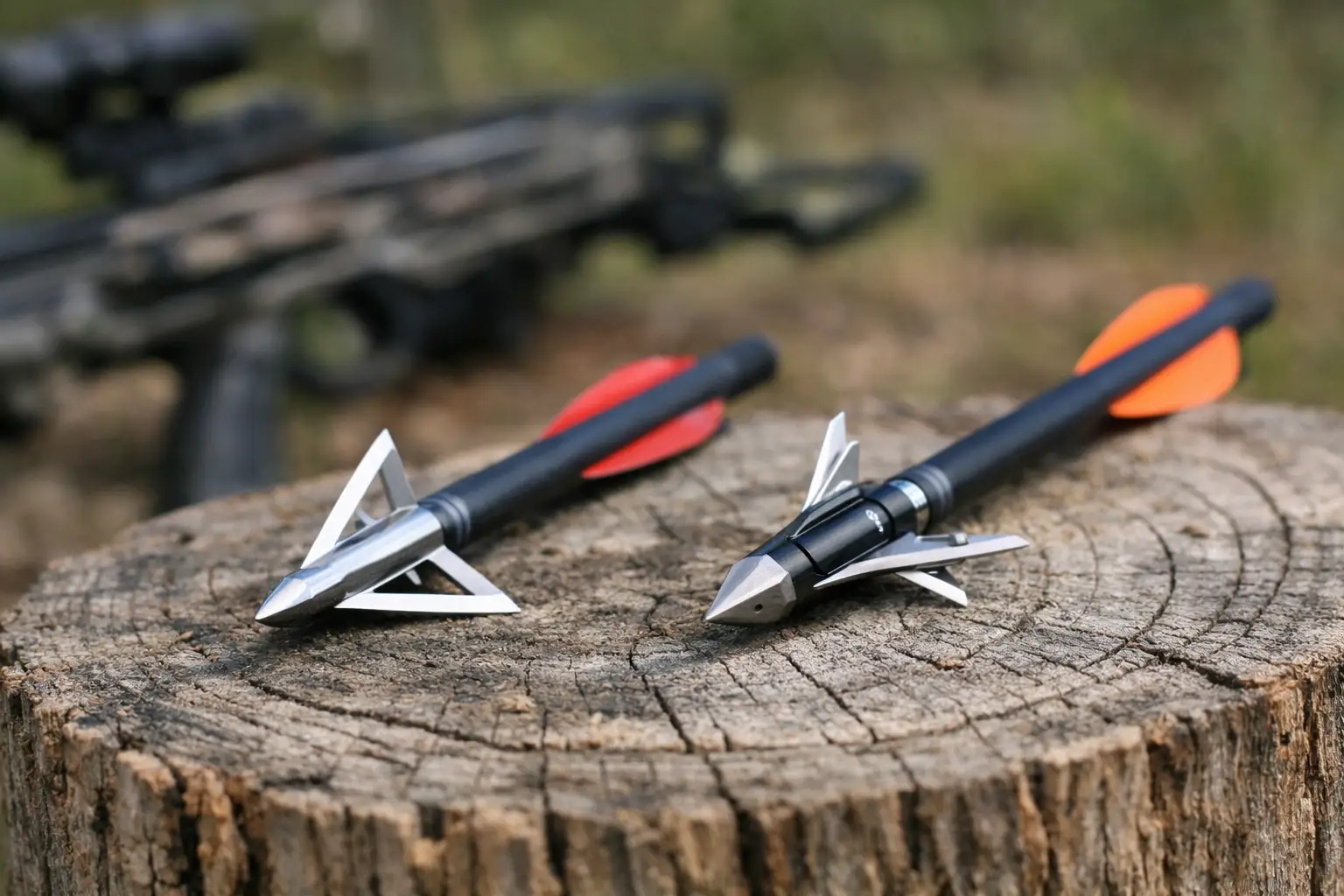
Fixed-blade broadheads have blades that remain exposed at all times. Mechanical broadheads keep their blades closed during flight, then deploy on impact. Both can kill deer cleanly. Both can also cause problems when hunters choose based on packaging claims instead of field results.
The practical dividing line is simple. Fixed blades favor reliability, penetration, and a straightforward design. Mechanicals favor broad flight characteristics and potentially wider entry and exit wounds. The better choice depends on how demanding your shots are likely to be.
When fixed-blade broadheads make sense
A quality fixed-blade head is a strong choice for hunters who want the fewest moving parts between release and recovery. There is no deployment mechanism to test, no concern about blades opening early, and no question about whether a head will open after a steep-angle impact. For hunters who may face heavier bone, longer blood trails, or less-than-perfect angles, that simplicity matters.
Fixed heads also tend to hold an advantage when penetration is the priority. A compact cut-on-contact design can drive deeply, especially when paired with a properly weighted crossbow arrow. That is useful for larger-bodied deer, elk where legal and appropriate, or any hunt where a quartering-away shot may be the best ethical opportunity.
The trade-off is flight. Exposed blades catch more air than a field point or a closed mechanical. At 20 yards, that difference may be invisible. At 40 yards and beyond, a fixed head can show a different point of impact if the arrow, broadhead, or crossbow setup is not right. That does not mean fixed heads are inaccurate. It means you must verify them with real broadheads before hunting.
When mechanical broadheads make sense
Mechanical broadheads fly much like field points in many setups because their blades stay tucked in during flight. That is their main appeal. A hunter who has a crossbow dialed in for precise 30- to 50-yard deer shots may appreciate that consistency, particularly with a wide-cut mechanical designed for crossbow energy levels.
A properly functioning mechanical can create a large wound channel and a strong blood trail on a broadside deer. For hunters who wait for clean, close-to-broadside shots and want field-point-like accuracy, that is a valid reason to use one.
But mechanicals demand more discipline. The blades and retention system must be inspected before every hunt. Some designs use collars, O-rings, or internal retention systems. Any of them can be damaged, worn, or improperly seated. A mechanical also needs enough impact energy to deploy as designed. Most hunting crossbows have plenty for deer-sized game at sensible ranges, but long-distance shots reduce impact energy and increase the chance of a poor hit. A huge cutting diameter is not a substitute for shot placement.
Fixed vs Mechanical for Fast Crossbows
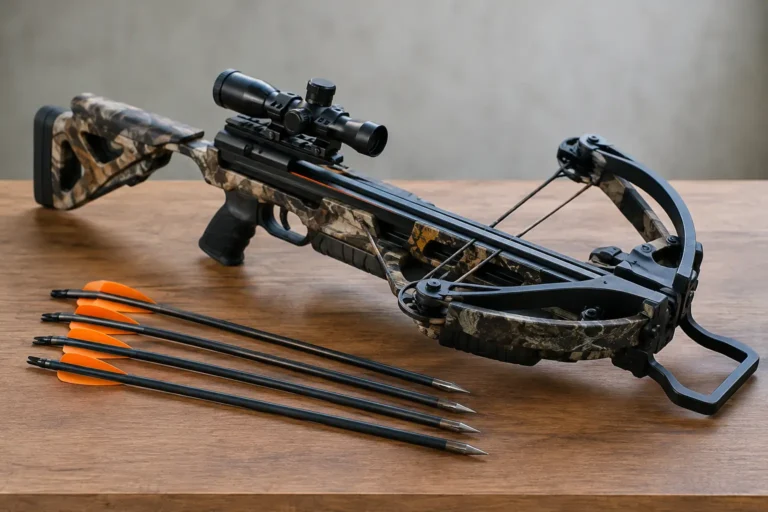
High-speed crossbows put extra pressure on every part of the arrow system. A head that is slightly out of square, a damaged vane, or a loose insert can turn a confident group into a miss. Before blaming the broadhead style, check the basics: use the arrow length and nock style specified for your crossbow, confirm total arrow weight meets the manufacturer minimum, and make sure inserts and broadheads are fully seated.
Do not assume a mechanical is automatically safer for a fast crossbow, or that a fixed blade is automatically too difficult to tune. The only honest answer comes from shooting both types through your own rig. Start at 20 yards, then move back in 10-yard steps. Shoot broadhead-tipped arrows into a broadhead-rated target, not the same soft target you use for field points. Mark each arrow so you can identify a flyer instead of guessing.
If your fixed blades group a few inches from field points but consistently group together, you can sight in for them. If they scatter, do not hunt with them yet. Check head tightness, spin each assembled arrow, inspect vane clearance, and test a second fixed-blade model with a smaller profile. If a mechanical will not group, inspect the retention system and make sure the head is rated for crossbow use.
Choose by Your Hunt, Not the Broadhead Hype
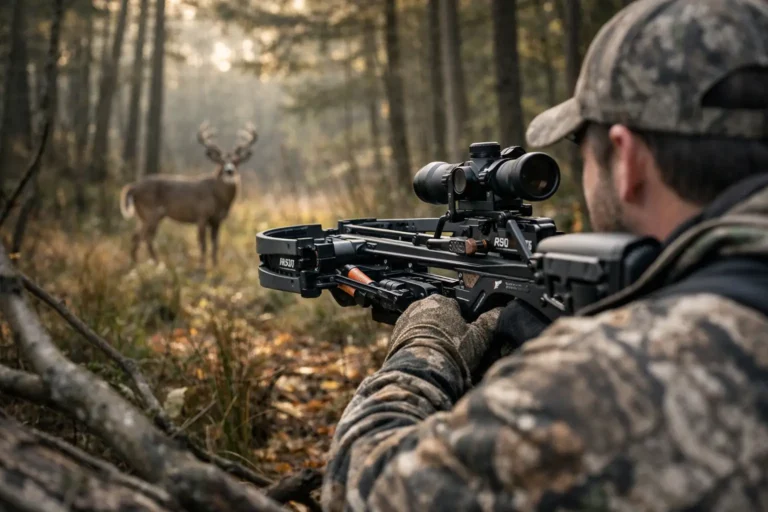
For a whitetail hunter in a stand who keeps shots inside 35 yards and waits for broadside deer, a dependable mechanical can be a sensible choice. Its flight behavior may make it easier to maintain confidence at the range, and a wider cut can produce an obvious blood trail after a well-placed shot.
For a hunter in thick timber, on uneven ground, or in a situation where a deer may be quartering away, a fixed blade earns a hard look. Deep penetration and simple construction are worth more than a massive advertised cut. The same is true for hunters who want one setup that is ready for tougher animals where regulations and equipment requirements permit it.
New crossbow hunters should not feel pressured to start with mechanicals because they sound easier. A compact fixed head that groups well is an excellent beginner choice because it teaches good setup habits and removes one mechanical failure point. On the other hand, an experienced shooter whose arrows are well tuned may get excellent results from either style.
Here is the no-BS rule: pick the broadhead that gives you repeatable groups, reliable performance after inspection, and enough penetration for the animal and angle you are willing to take. If it only works under perfect conditions on the range, it is not hunting gear yet.
Broadhead Setup Checklist Before Opening Day
Do this work before the season, not from the tailgate on opening morning:
- Confirm your arrows meet the crossbow manufacturer’s minimum weight and component requirements.
- Use only broadheads specifically rated for crossbow speeds and the game you intend to hunt.
- Spin-test every assembled hunting arrow and remove any head or shaft that wobbles.
- Shoot your actual broadheads at every distance you may shoot in the field.
- Inspect blades, ferrules, collars, and retention parts after every practice session and after any impact.
Keep dedicated broadhead arrows separate from practice arrows. Broadheads dull, blades bend, and a shaft can take damage that is hard to see. Replacing a questionable component costs far less than losing an animal.
Matching Broadheads to a Ravin Hunting Setup
Ravin crossbows are built around compact, high-performance hunting setups, so arrow compatibility is not optional. Follow the manual for the specific model and use approved arrows, nocks, and minimum arrow weights. Whether you hunt with an R10, R29X, R50, or R500, do not alter arrow components casually just to chase speed. A safe, consistent arrow is more valuable than a few extra feet per second.
Use the Ravin comparison pages on this site to narrow down the platform that fits your hunting distances, size preferences, and budget, then build a broadhead test around that exact crossbow. The right head for a lighter, compact setup may not be the one you choose for a speed-focused model. Your target tells the truth better than any package label.
Make the Final Call at the Target
Shoot at least three broadhead-tipped arrows at your realistic maximum hunting distance, preferably on a calm day and then again in mild wind. Look for consistency, not one lucky bullseye. A fixed head that groups tightly is ready. A mechanical that impacts with field points and passes a careful inspection is ready. Anything else needs more work.
The broadhead you trust should make you calmer at full draw, not more hopeful. Set up the arrow correctly, prove the head in practice, and carry the one that fits the shots you are actually prepared to take.