Ravin R500 Performance for Deer Hunters
The Ravin R500 performance story starts with one number: 500 feet per second. That is serious speed, not a gimmick for a spec sheet. For deer hunters who want a compact crossbow that shoots flat, hits hard, and carries cleanly into a stand or blind, the R500 is one of Ravin’s most aggressive platforms. But speed this high comes with a few real-world demands. You need to respect the setup, practice with the included system, and decide whether its premium price fits how you actually hunt.
This is the no-BS breakdown of what the R500 does well, where it asks more of the shooter, and how it stacks up against other Ravin options.
Ravin R500 Performance: Speed With a Purpose
At 500 fps, the R500 is built to reduce the two problems that make crossbow hunting harder than it needs to be: judging distance and managing arrow drop. A fast arrow gets to the target sooner, which means less time for an animal to move and less arc between your sight-in distance and your actual shot distance.
With a 400-grain arrow, 500 fps works out to roughly 222 foot-pounds of kinetic energy. That is far beyond what is needed for deer-sized game with a properly placed broadhead. It also gives the R500 plenty of authority for larger game where legal, provided the hunter uses the right arrow, broadhead, and shot angle.
Speed is not a free pass for poor decisions. A 500 fps crossbow will not fix bad form, a loose rest, an incorrectly mounted scope, or a rushed shot at a quartering animal. What it does give you is more margin on range estimation and a flatter point of impact across typical hunting distances.
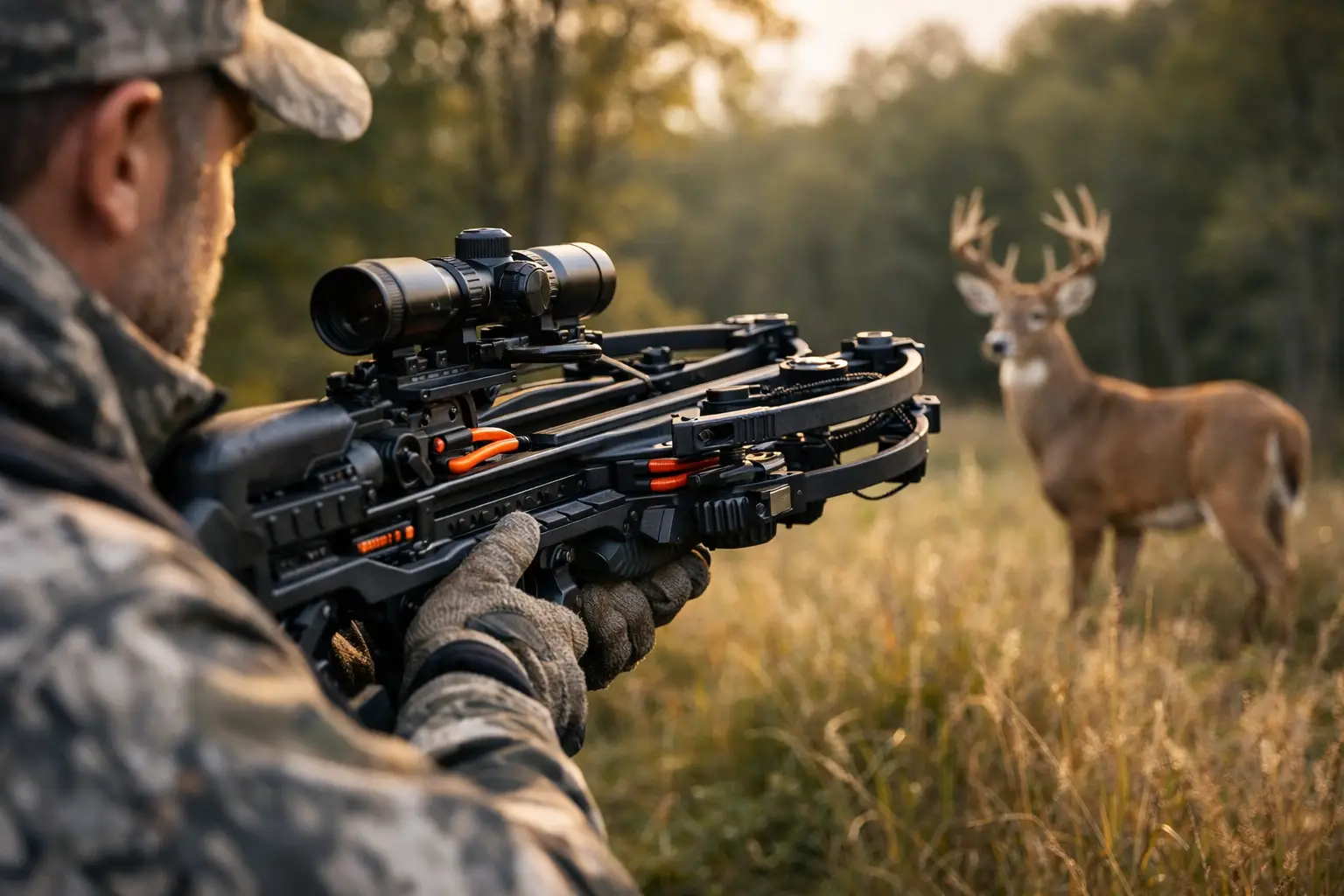
For a hunter used to a slower crossbow, the first thing that stands out is how little drop the R500 shows at moderate ranges. That makes it especially useful in open hardwoods, field edges, elevated stands, and ground blinds where a deer may step out at 20 yards one minute and 45 the next.
Accuracy Depends on Setup, Not Just the Name
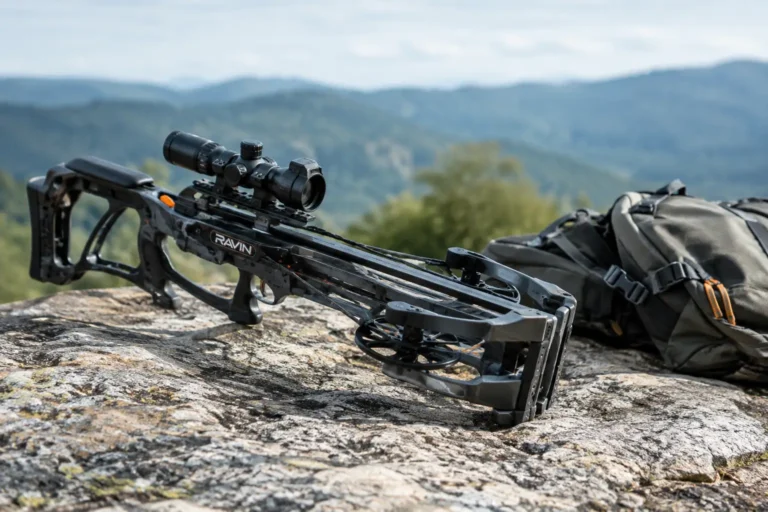
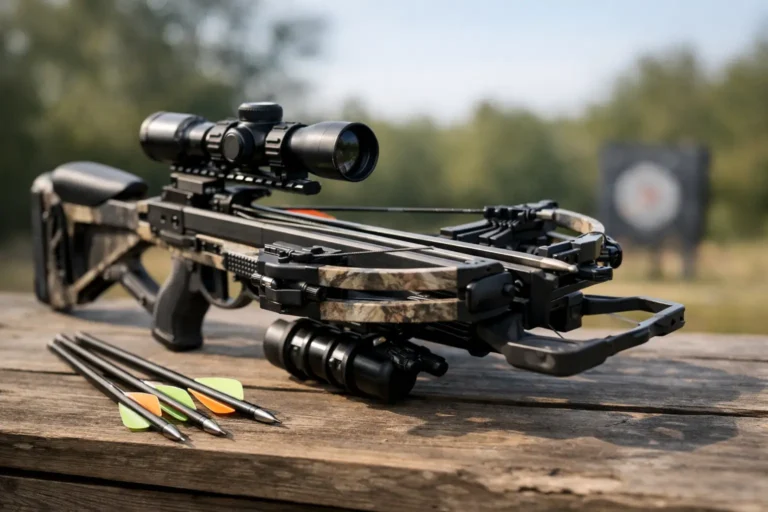
The R500’s compact HexCoil Cam design keeps the crossbow narrow when cocked. That matters in a cramped stand, inside a blind, or when you are threading a shot through cover. Less limb width means less chance of clipping a wall, rail, branch, or shooting-house window when you need to move into position.
Ravin also pairs this platform with a free-floating arrow system designed to keep the arrow centered and reduce contact that can affect consistency. In plain terms, the system is built for tight groups, but you still have to do your part.
Before hunting with an R500, shoot enough to confirm three things: your scope is level, your bolts are grouping consistently, and your broadheads hit where your field points hit. Do not assume a fast crossbow automatically makes broadhead tuning irrelevant. Fixed-blade broadheads can show differences, particularly at longer distances, and a hunting broadhead should always be verified on the range.
The crossbow’s speed can also make small setup mistakes obvious. A loose optic mount, damaged nock, worn string serving, or inconsistent arrow selection can turn a premium rig into an expensive frustration. Use Ravin-approved arrows and nocks for the R500. This is not the place to improvise with random bolts from the gear bin.
Compact in the Woods, Demanding on the Range
The R500 is about 28 inches long and roughly 3.6 pounds before you add its scope, quiver, arrows, and other hunting gear. That compact footprint is a legitimate advantage. It is easy to carry through brush, settle into a saddle or treestand, and maneuver when a deer appears on the wrong side of the tree.
It is not a featherweight once fully dressed, and that is worth saying plainly. Add an optic, loaded quiver, and sling, and any high-end crossbow becomes more noticeable on a long walk. Still, the R500 balances well for its speed class, and its narrow cocked profile is more valuable in tight hunting situations than a small difference on a scale.
Noise is another trade-off. High-speed crossbows store and release a lot of energy. The R500 is not a quiet, soft-shooting beginner plinker. The shot is fast and forceful. For deer hunting, the arrow’s speed helps limit an animal’s chance to react, but no crossbow is silent and no hunter should count on speed alone to beat an alert deer.
The practical move is simple: hunt inside the distance where you can repeatedly place broadheads into a tight group under realistic conditions. For many hunters, that means 40 yards or less from a stand, even though the R500 is capable of much more on a controlled range.
Cocking and Loading: Take the System Seriously
The R500 uses Ravin’s Versa-Draw cocking system, which makes drawing a powerful crossbow manageable without needing superhero strength. That is a major benefit for newer crossbow hunters and for anyone who does not want to fight a heavy manual rope cocker in cold weather.
But the process is deliberate. Learn it at home before opening day. Make sure the arrow is fully seated against the string, the nock is correctly oriented, the safety is functioning as intended, and your fingers stay below the flight deck every single time. Fast crossbows are not forgiving of loading shortcuts.
The same goes for arrow inspection. Check each bolt before a hunt and after every shot. Look for cracks, splinters, damaged vanes, loose nocks, and any sign that an arrow took a hard impact. At R500 speeds, compromised gear is not something to gamble on.
A little discipline also protects your investment. Keep the rail, string, and cables maintained according to Ravin’s instructions. Use the correct lubricant sparingly, store the crossbow out of damaging heat and moisture, and do not dry-fire it. Those are basic habits, but they matter more on a high-performance platform.
Where the R500 Makes the Most Sense
The R500 fits the hunter who wants top-end speed in a compact hunting crossbow and is willing to pay for it. It makes sense for serious whitetail hunters who hunt varied terrain, want a flatter trajectory, and value a narrow profile in stands and blinds. It also suits experienced bowhunters making the switch to a crossbow but unwilling to settle for a bulky, slow-feeling setup.
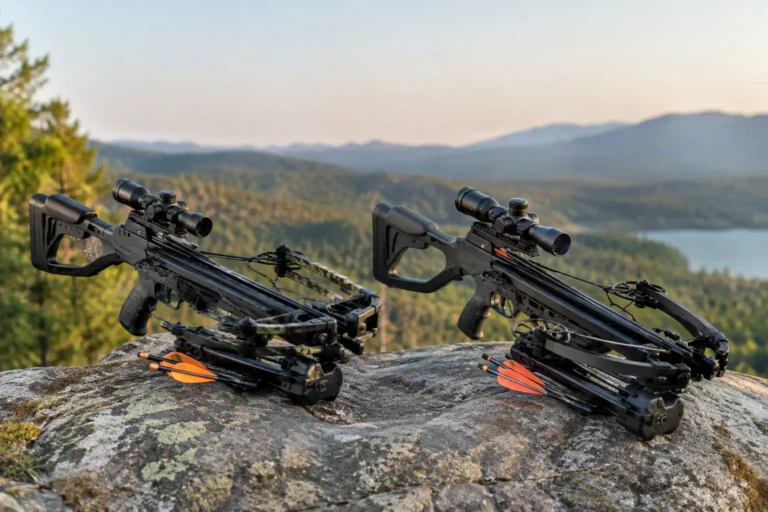
It may be more crossbow than a first-time buyer needs. A newcomer who hunts a few weekends per season from a fixed 25-yard stand may get everything needed from a more affordable Ravin model. The R10 remains a sensible choice for hunters who value Ravin’s compact design but do not need 500 fps. The R29X offers strong speed and proven hunting capability at a lower performance ceiling, while the R50 is worth considering for hunters who want a newer compact Ravin setup without making raw speed the only priority.
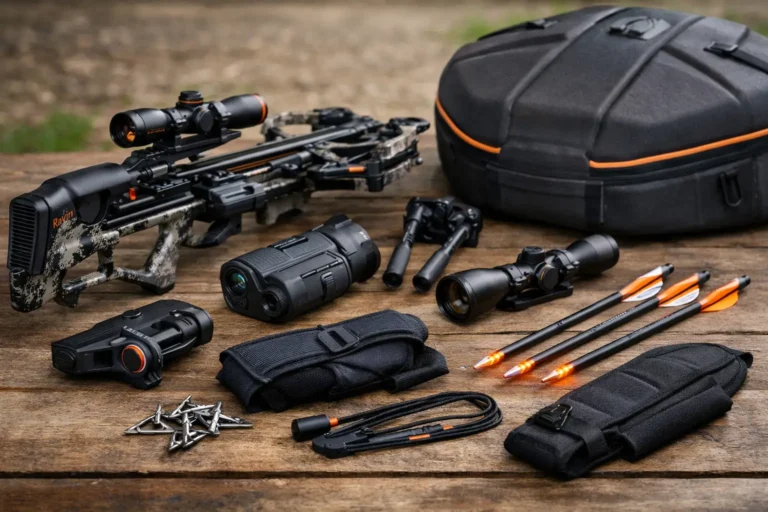
That is why price should not be ignored. The R500 is a premium crossbow, and the total cost includes arrows, broadheads, maintenance items, a case, and range time. If that budget is comfortable, its performance is hard to dismiss. If it forces you to cut corners on practice or hunting accessories, step back and compare the Ravin lineup before buying.
A Practical R500 Setup for Deer Season
Start with the factory package and learn it before changing anything. Mount the scope carefully, level it, torque fasteners to the manufacturer’s guidance, and shoot from a stable rest. Sight in at the distances supported by your scope’s reticle, then verify the marks with the exact arrows and broadheads you will carry hunting.
Practice from positions that look like your actual hunt. Shoot seated if you hunt from a blind. Shoot from an elevated platform if you spend fall in a treestand. Wear the jacket, gloves, and safety harness you will use in November. The R500 can produce impressive groups from a bench, but a deer does not stand in front of a shooting bench.
Finally, set a personal maximum range based on broadhead accuracy, not internet claims. If your longest repeatable hunting group is 45 yards, then 45 yards is your line. That decision will do more for clean recoveries than another 50 fps ever will.
The Ravin R500 is a serious hunting tool for hunters who will treat it like one. Check the current R500 product details and compare it directly with the R29X, R50, and R10 before spending the money. Buy the Ravin that matches your hunting distance, terrain, and practice habits, then put in the range work that makes its performance count.