Portable Power Station vs Generator for Hunters
A dead phone is annoying. A dead rangefinder, headlamp, GPS unit, or charging setup the night before a hunt is a real problem. For hunters building a vehicle camp or a remote base, the portable power station vs generator decision comes down to what you need to run, how close camp is to game, and whether you can tolerate noise and fuel handling.
For most deer and elk hunters, a portable power station is the better fit for quiet camp chores and electronics. A generator earns its place when you need serious wattage for extended periods, especially at a truck camp, cabin, or large group setup. Real gear decisions are about the job, not the biggest number on a box.
Portable power station vs generator: the straight answer
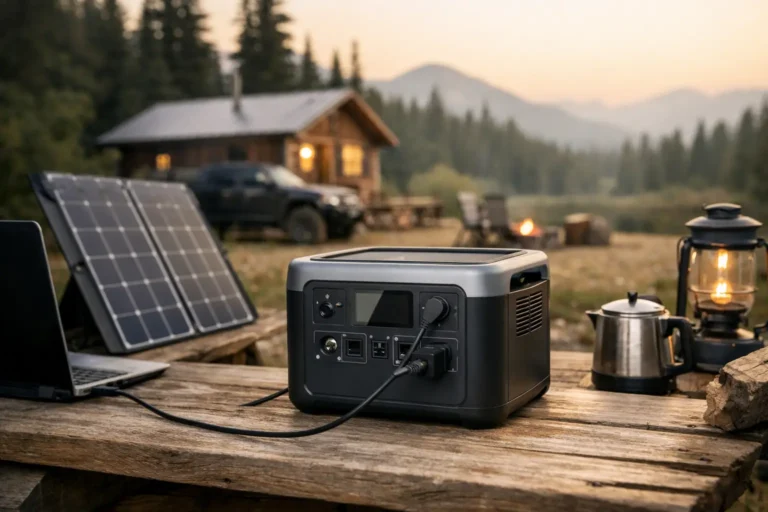
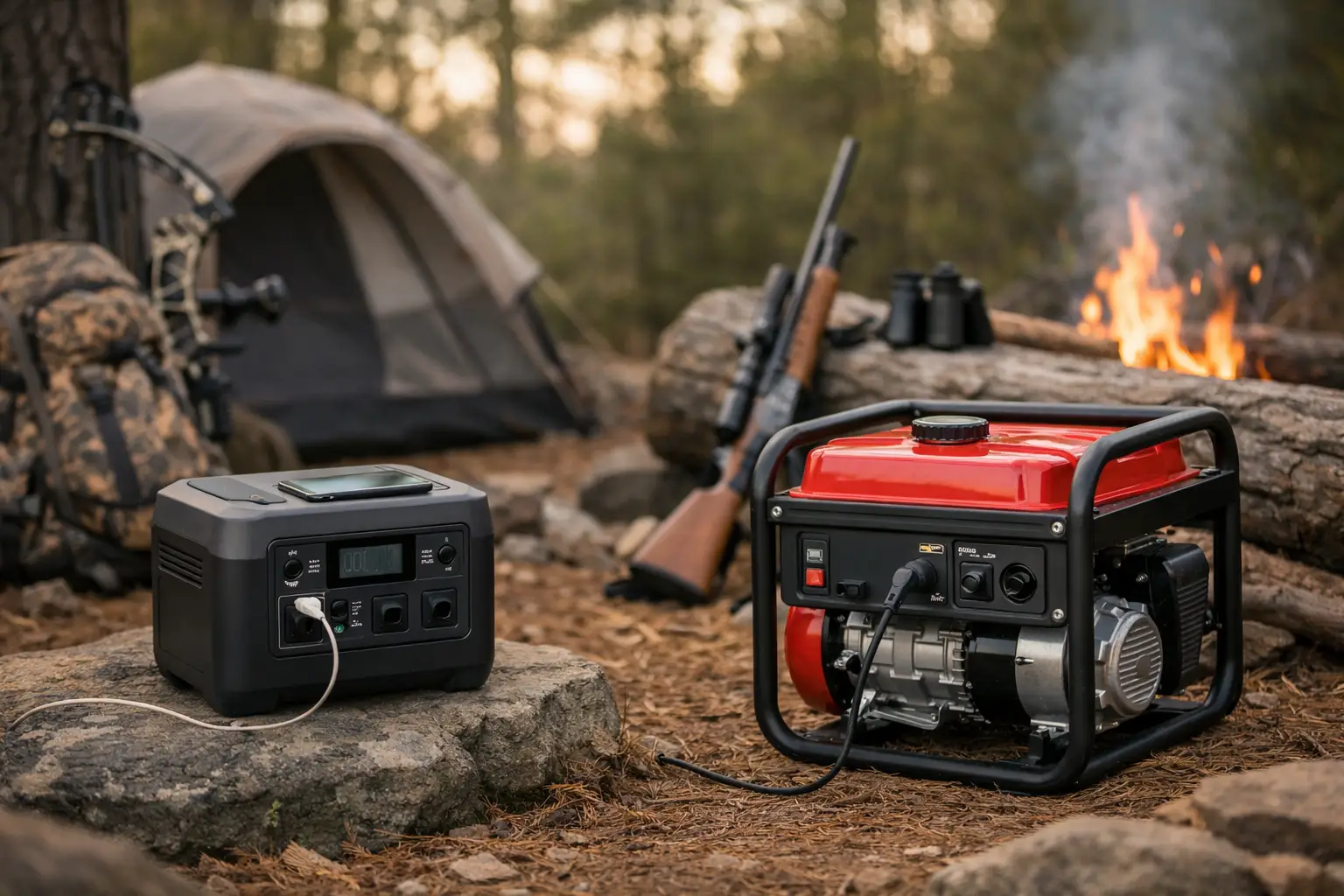
A portable power station stores electricity in a built-in battery. You charge it at home, from a vehicle, or sometimes from a compatible solar panel, then use its USB, 12-volt, or AC outlets at camp. It runs silently and needs no gasoline.
A generator makes electricity by burning fuel. It can run as long as you keep feeding it gas or propane, depending on the model. That makes it the stronger option for high-draw equipment and multi-day use where recharging a battery station is not realistic.
For a crossbow hunting camp, the question is rarely “Which one is more powerful?” It is usually “What do I actually need powered without turning camp into a noisy worksite?” If the answer is phones, lights, radios, a rangefinder charger, camera batteries, and occasional small electronics, a power station is usually enough. If you want to run a full-size refrigerator, power tools, heaters, or a trailer with multiple people, a generator starts making more sense.
What crossbow hunters actually need to power
Most hunting electronics do not draw much power. A phone, headlamp, handheld GPS, trail camera battery pack, rechargeable lantern, and compact radio are all easy work for a decent power station. Even several days of charging can be manageable if you start with a full battery and avoid wasting power on unnecessary AC devices.
The main mistake is buying based only on outlet count. Look at watt-hours, which tell you how much stored energy the station has, and output watts, which tell you what it can run at one time. A unit with plenty of outlets but limited watt-hours may charge a pile of gear once and be done.
Crossbow gear adds a reason to plan ahead, but it does not automatically mean you need a generator. If you hunt with a Ravin R10, R29X, R50, or R500, keep the manufacturer-approved charging equipment and batteries organized, dry, and protected from extreme cold. Check the manual for the correct charging method. Do not assume every accessory should be plugged into a random inverter or high-output outlet just because it fits.
A power station also helps keep your hunting setup separate from the truck battery. Draining your truck while charging devices at camp is a bad trade when you need that vehicle for access roads, recovery, and getting home.
When a portable power station is the better call
Quiet is the biggest advantage. A battery station makes no engine noise, no exhaust, and no fuel smell. That matters when your camp is near a bedding area, a trailhead lot with other hunters, or a remote parcel where you do not want to advertise your location before daylight.
It is also easier to use. Charge it before the trip, pack it where it will stay dry, and plug in your equipment. There is no fuel can to secure, no oil to check, and no pull-start routine on a cold morning. For newer hunters, that simplicity matters. Gear should solve problems, not create a maintenance schedule.
A power station is best for short trips, overnight truck camps, and hunters who are disciplined about power use. It works especially well if you charge devices during the drive, shut off unneeded lights, and avoid using an inverter for tasks that could be handled through USB or 12-volt ports.
The trade-off is finite capacity. Once the battery is empty, you need time and a power source to refill it. Vehicle charging can be slow, and solar charging depends on weather, daylight, panel size, and where you can place the panel. Cold weather can also reduce battery performance. If you are sitting in an elk camp for a week with no reliable recharge plan, do not pretend a small station is unlimited power.
When a generator is worth the noise
A generator makes sense when the power demand is large or continuous. Think extended cabin stays, wall-tent camps with several hunters, a travel trailer, an electric cooler running around the clock, or a work camp where tools need to operate. Fuel availability gives a generator a practical advantage over a battery station when the trip runs long.
It can also serve as the recharge source for other batteries. Run it during the middle of the day, away from sleeping areas and hunting ground, then shut it down. That approach gives you quiet mornings and evenings while still providing enough power to keep larger equipment going.
But generators come with baggage. They are loud, heavy, fuel-dependent, and require safe ventilation. Never run one in a tent, vehicle, enclosed trailer, or near openings where exhaust can enter. Carbon monoxide is not a minor inconvenience. It can kill you.
Noise is not just a comfort issue either. Running a generator at 4:30 a.m. can disturb nearby hunters and make camp feel like a construction zone. If you use one, locate it well away from tents, follow land-management rules, and run it only when the benefit is clear.
Choose by your camp style, not marketing claims
Before buying either option, write down every device you expect to power and how often it will need charging. Then be honest about the trip. A weekend whitetail hunt from a pickup is different from a six-day elk hunt from a wall tent, and both are different from staying at a cabin with shore power unavailable.
Use this quick field check:
- Choose a portable power station for quiet charging, light-duty electronics, short trips, and camps close to where you hunt.
- Choose a generator for high-watt appliances, groups of hunters, extended off-grid stays, or situations with reliable fuel but no practical recharge source.
- Bring neither if your gear can be fully charged before departure and your hunt is short enough to run lean.
- Consider both only when your camp genuinely has two needs: silent power at the tent and higher-output charging well away from the hunting area.
Do not buy a generator because it sounds tougher. Do not buy a tiny power station because it looks convenient. Either choice is wrong if its capacity does not match your gear list.
Pack and test before the hunt
Test your setup at home with the exact cables, chargers, and devices you plan to carry. Confirm that your power station can handle the charger you intend to use and that the generator starts, runs, and can be safely transported. Label charging cords if several hunters are sharing camp. Small items disappear fast in the dark.
Keep all batteries and electronics in a weather-resistant case. Cold can shorten usable battery life, while moisture can ruin chargers and connections. A basic routine helps: charge critical gear before leaving, top it off while driving if possible, and reserve camp power for equipment that affects navigation, communication, safety, or the hunt.
The best power setup is the one you barely notice at camp. Keep your crossbow gear ready, your electronics topped off, and your campsite quiet enough to hear the woods wake up.