Can Ravin Crossbows Use Mechanical Broadheads?
A Ravin does not give a mechanical broadhead an easy ride. Models such as the R10, R29X, R50, and especially the R500 launch a bolt with enough speed to expose weak components, poor tuning, and broadheads that were never built for high-energy crossbows.
Disclosure: Dark Justice Survival is a Ravin Crossbows affiliate. Purchases made through links on this page may earn us a commission at no cost to you.
Shop on Ravin:
See Ravin broadheads and current prices on RavinCrossbows.com →
So, can Ravin crossbows use mechanical broadheads? Yes. A properly rated mechanical broadhead can be an effective hunting choice on a Ravin crossbow. But “mechanical” is not a free pass. The broadhead must be designed for crossbow velocities, matched to the correct bolt setup, and proven at the range before it goes into the woods.
That is the no-BS answer. If a head opens in flight, groups poorly, or shows damage after practice, it does not belong in your quiver – no matter how good it looked in the package.
Why Ravin Crossbows Are Hard on Broadheads
Ravin crossbows are known for compact designs and serious speed. That speed is useful when your shot is true, but it also puts more stress on the broadhead’s ferrule, blades, retention system, and the bolt itself. A broadhead that behaves fine from a slower setup can show problems when pushed faster.
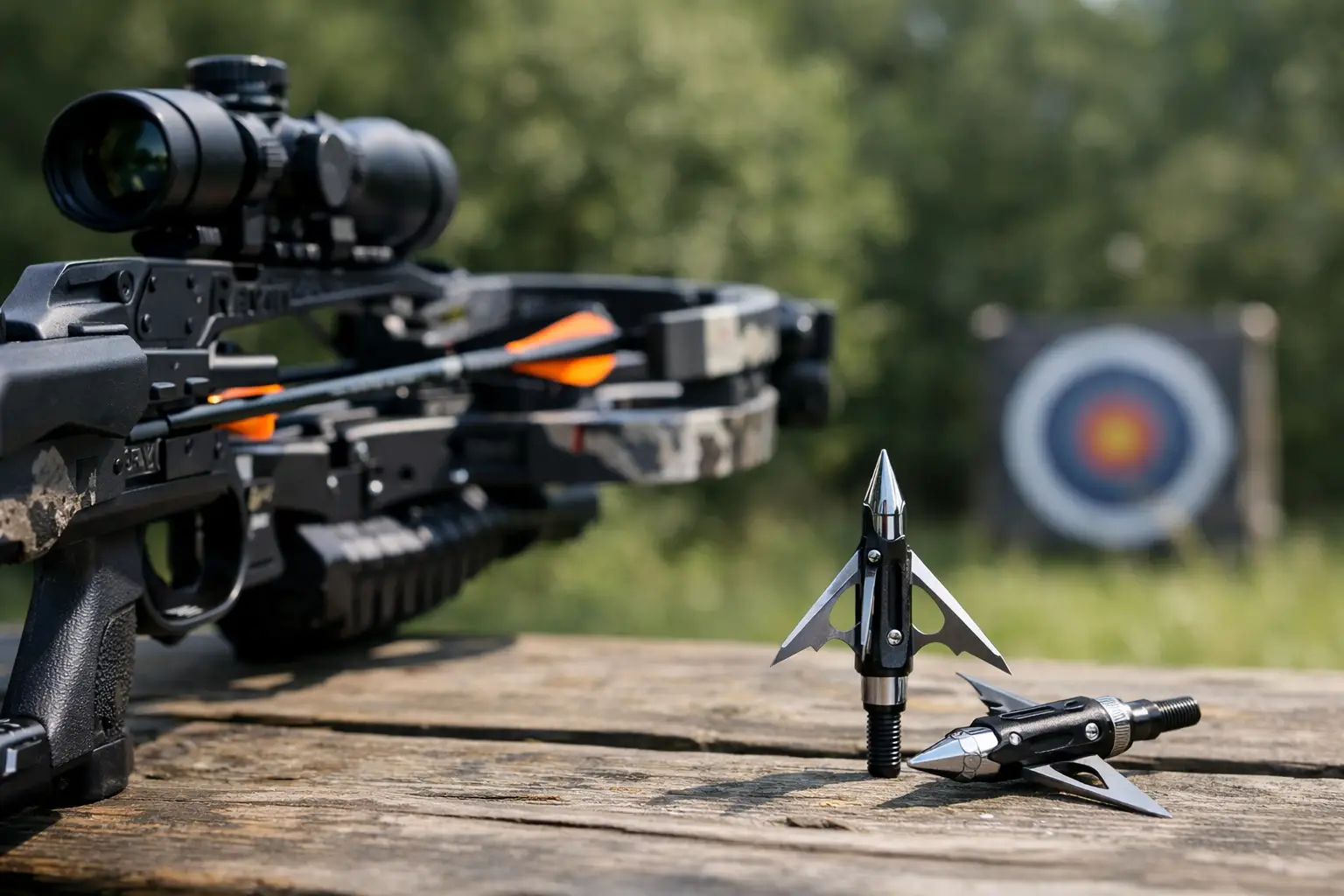
Mechanical broadheads have moving parts. Most use a retention collar, clip, O-ring, or internal mechanism to keep blades closed during flight, then open on impact. If that retention system is not built for the force and vibration of a fast crossbow launch, blades can partially deploy before the bolt reaches the target. The result can be a wild impact, poor penetration, or a complete miss.
This does not mean fixed-blade heads are automatically better for every Ravin hunter. It means mechanical heads demand a higher standard of setup and testing. For many deer hunters, a quality mechanical head delivers a wide cutting diameter and strong blood trails. The trade-off is that you must verify it works from your particular Ravin, not assume it will.
What Makes a Mechanical Broadhead Ravin-Ready?
Start with the manufacturer’s stated crossbow and speed rating. If the broadhead maker does not clearly say the head is suitable for crossbows or high-speed setups, leave it on the shelf. Do not try to guess whether a standard mechanical can handle an R29X or R500.
Next, match the head weight to your Ravin bolt and hunting setup. Many crossbow hunters use 100-grain broadheads, but the correct choice is the one that maintains the total bolt weight and specifications required for your specific Ravin model. Changing head weight changes front-of-center balance, total finished weight, point of impact, and potentially the way the crossbow performs.
Use bolts that meet Ravin’s specifications for your model. This is not the place for bargain-bin arrows, damaged nocks, or a mixed quiver of mystery bolts. Ravin’s bolt, nock, and arrow weight requirements exist because the system is engineered to work as a package. Going below the required finished bolt weight can create a dangerous situation and may damage the crossbow.
Finally, inspect the mechanical design itself. Look for a secure blade-retention system, a durable ferrule, blades that lock open on impact, and a reputation for handling crossbow speeds. A large cutting diameter can be attractive, but more blade surface can also make a head less forgiving in wind or on marginal angled shots. Bigger is not always better.
Mechanical vs. Fixed-Blade Heads on a Ravin
A mechanical broadhead is often the practical choice for the hunter who wants field-point-like flight and a wide wound channel on deer-sized game. With a well-matched head, a Ravin’s speed can produce flat flight and fast, decisive results at reasonable hunting ranges.
The downside is mechanical complexity. Blades can fail to deploy, deploy early, or lose energy while opening, particularly if the head is poorly made or driven beyond its design limits. Mechanical heads also deserve extra inspection after every target session. A slightly bent blade, weakened collar, or loose ferrule is enough reason to retire a practice head.
Fixed blades are simpler and generally offer fewer moving-part concerns. They can be a smart choice for hunters who prioritize durability, bone contact performance, or a broadhead with no deployment mechanism to manage. But fixed heads can be less forgiving of imperfect tuning, and some models may impact differently than field points.
For most Ravin deer hunters, the decision comes down to confidence after testing. If your mechanical broadhead groups with your field points, stays closed in flight, and is rated for your setup, it can be a solid option. If it does not, switch heads. Do not spend hunting season trying to troubleshoot gear that already gave you a warning at the range.
How to Test Mechanical Broadheads Before Hunting
Never take a new mechanical broadhead straight from the package to a treestand. Test it from the exact Ravin crossbow, bolt, scope setting, and distance you plan to hunt with.
Begin with field points to confirm the crossbow is shooting correctly. Once those groups are consistent, shoot one mechanical broadhead at a time into a broadhead-rated target. Avoid shooting multiple broadheads into the same small aiming spot. Broadheads can destroy each other on contact, and a damaged head can hide a bad grouping problem.
Test at 20 yards first, then move to your intended hunting distance. Most hunters should keep broadhead shots within the ranges they can repeat from real hunting positions, not just from a bench on a calm afternoon. If you hunt from a stand, practice from an elevated position. If you hunt in cold weather, test wearing the jacket and gloves you will actually use.
After each shot, check the head closely. Confirm the blades remained closed until impact, deployed correctly, and did not bend or loosen. Also inspect the bolt shaft, vane area, insert, and nock. Ravin bolts travel fast. Small damage is not cosmetic when that bolt is headed downrange.
Use this short pre-hunt check before every outing:
- Confirm every finished bolt meets Ravin’s required weight and uses the correct nock.
- Check each mechanical head for tightness, blade retention, bent blades, and loose parts.
- Spin-test the broadhead-equipped bolt to spot wobble from a bent ferrule or damaged insert.
- Keep practice heads and sharp hunting heads clearly separated.
- Verify your scope zero with a broadhead before the season and after any hard knock or travel.
Ravin Model Considerations: R10, R29X, R50, and R500
The basic rule stays the same across Ravin’s lineup: use a mechanical broadhead built for the speed and energy your crossbow produces. The faster the model, the less room there is for weak retention systems and sloppy bolt preparation.
An R10 owner may have more broadhead options than an R500 owner simply because the R500’s extreme speed is more demanding. That does not make an R500 a bad mechanical-broadhead platform. It means the hunter needs to be stricter about head ratings, complete bolt weight, and real range results.
The R29X and R50 sit in the same practical conversation. They are more than capable of clean deer-hunting performance, but they still deserve quality broadheads and precise setup. Do not choose a head based only on advertised cutting diameter. Choose the one that holds together and groups from your crossbow.
If you are deciding between models, compare the R10, R29X, R50, and R500 based on your typical shooting distance, budget, and comfort with high-speed crossbow maintenance. The fastest Ravin is not automatically the best fit if you want a simple, conservative hunting setup. Our Ravin comparison pages are built to help hunters sort that out before buying.
Don’t Ignore Ravin’s Manual and Local Rules
Your Ravin owner’s manual is the final word on approved bolt configuration, minimum finished bolt weight, nock requirements, and safe operation. Follow it exactly. A mechanical broadhead does not change those rules.
Also check the broadhead regulations where you hunt. Legal cutting-diameter requirements and definitions can vary by state and game species. A head that is legal for deer in one area may not meet a different state’s rules.
A good mechanical broadhead on a properly configured Ravin can be a deadly, practical deer-hunting setup. Earn that confidence on the range, keep your bolts in spec, and carry only the heads you would trust when the shot finally shows up.