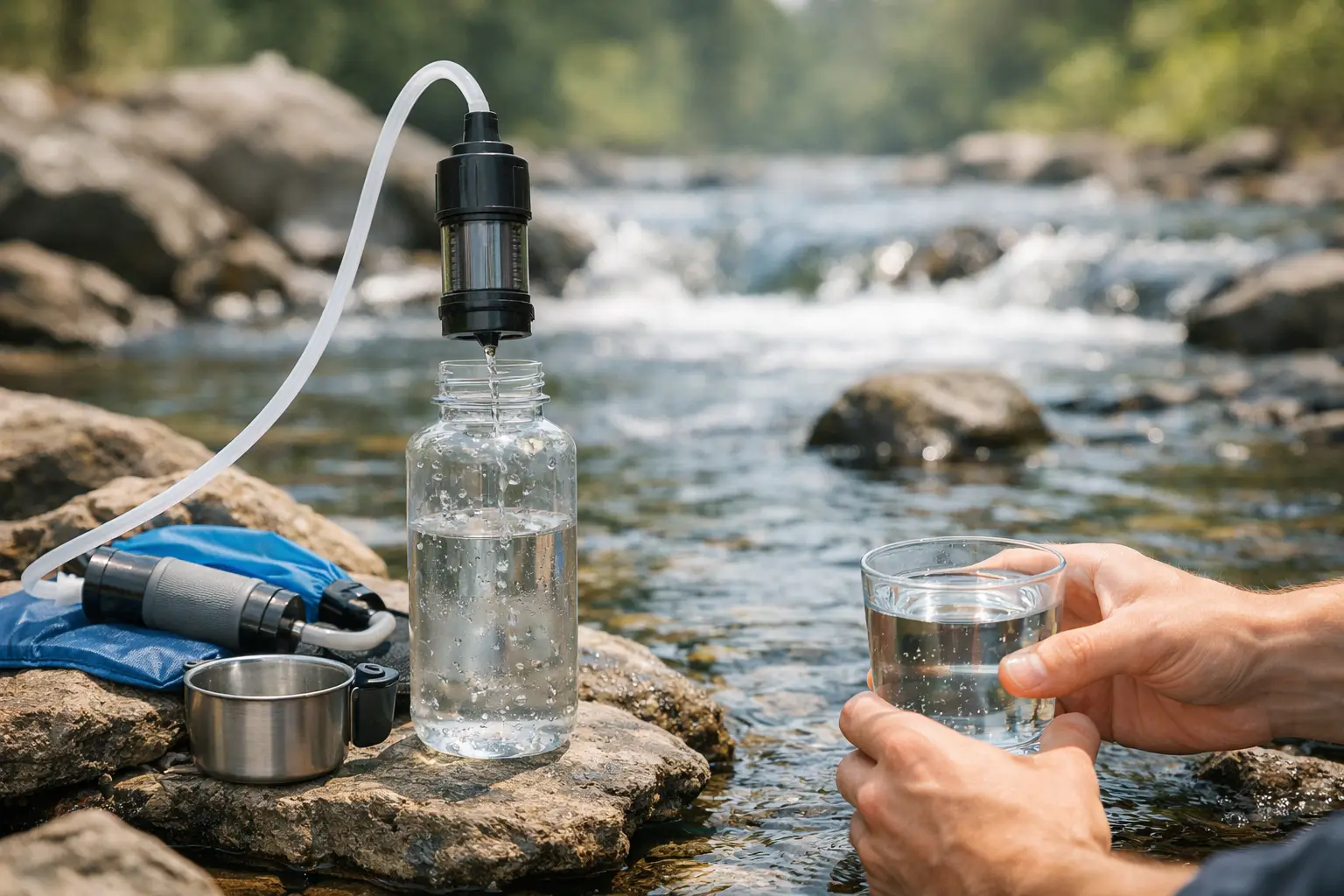
How to Purify River Water Without Getting Sick
A clear-looking river can still carry enough bacteria, protozoa, or chemical runoff to ruin a trip fast. Knowing how to purify river water is not about finding one magic gadget. It is about matching the treatment method to the water in front of you, the time you have, and the gear you can realistically carry.
For most campers, vehicle-based travelers, and emergency-preparedness households, the dependable answer is a layered approach: remove sediment first, then filter or disinfect, then store the treated water in a clean container. Real survival info. Real gear. No BS.
How to Purify River Water in the Field
Start upstream from campsites, trail crossings, livestock areas, storm drains, and obvious contamination. Moving water is generally a better source than stagnant pools, but “better” does not mean safe. A fast mountain stream can still contain Giardia or Cryptosporidium from wildlife. A river near farms, roads, mines, or developed areas may also contain contaminants that common backpacking filters cannot remove.
Look for the clearest water available and collect it without stirring up mud from the bottom. If you can reach a small side channel fed by the main river, that is often easier to treat than the main current. Avoid water with a chemical smell, oily sheen, bright unnatural color, dead fish, or nearby industrial discharge. No portable treatment setup makes unknown chemical pollution reliably safe.
Once you have chosen a source, use the right method for the threat.
1. Filter river water for the fastest daily use
A quality hollow-fiber or pump filter is usually the most practical tool for drinking water on the move. Many field filters are rated to remove bacteria and protozoa, including common threats such as E. coli, Giardia, and Cryptosporidium. That makes them a strong choice for backcountry streams and rivers where biological contamination is the main concern.
Pay attention to the filter’s stated pore size and test claims. A 0.1-micron filter is commonly used for bacteria and protozoa. Standard filters do not reliably remove viruses, dissolved chemicals, salt, fuel, or heavy metals. In most remote US wilderness settings, viruses are less likely than bacteria and protozoa. In floodwater, dense urban runoff, or areas with poor sanitation, that assumption gets weaker.
Squeeze filters are light and affordable but require some patience. Gravity filters are excellent for camp because they treat several liters while you handle food, shelter, or fire. Pump filters work well in shallow water and let you control the process, though they take more effort. For a vehicle kit, a gravity system plus a durable backup squeeze filter is a sensible setup.
Whatever filter you choose, protect it from freezing. If water freezes inside a hollow-fiber filter, the internal fibers can crack. The unit may still pass water, but it may no longer protect you. In cold weather, keep the filter in an inside pocket or sleeping bag overnight.
2. Boil water when you need the most reliable biological treatment
Boiling is blunt, proven, and hard to misunderstand. Bring clear water to a rolling boil for one minute. At elevations above 6,500 feet, boil it for three minutes. Let it cool in a covered, clean container before drinking.
Boiling kills bacteria, viruses, and protozoa. It does not remove sediment, chemicals, fuel, pesticides, heavy metals, or salt. It also uses fuel and takes time, which matters when you are cold, tired, or managing water for several people.
For emergency kits and off-grid setups, a metal pot is not optional gear. It gives you a second dependable treatment method if a filter clogs, breaks, freezes, or gets lost. Pair it with a compact stove and enough fuel to make boiling a realistic option rather than a plan on paper.
3. Use chemical treatment as a compact backup
Water treatment tablets and drops weigh almost nothing and deserve a place in every serious water kit. Chlorine dioxide is generally the better all-around choice because it works against bacteria, viruses, Giardia, and Cryptosporidium when used correctly. The trade-off is time. Depending on water temperature and the product instructions, treatment can take from 30 minutes to four hours.
Iodine treatments are compact and fast against many organisms, but they are less reliable against Cryptosporidium and are not ideal for pregnant people, people with thyroid conditions, or long-term daily use. Plain household bleach can work in a true emergency if it is regular, unscented bleach with an appropriate chlorine concentration, but measuring errors are common and formulations vary. Tablets or chlorine dioxide drops are easier to carry and harder to screw up.
Chemicals work best in clear water. If your river water is cloudy, pre-filter it first and follow the treatment label exactly. Guessing at dose or wait time is how good gear becomes useless gear.
4. Use UV only after clearing the water
UV purifiers can neutralize bacteria, viruses, and protozoa quickly, but only in clear water. Sediment blocks the light and can shelter organisms from treatment. A UV purifier also needs charged batteries or a reliable power source, which makes it less independent than a filter or a boil pot.
That does not make UV bad gear. It is a fast option for travelers, van lifers, and base camps with dependable power. Just do not make it your only answer for silty river water after rain. If you use one, carry a pre-filter and a backup chemical treatment option.
Pre-Filter Muddy Water Before Treatment
Silty water clogs filters, slows chemical treatment, and makes UV unreliable. Let the water sit in a container so larger particles settle, then pour the clearer water off the top. You can also run it through a clean bandana, coffee filter, tightly woven cloth, or purpose-built sediment pre-filter.
This step does not purify the water. It simply makes your actual treatment method work better and helps your expensive filter last longer. Do not use a dirty shirt, oily rag, or fabric exposed to detergent or fuel.
In a long-duration emergency, bring a collapsible bucket or wide-mouth container. It makes settling and pre-filtering far easier than trying to do everything with a narrow bottle at the riverbank.
The Best River Water Setup Depends on Your Use
For a day hike, a compact squeeze filter, a compatible bottle, and chlorine dioxide tablets cover most needs without much weight. For a family camping trip, a gravity filter, metal pot, camp stove, and backup tablets can handle higher volume with less hassle. For a truck, cabin, or off-grid property, add larger water containers, a sediment pre-filter, and enough stove fuel or power capacity to support repeated treatment.
Avoid buying gear based only on advertised flow rate. Check what contaminants it removes, how many liters it is rated for, whether replacement parts are available, and how it performs in freezing weather. A filter that is great for a solo weekend may be the wrong tool for four people using river water for drinking, cooking, and basic hygiene.
Our field water-filter and emergency water-treatment gear reviews focus on those real-world differences: treatment capability, failure points, maintenance, and whether the gear earns space in your kit.
Prevent Recontamination After You Treat It
Purified water can become unsafe again if you pour it into a dirty bottle. Keep untreated and treated water containers clearly separated. Mark them with tape, use different cap colors, or dedicate one container to raw river water and another to drinking water.
Wash your hands before handling clean bottle threads and caps. Do not dip a dirty cup into treated water. If you use a squeeze filter, avoid letting the clean-side cap touch the riverbank or the dirty collection bag. These small habits matter because cross-contamination can undo every careful step before it.
Can you drink river water with only a filter?
Sometimes, but only if the filter is rated for the threats present and the water is not chemically contaminated. For typical backcountry use, a reputable bacteria-and-protozoa filter is often enough. When virus risk is higher or the source is questionable, pair filtration with chemical treatment or boiling.
Does boiling remove chemicals from river water?
No. Boiling kills living organisms but does not remove most dissolved chemicals, heavy metals, pesticides, or fuel. In some cases, boiling can concentrate contaminants as water evaporates. Find another source if chemical contamination is possible.
How much river water should you carry?
Carry more than you think you need, but do not rely on hauling your entire supply if you have a reliable source and treatment plan. A practical starting point is a filled bottle for immediate use, a collection bag or second container for raw water, and the capacity to treat several liters at camp.
The right water kit gives you options when conditions get ugly. Carry a filter for speed, a boil pot for certainty, and chemical treatment for backup. Then practice using all three before the river is your only source.