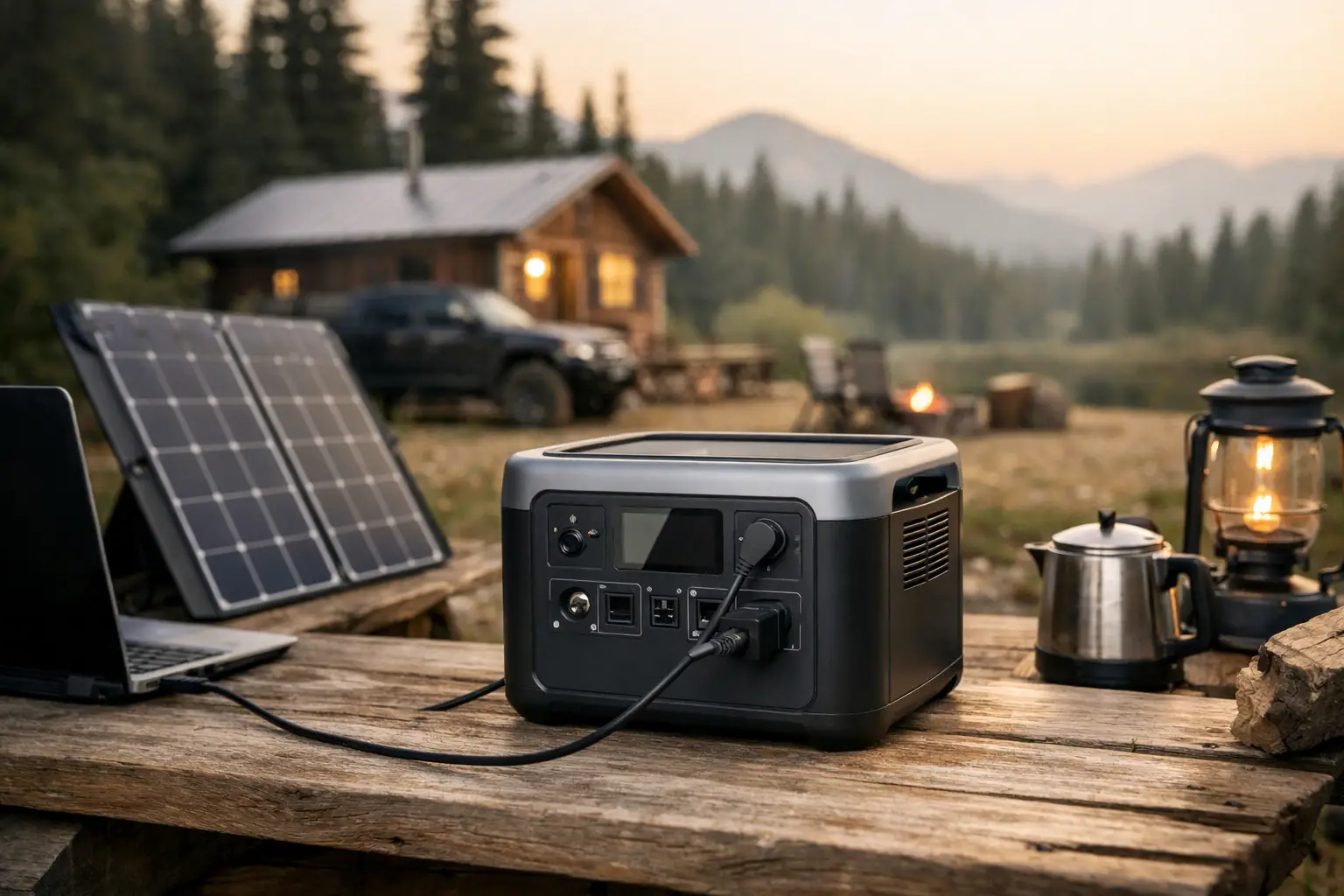
Portable Power Station for Off Grid Living
A dead battery at an off-grid cabin is not an inconvenience when it takes out your water pump, fridge, lights, or medical gear. A portable power station for off grid living can be a practical answer, but only if you size it for the loads you actually use. Buy too small and it becomes an expensive phone charger. Buy too large without a way to recharge it and you are hauling weight that still runs empty.
The right setup is not about having the biggest battery on the spec sheet. It is about matching battery capacity, inverter output, solar charging, and portability to the way you live. Real survival info. Real gear. No BS.
What a Portable Power Station Actually Does
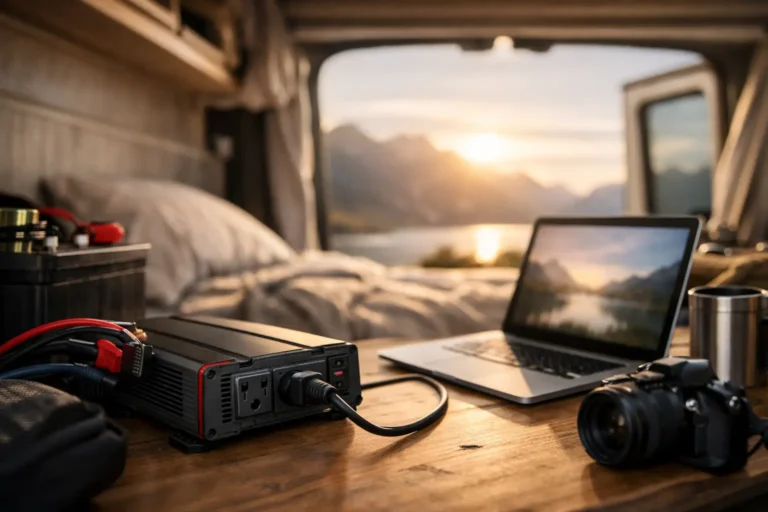
A portable power station combines a battery, inverter, charge controller, AC outlets, USB ports, and often a display in one enclosed unit. You can charge it from wall power before leaving home, from a vehicle while moving, from a generator, or from compatible solar panels once you are set up.
For off-grid living, that all-in-one design has a real advantage: less wiring, fewer separate components, and less room for a beginner mistake. It is also quieter and cleaner than running a gas generator around the clock.
But a power station is not a complete replacement for a permanent solar-and-battery system in every situation. If you run a full-size refrigerator, well pump, power tools, electric cooking appliances, air conditioning, and laundry equipment every day, you may outgrow a portable unit fast. For a van, hunting camp, small cabin, backup room, or a modest off-grid base, it can be exactly the right tool.
Size a Portable Power Station for Off Grid Living First
Ignore marketing claims about how many devices a unit can charge. Start with your own gear. You need to know two numbers: watts and watt-hours.
Watts measure the power an appliance needs at one moment. A 1,500-watt space heater needs far more immediate power than a 10-watt LED light. Watt-hours measure how much energy you will use over time. Run that 10-watt light for five hours and it consumes roughly 50 watt-hours.
Use this simple calculation:
Watts x hours used per day = watt-hours per day
A 60-watt DC fridge that cycles for eight total hours in a day uses about 480 watt-hours. Add lights, phone charging, a laptop, a fan, and a small water pump, and a realistic daily demand can quickly reach 1,000 to 1,500 watt-hours.
Do not plan around the published battery capacity alone. Inverter losses, cold weather, cable losses, and the fact that appliances cycle on and off all affect usable runtime. Give yourself a buffer of at least 20 to 30 percent. If your estimated daily use is 1,200Wh, a 1,500Wh to 2,000Wh unit is the sensible starting point.
Inverter output matters as much as battery capacity
Battery capacity tells you how long a station can run equipment. Inverter output tells you what it can run at all. A 2,000Wh power station with a 1,000W inverter may run a fridge and lights for a while, but it cannot handle a 1,500W coffee maker or many job-site tools.
Watch for startup surge, too. Compressors in refrigerators, freezers, pumps, and some power tools can draw several times their running wattage for a brief moment. A pump listed at 700 watts may need a much higher surge allowance to start. Check both the appliance label and the power station’s continuous and surge ratings before you depend on it.
Build Around the Loads That Matter
A good off-grid power plan separates essential loads from comfort loads. Essentials are what keep your shelter functional and your people safe: refrigeration for food or medicine, communication devices, lights, a fan in dangerous heat, a CPAP machine, water pumping, and basic charging.
Comfort loads are where batteries disappear fast. Electric heaters, hot plates, toaster ovens, hair dryers, electric kettles, and air conditioners can drain a station in a hurry. That does not mean you can never use them. It means you need to use them deliberately, preferably while solar is actively producing power or while a generator is running.
For cooking and heating, propane, wood, or other fuel-based options usually make more sense in an off-grid setup. Save stored electricity for the jobs that cannot be handled another way.
A typical small-cabin or van setup often works well with a 1,000Wh to 2,000Wh lithium iron phosphate power station, a 1,500W to 2,000W pure sine wave inverter, and enough solar to replace daily use. Larger families, regular tool use, or a 120V water pump may justify a 2,000Wh-plus expandable model.
Choose LiFePO4 and Pure Sine Wave Power
Battery chemistry is not a minor detail. For most people buying a portable station for regular off-grid use, lithium iron phosphate, usually labeled LiFePO4 or LFP, is the right call. It typically offers far more charge cycles than older lithium-ion designs and holds up better under frequent use.
That matters when the unit will be charged and discharged every day rather than sitting in a closet for emergencies. LiFePO4 units are usually heavier than comparable high-density lithium packs, but that is a trade-off worth making for durability and long-term value.
Also choose a pure sine wave inverter. Sensitive electronics, battery chargers, CPAP machines, and compressor-driven appliances are generally happier with clean, stable power. Modified sine wave units may cost less, but they are not where you want to cut corners for equipment you depend on.
Solar Input Is Where Off-Grid Plans Succeed or Fail
A large battery without enough charging input is just stored time. Solar is what turns a portable power station into a workable off-grid system.
Look at the station’s maximum solar input in watts and its supported voltage range. A 2,000Wh battery paired with only 200 watts of solar can work for light use in clear summer weather, but it may take more than a day to refill after a serious discharge. Cloud cover, shade, panel angle, and short winter days will make that worse.
For a daily-use setup, aim for solar panel capacity close to or greater than your expected daily watt-hour use divided by your realistic sun hours. If you use 1,200Wh daily and average four solid sun hours, 400 watts of panels is a workable baseline on paper. In the real world, 600 watts gives you more margin for weather and charging losses.
Portable folding panels are convenient for van life, temporary camps, and seasonal use. Rigid panels mounted on a cabin roof, shed, rack, or trailer are usually tougher and less annoying for a long-term setup. Either way, do not place panels where trees, roof racks, or even a small patch of shade will cripple output.
Have a backup charging method
Solar is not magic. Days of rain, snow-covered panels, and heavy tree cover happen. A vehicle charging cable can help while traveling, but it is usually too slow to be your main recovery plan. A small inverter generator can be a smart backup for extended bad weather, tool work, or periods of high demand.
This is where a power station earns its keep. Run a generator for a limited charging window instead of listening to it all day, then use stored battery power quietly through the night.
Features Worth Paying For
Not every extra feature matters, but several are genuinely useful off grid. Expandable battery support gives you a path to increase storage later without replacing the main unit. An RV-style outlet can simplify some trailer and camper connections. A strong app is convenient for checking battery status, though it should never be the only way to operate the unit.
Pay close attention to cold-weather charging protection. Lithium batteries should not be charged below freezing unless the system has proper low-temperature protection or battery heating. Discharging in cold conditions is usually less of a problem, but capacity still drops. If your station will live in an unheated cabin, enclosed trailer, or truck bed, this is not optional fine print.
Portability also needs an honest look. A 2,000Wh station can weigh 50 pounds or more. That may be portable enough for a truck, cabin, or RV, but not something you want to carry across rough ground alone. Wheels, solid handles, and a case that can take dust and bumps matter more than flashy LED lights.
For most buyers, BLUETTI’s LiFePO4 models are worth comparing because the lineup includes compact units, larger high-output stations, and expandable systems. Match the model to your actual load calculation, then review its solar-input limit, cold-weather behavior, weight, and warranty before spending money.
Set It Up Like You Plan to Need It
Keep the station dry, ventilated, and protected from direct sun. Do not bury it under blankets, gear bins, or sleeping bags while it is charging or powering heavy loads. Use appropriately rated extension cords, inspect cables for damage, and avoid cheap adapters for high-wattage equipment.
Before relying on the system, run a home test. Plug in your actual fridge, pump, CPAP, lights, or work equipment. Measure a normal day, then recharge from the solar panels you intend to use. This exposes bad assumptions before you are miles from the nearest outlet.
The best off-grid power setup is boring: it starts every load you need, recharges before the next day, and does not demand constant babysitting. Buy for that standard, not for the biggest number printed on the box.