How to Cock a Ravin R10 Safely Before Hunting
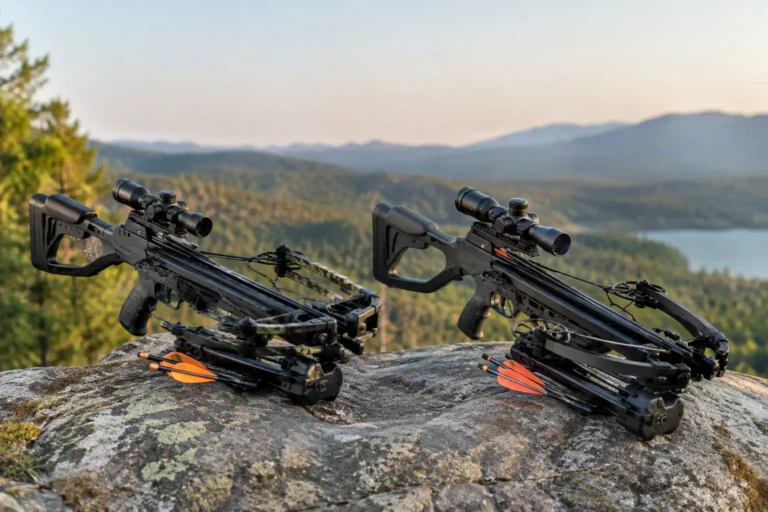
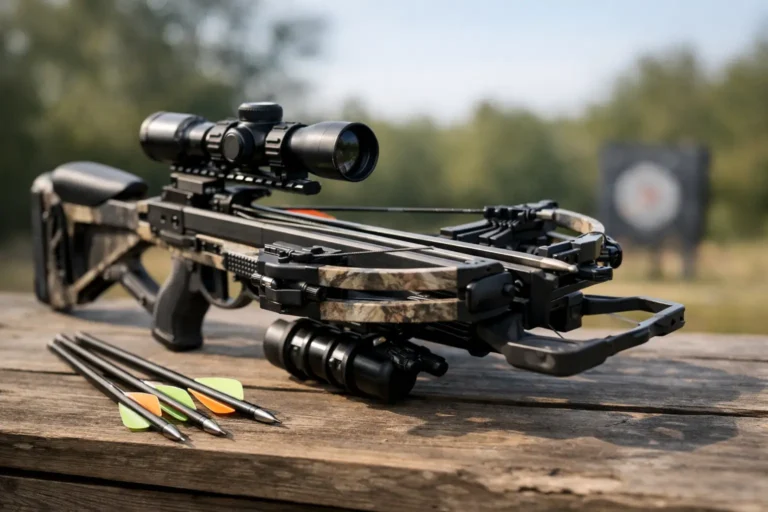
The Ravin R10 is compact, fast, and built around a cocking system that removes much of the strain found on older crossbows. That does not mean you should rush it. Knowing how to cock Ravin R10 correctly protects the bow, keeps the string centered, and prevents the kind of careless handling that can end a hunt before it starts. If you’re also looking at the newer model, read our Ravin R10X Pro review.
The R10 uses Ravin’s integrated Versa-Draw cocking system. It is one of the reasons this crossbow remains a solid choice for hunters who want Ravin performance without stepping into the higher price range of newer models. The process is straightforward, but only when you start with a clear safety routine and use the system as designed.
Before You Cock the Ravin R10
Treat the R10 as a loaded weapon the moment you pick it up, even if you know it has been stored uncocked. Keep the crossbow pointed in a safe direction, keep your finger away from the trigger, and make sure there is no arrow or bolt in the rail before cocking or uncocking it.
Inspect the string, cables, and serving before every hunt. You are looking for fraying, separated strands, damaged serving around the center area, or anything that looks flat, fuzzy, or out of place. A compact crossbow stores serious energy. If the string or cables look questionable, stop there. Do not try to shoot through a problem.
Also check that the Trac-Trigger firing unit is fully forward and that nothing is blocking its path. Dirt, leaves, a loose accessory, or a poorly seated string can create problems. The R10’s enclosed firing system is one of its strengths, but it still needs to move freely.
Wear eye protection when practical, especially while learning the process or working at a range. It is a small step that makes sense around any high-energy string system.
How to Cock a Ravin R10 With Versa-Draw
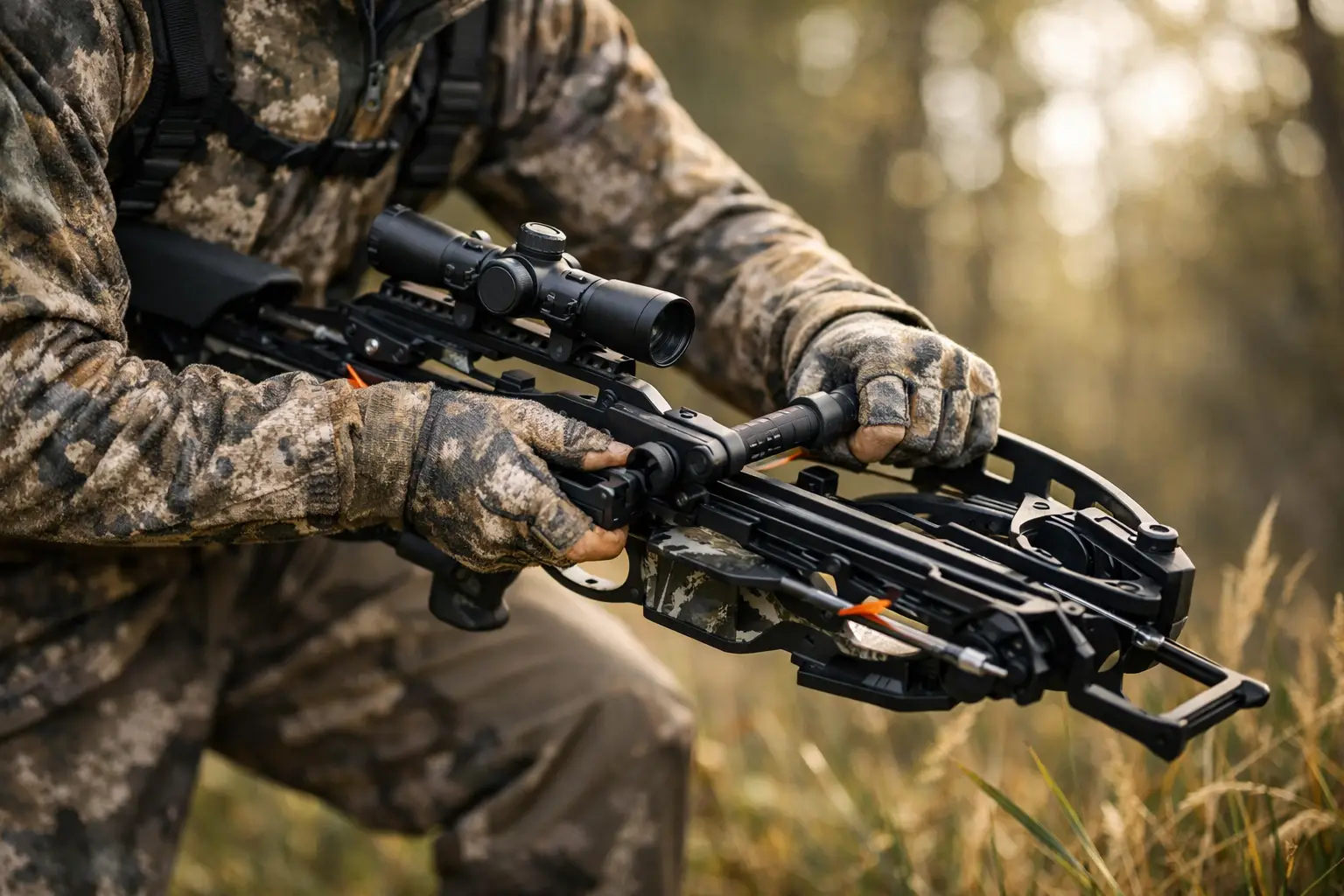
The Versa-Draw system uses a removable crank handle to pull the string back evenly. It gives you mechanical advantage, which is why many hunters find the R10 easier to manage than a rope-cocker design. The trade-off is simple: you need to slow down enough to ensure the handle is properly installed and the string is tracking evenly.
1. Set the crossbow on stable ground
Point the R10 in a safe direction and place the foot stirrup firmly on the ground. Put one foot securely through the stirrup. Do not balance the crossbow against your leg, tailgate, or a wobbly tree stand platform.
You want the bow stable before you begin turning the crank. A stable base prevents the crossbow from shifting and keeps you from forcing the handle at an awkward angle.
2. Confirm the rail is empty
Do not cock the crossbow with an arrow already loaded unless you are following the exact procedure in the Ravin owner’s manual for your setup. For normal field use, cock first, then load the arrow only when you are ready to shoot.
This distinction matters. A cocked R10 is not automatically ready to fire. It becomes ready only after you load the correct Ravin arrow, confirm it is seated correctly, and keep the safety rules in place.
3. Insert the Versa-Draw handle
Take the Versa-Draw handle and seat it fully into the crank port. Make sure it is engaged before you apply pressure. If it feels loose, crooked, or does not seat cleanly, remove it and try again rather than muscling it.
Use the handle that came with the crossbow or the correct Ravin replacement. Do not substitute a random tool or modify the crank. That is not a shortcut. It is a good way to damage the system or lose control of the handle.
4. Turn the handle steadily until the string latches
Rotate the handle in the cocking direction shown in your R10 manual. Keep a firm grip and use smooth, controlled turns. As the string travels rearward, watch for even movement and listen for anything that sounds unusual, such as grinding, popping, or a sudden skip.
Continue until the string is fully drawn into the Trac-Trigger mechanism and the system latches. Do not stop short and assume it is cocked. A partial draw is not a safe or usable state.
When the crossbow reaches the fully cocked position, the anti-dry-fire safety system should be engaged. Visually confirm the string is seated correctly in the trigger area. If it does not look right, do not load an arrow or attempt to fire.
5. Remove and store the crank handle
Once the R10 is fully cocked and latched, remove the Versa-Draw handle and put it somewhere you can reach when the hunt is over. A secure pocket, pack compartment, or dedicated holder beats leaving it on the ground where it can collect mud or disappear in leaves.
Never carry the crossbow by the crank handle. It is a cocking tool, not a carry handle.
Load the Arrow Only When You Are Ready
After cocking, keep the Ravin R10 pointed safely downrange. Use the correct Ravin arrow for the R10 and inspect it before loading. Check the nock, shaft, vanes, and broadhead or field point. A cracked shaft, damaged nock, or loose point does not belong in a high-speed crossbow.
Place the arrow on the rail according to the orientation specified by Ravin, then slide it rearward until the nock contacts the string. Do not assume it is seated just because it looks close. The arrow must be fully against the string for the crossbow to function as intended.
If you hunt from a blind or stand, do not load early just because you may see deer. Cocking before you settle in can be reasonable if local regulations and your hunting situation allow it. Loading should happen only when you can keep complete control of the crossbow and maintain a safe shooting direction.
Common R10 Cocking Mistakes That Cause Trouble
The biggest mistake is trying to rush the crank. The Versa-Draw system makes cocking easier, not foolproof. Slow, even turns give you the chance to notice a problem before it becomes expensive.
Another common error is failing to inspect the string and cables. The R10’s speed and compact profile are real advantages in the woods, but those benefits depend on properly maintained components. Follow Ravin’s current service and replacement guidance rather than waiting until visible damage becomes severe.
Hunters also lose time by misplacing the crank handle. Store it in the same place every trip. If your R10 is cocked at the end of a hunt, you will need that handle to follow the proper uncocking procedure. Do not fire an arrow into the ground, a target that is too worn out, or an unsafe improvised backstop just to discharge the bow.
Finally, never dry-fire the R10. The anti-dry-fire system is there to help prevent a mistake, but it is not permission to test the trigger without an arrow. Dry-firing can damage a crossbow and can put the shooter and bystanders at risk.
What to Do if the R10 Will Not Cock Properly
Stop immediately if the crank binds, the string does not travel evenly, the trigger unit does not latch, or you hear an abnormal noise. Do not force the handle harder. Forcing a problem can turn a small adjustment or maintenance issue into damaged cables, a damaged trigger system, or an unsafe bow.
First, confirm the rail and trigger area are clear, the handle is properly seated, and you are using the normal cocking direction. If the issue remains, consult the R10 owner’s manual and contact an authorized Ravin service source. This is one area where guesswork has no place.
For hunters comparing Ravin models, the R10’s Versa-Draw system is still a meaningful advantage. It offers a controlled cocking process without the bulk of an external rope system, though newer Ravin models may better suit hunters who want more speed, different stock geometry, or updated features. Dark Justice Survival’s Ravin comparison pages can help narrow that choice before you spend your money.
A clean, controlled cocking routine takes less time than fixing a damaged crossbow or explaining a preventable safety mistake. Set the R10 firmly, crank it evenly, confirm the latch, and load only when the shot is real.