
Best BLUETTI Power Station for Home Backup
The right “home backup” power station depends on what you must keep running (router, lights, fridge, medical devices) and how long you need it (short outages vs multi-day). This guide routes you to the right class and links to the full pages.
Quick Answer
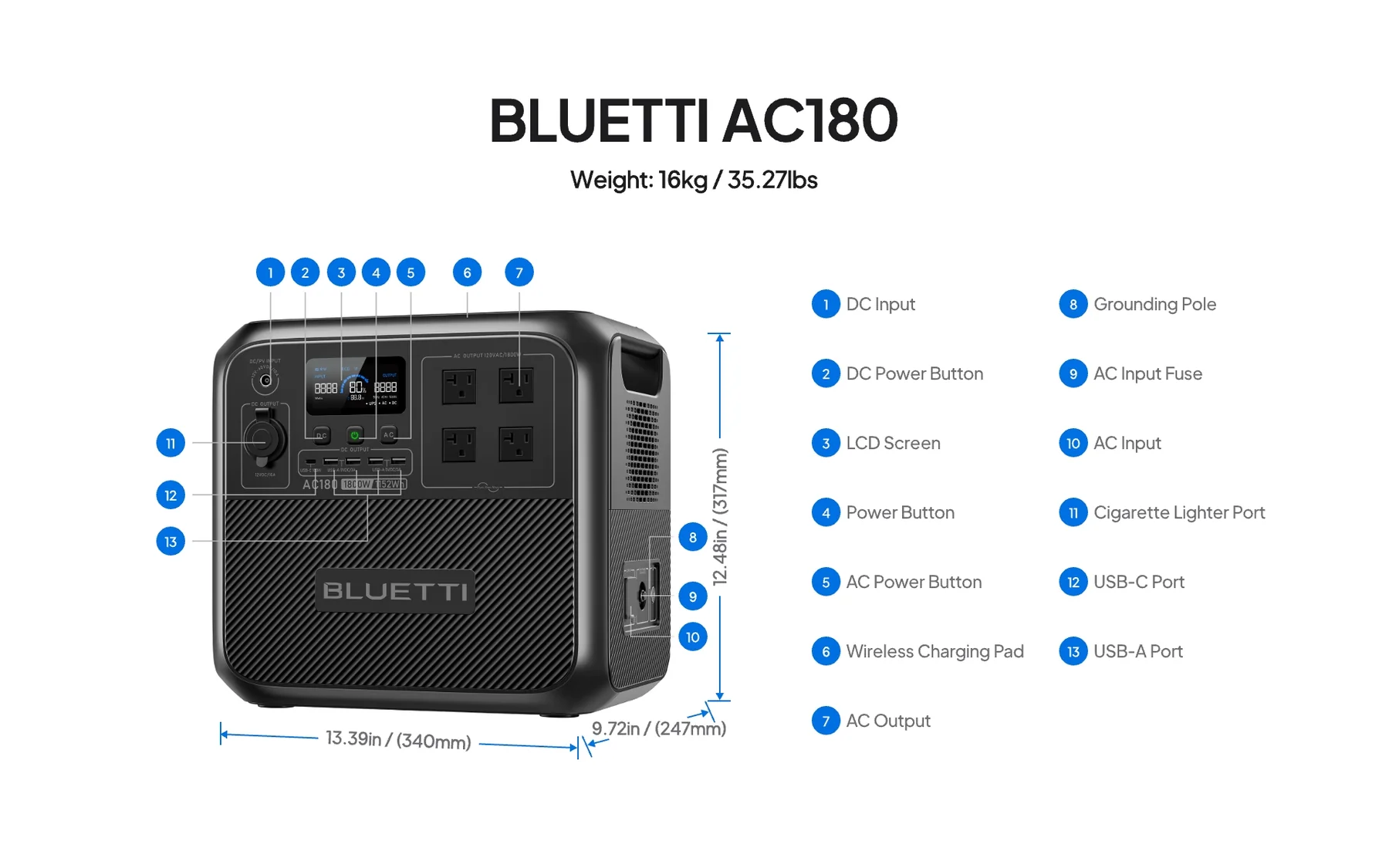
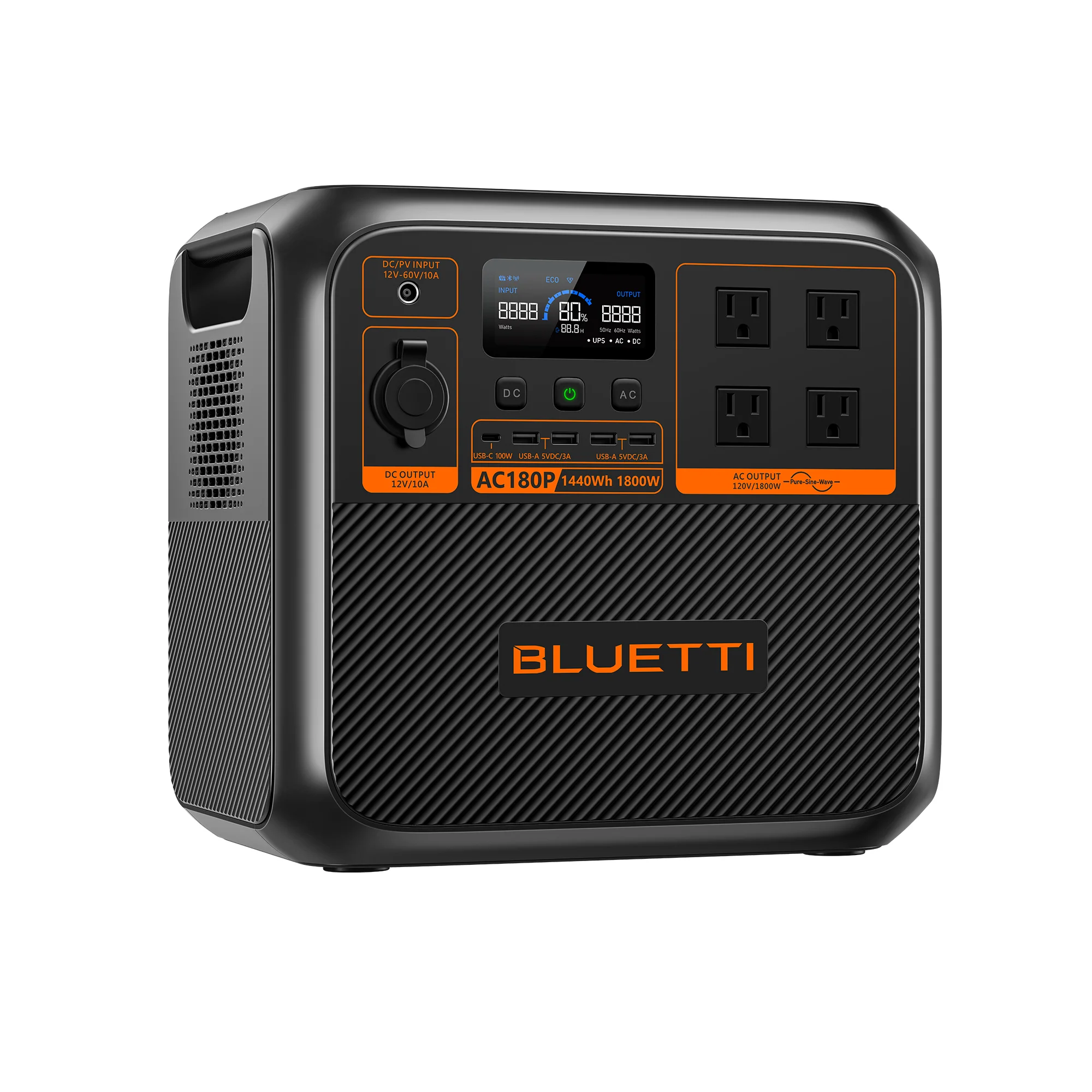
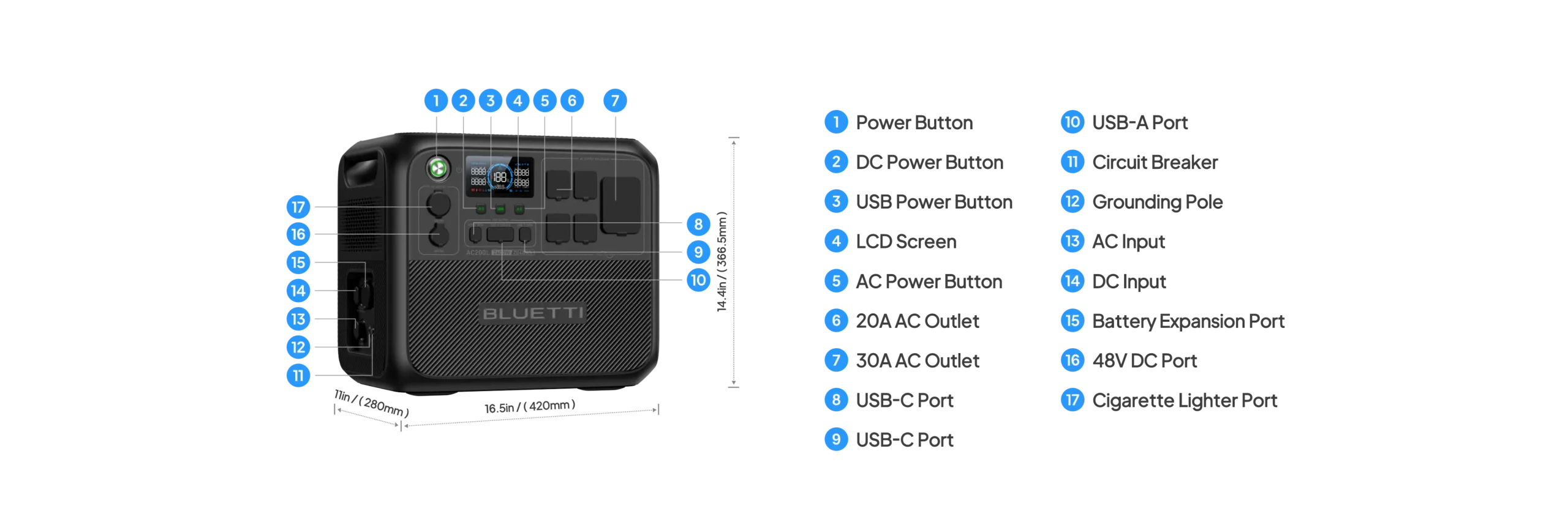
If your goal is short outages (keep essentials alive without spending big), start with BLUETTI AC180. Choose AC180P when you want more runtime buffer at the same 1,800W output. Move up to the AC200 series when you’re covering heavier essentials, longer runtime, or you want stronger solar input and expansion planning.
 ❯
❯
Quick Comparison
Use this to choose the right class fast, then click through to the full page for the buying details.
| Model | Output class | Battery | Best for |
|---|---|---|---|
| AC180 (Starter class) Short outages, essentials |
1,800W output | 1,152Wh | Router + lights + fans + charging + limited fridge runtime, especially when you can recharge daily. |
| AC180P (More buffer) Same output, more runtime |
1,800W output | 1,440Wh | Same use-case as AC180 but more “don’t worry” buffer for longer outages or higher daily draw. |
| AC200 series (Heavier essentials) Longer runtime & planning |
~2,400W output class | ~2,0xx–2,3xxWh class | Heavier loads, longer runtime, stronger solar input, and expansion planning for multi-day stability. |
Best Picks
Pick your class, then use the internal page to finalize your buying decision.
Starter Pick: BLUETTI AC180
Best “buy-first” option for many homes when the goal is to keep essentials alive during short outages without overspending.
- Output class: 1,800W
- Battery: 1,152Wh
- Best for: router/phones/lights/fans + selective appliance use
More Buffer: BLUETTI AC180P
Same 1,800W class output, more battery. This is the “I don’t want to cut it close” pick for longer outages.
- Output class: 1,800W
- Battery: 1,440Wh
- When to choose: you want more hours before recharge decisions
Heavier Essentials: BLUETTI AC200 Series
When your plan includes bigger loads, longer runtime, stronger solar input, or expansion planning, this is the move-up class.
- Output class: ~2,400W
- Battery class: ~2,0xx–2,3xxWh
- Best for: longer outages + heavier essentials
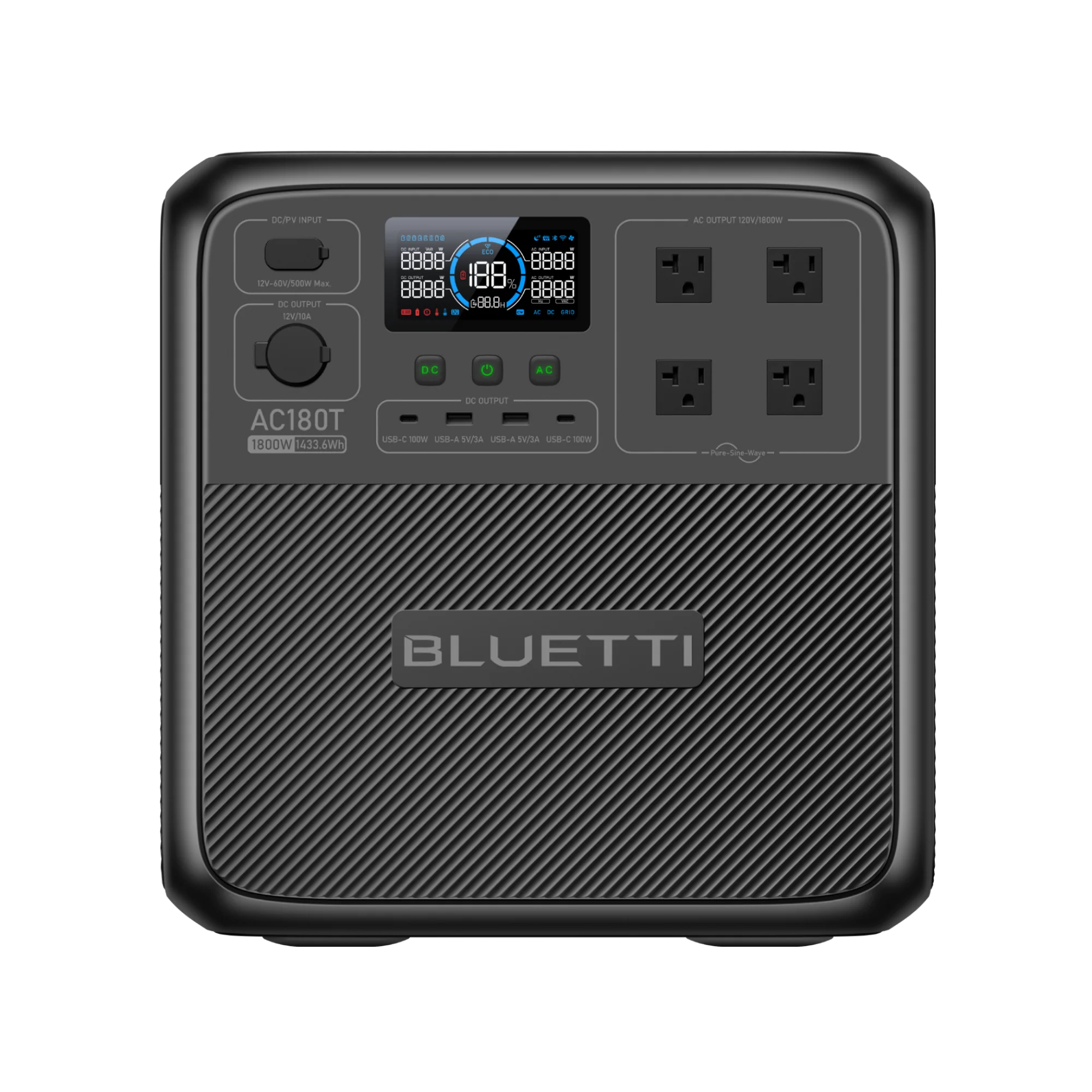
Optional: if you specifically want hot-swappable workflow behavior, AC180T exists, but it’s not the default “home backup” pick. Read AC180T Review.
Load Planning
Home backup fails when people size for “everything at once.” Size for the must-run essentials, then add comfort loads only if you have buffer. If you don’t plan loads, you’ll burn battery fast and end up disappointed even with a good unit.
| Tier | What to keep running | Common mistake |
|---|---|---|
| Essentials Keep life functional |
Router/modem, phones, a few lights, fans, charging, selective fridge time. | Trying to run cooking/heating loads like they’re “normal life.” |
| Comfort Add quality of life |
Longer fridge runtime, more lighting, more device charging, occasional appliance use. | Stacking multiple high-draw devices at once and wondering why it dies fast. |
| Heavier Requires move-up class |
Higher continuous loads, longer runtimes, better recharge strategy (solar/expansion planning). | Buying bigger battery without a recharge plan for multi-day outages. |
The “right” unit is the one that matches your load plan and your recharge plan. If you can’t recharge during multi-day outages, you need more buffer and tighter load control.