
Best 12V Water Pump for Van Conversions & Off-Grid Use
By the Dark Justice Survival team — tested recommendations for real builds, not spec-sheet comparisons.
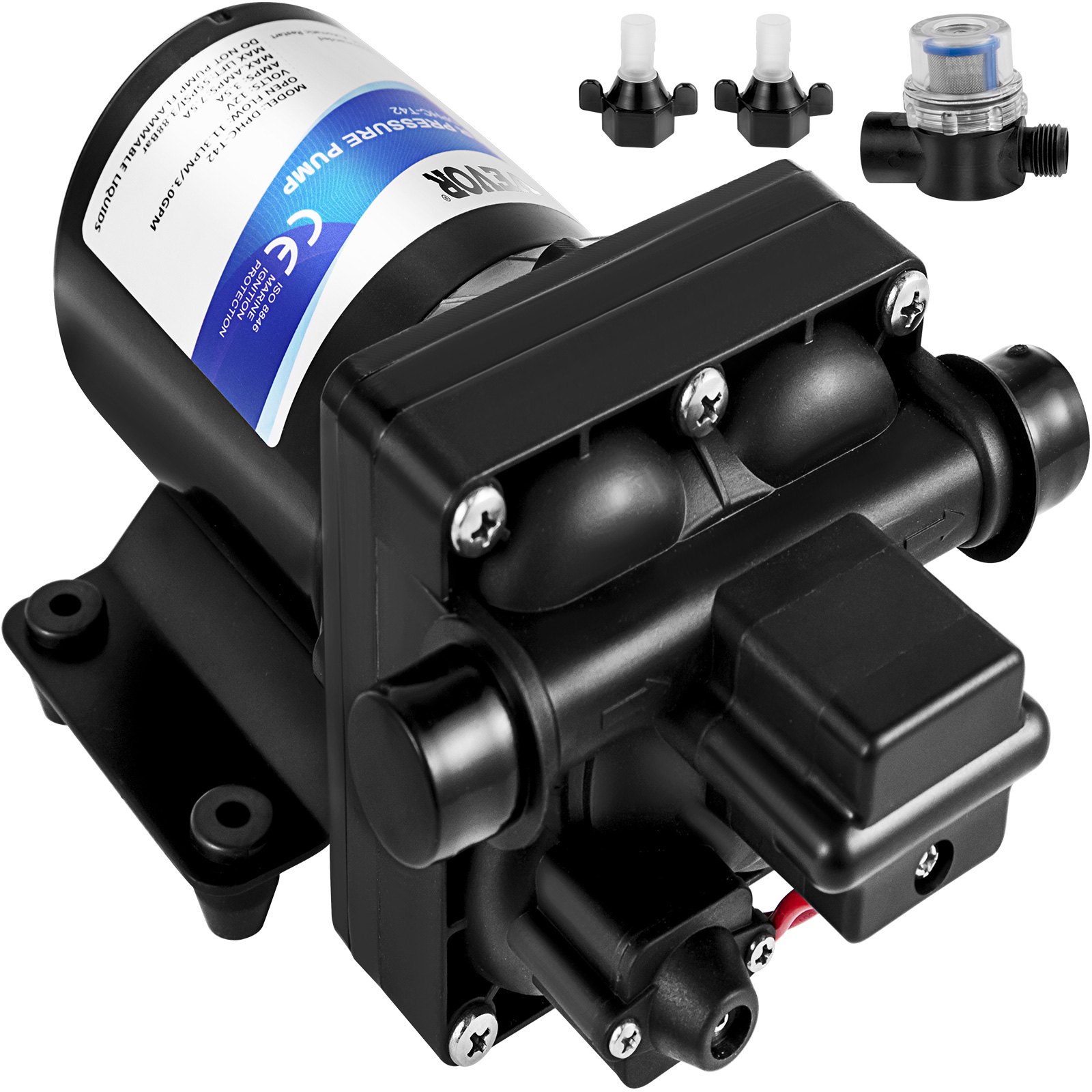
Quick Answer: For most van sink + shower setups, a self-priming 12V diaphragm pump rated 4.0–4.5 GPM at 45–55 PSI is the right call. It handles typical demand without being overkill — which matters because oversizing creates noise and cycling problems. If you have two fixtures, long plumbing runs, or a washdown deck, step up to 5.5 GPM / 70 PSI.
Our 3 Picks at a Glance
4 GPM Self-Priming (Best for Most)
Sink + shower. Quiet enough. Right-sized for 90% of van builds.
- 12V diaphragm — self-priming
- ~45 PSI shutoff — good tap feel
- Draws ~5–7A at load
- Quiet enough without mods
- Not ideal for 2+ fixtures at once
5.5 GPM / 70 PSI (Higher Demand)
Bigger setups, long runs, two fixtures, or washdown tasks.
- Higher flow headroom
- 70 PSI shutoff — strong pressure
- Draws ~8–12A at load
- Self-priming diaphragm
- Louder / more cycling on small systems
5.5 GPM Washdown Kit
Boats, overlanding rigs, gear rinse. Kit includes hose + nozzle.
- Complete washdown kit
- Good for outdoor rinse stations
- Works on boats & trucks
- Not designed for indoor plumbing
- Overkill for sink-only van
Full Comparison Table
Side-by-side specs so you can see exactly what you're choosing between:
| Pump | Flow Rate | Max PSI | Voltage | Amp Draw | Type | Best For |
|---|---|---|---|---|---|---|
| VEVOR 4 GPM Diaphragm BEST PICK | 4.0 GPM | ~55 PSI | 12V DC | 5–7A | Self-priming diaphragm | Sink + shower, most van builds |
| VEVOR 5.5 GPM / 70 PSI LOUDER | 5.5 GPM | 70 PSI | 12V DC | 8–12A | Self-priming diaphragm | Two fixtures, long runs, high demand |
| VEVOR 5.5 GPM Washdown Kit | 5.5 GPM | 70 PSI | 12V DC | 8–12A | Washdown / kit | Gear rinse, boats, overlanding |
Amp draw figures are approximate under load. Actual draw varies by plumbing restriction, water temperature, and pump wear.
How to Choose the Right 12V Water Pump Size
The most common mistake in van and off-grid plumbing is oversizing the pump. More GPM is not automatically better — it means more noise, more rapid cycling, more amp draw, and harder wear on fittings unless your system is actually large enough to use that capacity.
Start here: how many fixtures will run at the same time?
What About PSI?
PSI (pressure) and GPM (flow) are related but distinct. Higher PSI means the pump shuts off at a higher pressure — which can feel "stronger" at the tap but also means the pump has to work harder to reach shutoff. For most van showers and sinks, 45–55 PSI shutoff is the comfortable range. 70 PSI is better suited to larger plumbing or systems where you need to push water through longer or narrower runs.
Diaphragm vs. Centrifugal: Which Type Do You Need?
For van and off-grid use, diaphragm pumps are almost always the right choice. They're self-priming (can pull water from a tank below or beside them), handle intermittent use well, and have a built-in pressure switch for automatic shutoff. Centrifugal pumps are designed for continuous high-volume flow (think irrigation or boat bilge) and are not suitable for typical van plumbing.
Power Draw & Battery Impact
This matters a lot in off-grid builds where you're living off a battery bank. The good news: a 12V diaphragm pump only runs when you open a tap and pressure drops. It's not a constant draw like a fridge or fan.
Here's how to estimate daily amp-hours consumed by your pump:
If you use water for roughly 15 minutes/day total (cooking, brushing teeth, quick rinse):
6A × 0.25 hrs = ~1.5 Ah/day
Even a 30-minute/day user would draw ~3 Ah — well within the range of a modest 100Ah lithium battery system.
The 5.5 GPM pump at 10A draw on the same schedule would use ~2.5–5 Ah/day. Still manageable, but meaningfully higher — and the inefficiency of rapid cycling when oversized can push that number up further.
Bottom line on battery: Pump draw is rarely the battery killer in a van build. Your fridge, lighting, and inverter will dominate consumption. But right-sizing still matters for cycling behavior and pump longevity.
Wiring, Mounting & Noise Control
Wire Gauge
Using the wrong gauge wire is the most common electrical mistake in DIY pump installs. Too thin and you get voltage drop, which starves the pump and shortens its life. Use this as your starting guide:
| Run Length (one way) | 4 GPM (6A max) | 5.5 GPM (12A max) |
|---|---|---|
| Under 5 ft | 14 AWG | 12 AWG |
| 5–10 ft | 12 AWG | 10 AWG |
| 10–15 ft | 10 AWG | 10 AWG |
| 15–20 ft | 10 AWG | 8 AWG |
Always measure the full circuit length (positive + negative) when sizing wire. Fuse as close to the battery as possible — use an inline ATC fuse rated at 125–150% of max amp draw.
Mounting to Reduce Noise
A 12V diaphragm pump vibrates during operation. Mounted directly to a wood cabinet floor or metal van wall, that vibration transmits everywhere. The fix is cheap and easy: rubber isolation mounts or a folded piece of neoprene foam between the pump and mounting surface. Combined with flexible braided hose on the inlet and outlet (instead of rigid pipe right up to the pump), you'll eliminate most of the buzz.
- Use rubber isolation mounts (often sold as anti-vibration mounts for compressors — same thing).
- Run 6–12 inches of flexible braided hose on both inlet and outlet before transitioning to rigid tubing or SharkBite fittings.
- Keep the pump away from resonant surfaces — a hollow cabinet wall amplifies noise more than solid mounting.
Protect the Pump with a Strainer
Add a mesh inline strainer on the inlet side of the pump. Debris, sediment, or grit from a tank or hose fitting can score the pump's internal valves and kill it early. A $5 strainer is cheap insurance on a pump that costs 10–20x that.
Plumbing Fittings
Most VEVOR diaphragm pumps use 3/8" or 1/2" barb fittings. Check your specific model before buying tubing. Use stainless hose clamps — plastic ones loosen and crack over time with temperature cycling in a van. Thread sealing: PTFE tape on NPT threads, not pipe dope (pipe dope can swell and plug small fittings).
Do You Need an Accumulator Tank?
An accumulator tank is a small pressurized tank (typically 0.5–2 liters for van use) installed on the outlet side of the pump. It stores a small volume of pressurized water, so minor pressure fluctuations don't trigger the pump immediately.
- You chose the 5.5 GPM pump (higher flow, more prone to cycling)
- Your pump short-cycles on low-flow tasks (like slow hand-washing)
- Noise from frequent on/off cycling is bothering you
- You want to extend pump motor life
When you can skip it: If you chose the 4 GPM pump, your plumbing is short and well-sealed, and the pump runs smoothly when a tap is open — you're fine without one. Add it later if cycling becomes an issue.
Accumulator tanks for van use run $15–35 and take about 20 minutes to install. They're not a fix for a system problem (like a leak or air in lines) — they're a comfort and longevity upgrade.
Troubleshooting: Rapid Cycling & Weak Pressure
My pump keeps turning on and off rapidly (short-cycling)
This is the most common complaint. The pump runs for half a second, stops, runs again, over and over — even with a tap open. Causes, in order of likelihood:
- Small water leak somewhere in the system. Pressure bleeds off through the leak, triggering the pump. Check every fitting, joint, and connection under pressure.
- Air in the plumbing lines. Air compresses and fools the pressure switch. Flush the system fully — run water until you get a steady flow with no spitting.
- No accumulator + oversized pump. A high-flow pump in a tight system will cycle rapidly on low-demand tasks. Either add an accumulator or match pump size to your actual demand.
- Pressure switch set too high. If the shutoff PSI is set above what your plumbing can hold, it hunts. Some pumps have adjustable pressure switches — consult your model's manual.
- Restrictive fittings downstream. A partially closed valve, undersized fitting, or kinked hose creates a restriction that makes the pump fight itself.
My pump runs but pressure at the tap is weak
- Check for a clogged inlet strainer — this is often the culprit on systems that worked fine initially.
- Check for voltage drop — measure voltage at the pump terminals while running. Less than 11.5V means wiring is undersized or connections are corroded.
- Check for air lock — partially drain and refill the tank, flush lines completely.
- Check all fittings for partial blockages, especially if you recently changed anything in the plumbing.
Frequently Asked Questions
Ready to Buy?
For most van builds — sink + shower, one fixture at a time — the 4 GPM self-priming diaphragm pump is the right call. Good pressure, quieter operation, and easy on your battery bank.
Check Price & Availability →